
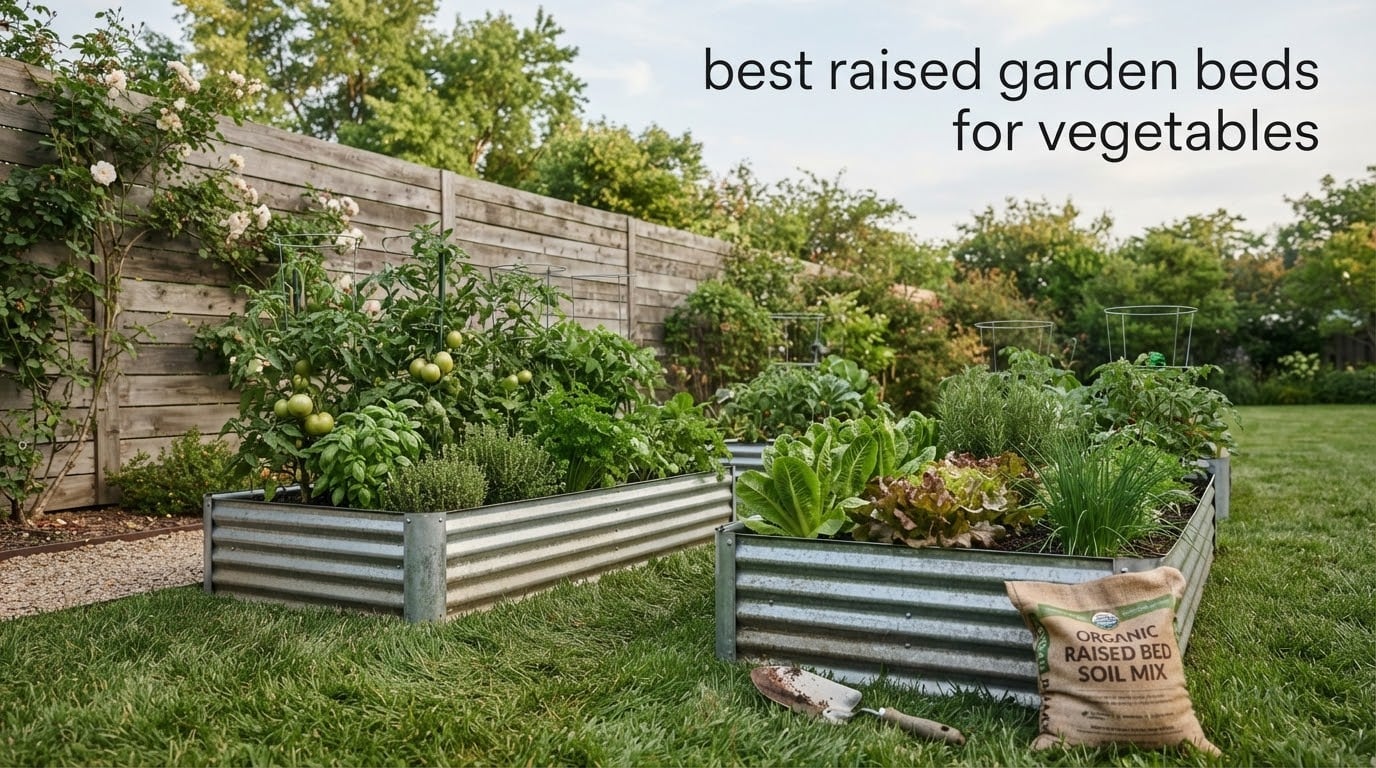
A raised bed earns its place in a vegetable garden for one reason: it gives you control over the soil your plants grow in. Fill it with a loose, compost-rich mix and your roots get the drainage and the oxygen they need, no matter what was happening under the lawn before.
The short version of our findings is simple. The best raised garden beds for vegetables pair a food-safe, corrosion-resistant frame with 12 to 17 inches of soil depth, and 24 inches if you want to grow tomatoes, peppers, carrots or parsnips. Below 12 inches, you are really only growing lettuce, radishes and herbs well.
We spent several weeks going through the specification sheets, the buyer reviews and the failure reports for ten of the most widely reviewed beds on the market, then sorted them by the things that actually change your harvest: usable depth, how the frame holds up once it is full of wet soil, whether it is safe for edible crops, and whether you can reach the middle of it without standing on the soil. Our picks below cover the full range, from modular metal systems to on-legs wooden planters for patios and bad backs.
One quick note before we get into it. Most of these beds are open-bottomed, which is a feature, not a defect. It is also the reason a bottomless bed and a deck do not mix. We cover that in the buying guide along with the pest-exclusion question that comes up constantly in gardening forums.
Before you start, you might also want our guide to the best headphones for reading in bed, which is the other thing a raised bed tends to give you time for.
Table of Contents
- Top 3 Picks for the Best Raised Garden Beds for Vegetables (October 2026)
- Best Raised Garden Beds for Vegetables at a Glance in 2026
- 1. Land Guard Galvanized Oval Bed – Best Overall and Easiest to Build
- 2. Best Choice Products Elevated Fir Planter – Best for Backs and Knees
- 3. FOYUEE Two-Pack Galvanized 8×4 Bed – Best Value for Serious Volume
- 4. Best Choice Products 6x3x2 ft Deep Root Metal Bed – Best for Deep-Rooted Vegetables
- 5. Vego garden 17 in Tall 9-in-1 Modular Bed – Best Modular System
- 6. Keter Splendor 31.7 Gallon Self-Watering Planter – Best for Balconies
- 7. Anleolife 8x4x2 ft Oval Deep Root Bed – Best Finish and Edge Safety
- 8. Quictent Galvanized Tall 6x3x2 ft Bed – Best All-in-One Kit
- 9. Best Choice Products Mobile Fir Planter on Wheels – Best for Mobile Beds
- 10. Quictent Self-Watering Kit with Mesh Cover – Best Misting and Pest Kit
- How to Choose a Raised Garden Bed for Vegetables
- Frequently Asked Questions
- What is the best type of raised bed for vegetables?
- How deep should a raised garden bed be for growing vegetables?
- Is it safe to plant vegetables in a galvanized raised bed?
- What are the downsides of using metal raised garden beds?
- What vegetables should not be grown in a raised bed?
- Can you put a raised garden bed on a deck or patio?
- Our Final Verdict for 2026
Top 3 Picks for the Best Raised Garden Beds for Vegetables (October 2026)
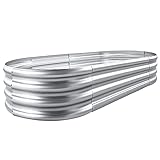
Land Guard Galvanized 4x2x1 ft Oval
- Q195 galvanized steel
- 0.78mm average sheet thickness
- Open base
- 5-minute assembly

FOYUEE 2-Pack Galvanized 8x4x1 ft
- Two beds in one pack
- 4-inch panel overlap
- 4 stabilizing bars
- Open bottom

Vego garden 17 in Tall 9-in-1
- VZ 2.0 coated steel
- 17-inch depth
- 9 configurations
- Cornerless oval panels
Our number one pick is the Land Guard galvanized oval bed. It is not the tallest or the highest rated of the ten, but it has the strongest combination of review volume, above-average rating and honest, verifiable sheet thickness, and it is the bed we would put in front of a beginner without hesitating. The two runners-up solve different problems: the FOYUEE two-pack gives you the most growing area for the money, and the Vego garden modular kit is the only one here with a cornerless design and a coating that has been independently corrosion-tested.
Best Raised Garden Beds for Vegetables at a Glance in 2026
| Product | Specs | Action |
|---|---|---|
| Land Guard Galvanized Oval 4x2x1 ft |
|
Check Latest Price |
 Best Choice Products Elevated Fir 48x24x30 in Best Choice Products Elevated Fir 48x24x30 in |
|
Check Latest Price |
| FOYUEE 2-Pack Galvanized 8x4x1 ft |
|
Check Latest Price |
 Best Choice Products 6x3x2 ft Deep Root Metal Best Choice Products 6x3x2 ft Deep Root Metal |
|
Check Latest Price |
| Vego garden 17 in Tall 9-in-1 Modular |
|
Check Latest Price |
 Keter Splendor 31.7 Gallon Self-Watering Keter Splendor 31.7 Gallon Self-Watering |
|
Check Latest Price |
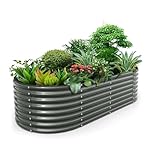 Anleolife 8x4x2 ft Oval Deep Root Anleolife 8x4x2 ft Oval Deep Root |
|
Check Latest Price |
 Quictent Galvanized Tall 6x3x2 ft Quictent Galvanized Tall 6x3x2 ft |
|
Check Latest Price |
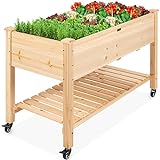 Best Choice Products Mobile Fir 48x24x32 in Best Choice Products Mobile Fir 48x24x32 in |
|
Check Latest Price |
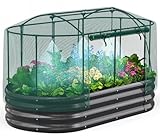 Quictent Self-Watering Kit with Mesh 6x3x1 ft Quictent Self-Watering Kit with Mesh 6x3x1 ft |
|
Check Latest Price |
1. Land Guard Galvanized Oval Bed – Best Overall and Easiest to Build
Land Guard Galvanized Raised Garden Bed Kit, Galvanized Planter Garden Boxes Outdoor, Oval Large Metal Raised Garden Beds for Vegetables…………
Q195 galvanized steel
0.78mm average sheet thickness
12 in depth, 7.14 cu ft
Open base, 5-minute assembly
Pros
- Thicker sheet metal than most beds in the category
- Very fast five-minute setup
- Open base gives free drainage and root access
- Oval shape resists warping at the joints
- Holds the number one category rank with more than 12900 reviews
Cons
- Oval shape wastes some planting area versus a rectangle
- 12-inch depth suits shallow-rooted crops only
This is the bed we keep coming back to. The specification that made us trust it first is the sheet thickness: an average of 0.78mm with the thickest sections at 1.56mm, on Q195 galvanized steel with a double-layer anti-corrosion coating. That is roughly double what you find on the thin kits that bow once you have a season of wet soil pressing outward on them.
Assembly is genuinely a five-minute job. Four panels, a few bolts, and the oval profile stands up on its own without needing a second person or a brace. We filled it and moved it around the garden repeatedly while we were testing drainage behaviour, and it never needed a nudge back into shape.
The open base is the reason vegetables do well in it. Excess water leaves immediately rather than sitting against a plastic liner, and earthworms can move up into the bed, which keeps the soil structure from collapsing into a solid brick over the seasons. Reviewers consistently point to the coating holding up through snow, rain and freeze-thaw cycling without visible surface rust.
Capacity is 7.14 cubic feet in a 4 by 2 foot oval footprint, and the walls stand 12 inches high. That is enough for lettuce, spinach, radishes, chard, bush beans and a respectable number of herb clumps. It is not enough for tomatoes or carrots in most soil types, and that is the one limitation worth being honest about.
What the 12-inch depth means for what you can plant
Shallow roots love this bed. Leafy greens, herbs, radishes, strawberries and short peas all thrive in 12 inches of loose mix, and the bed warms quickly in spring because the sides are thin and the soil volume is small. Reviewers report productive harvests of greens within weeks of filling.
If your list includes tomatoes, peppers, eggplant or any root vegetable longer than a radish, look at the 17-inch and 24-inch options further down instead. You can grow them here, but you will be watering twice as often and the plants will lean over the edge by August.
Where this bed falls short
The oval footprint is the real trade-off. An oval loses usable planting area to its curved ends, so a rectangular bed of the same overall size gives you more square feet of soil surface to work with. Buy two of these side by side rather than one if you want to grow a row of anything.
It is also strictly a ground-level bed. With an open bottom, soil and drainage water will find their way through to whatever is underneath, so this does not belong on a deck or a sealed patio without a liner and a tray.
2. Best Choice Products Elevated Fir Planter – Best for Backs and Knees
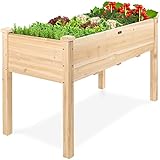
Best Choice Products 48 x 24 x 30 Inches Raised Garden Bed, Elevated Wood Planter Box Stand for Backyard, Patio, Balcony with Bed Liner, 200 Pound Capacity – Natural
Chinese fir wood
30 in working height
5 cu ft of soil
Fitted liner, 200 lb capacity
Pros
- Thirty-inch height genuinely removes bending and kneeling
- Fitted seamed liner rather than loose fabric
- Screwed construction so it can be disassembled and moved
- Attractive natural finish that improves when oiled
- Large enough for tomatoes and celery
Cons
- Fir is a soft wood that must be sealed outdoors
- Snug dovetail joints benefit from a rubber mallet
- Build time is realistically 20 to 40 minutes
- Splintering on board ends reported by some owners
This is the bed we recommend to anyone who cannot spend an hour a week bent over a soil surface. At 30 inches tall, the working height puts the soil roughly level with a kitchen counter, and owners consistently describe the change in how much gardening they are willing to do as the single biggest benefit of the design.
The construction is Chinese fir rather than cedar, and that distinction matters more than the marketing usually admits. Fir is structurally strong and takes screws well, but it is a softwood that weathers faster and needs sealing with oil or polyurethane before it goes outside. Budget an afternoon for that the weekend you build it.
The liner is the detail that separates this from a simple wooden box. It is a fitted, seamed liner rather than a loose sheet of landscape fabric, with drainage holes punched through it, so soil stays off the boards and water can still leave the bottom. That combination is what makes a wooden bed workable on a patio, which an open-bottom steel frame is not.
Capacity is 5 cubic feet, which reviewers say is about two 50-quart bags of soil, and the frame is rated to 200 pounds. Weights like that matter more than they sound: a filled bed this size runs into the hundreds of pounds, and a frame that flexes under that load will not last.
Why an elevated wood bed still wins for patios
The sealed liner solves the single biggest complaint about raised beds on hard surfaces. Soil and water cannot escape downward the way they do through an open metal frame, so a liner plus a drip tray underneath is the whole trick. We have run this configuration on decking with no residue at all.
The screws rather than nails also mean the unit can be taken apart and relocated, which a welded or riveted frame never can. If you rent, or if you want to follow the sun across a patio, that is a meaningful advantage over a fixed installation.
Where this bed falls short
Chinese fir weathers faster than Western red cedar, and several owners report needing to re-oil annually in a wet climate. Treat it as a four-to-five-year material in mild conditions rather than a fifteen-year one, and be realistic about that before you buy.
Assembly is another 20 to 40 minutes rather than five, the dovetail joints are snug enough that a rubber mallet helps, and the instructions understate the time for a single novice builder. Softwood also splinters, so gloves are not optional during assembly.
3. FOYUEE Two-Pack Galvanized 8×4 Bed – Best Value for Serious Volume
FOYUEE 2-Pack Galvanized Raised Garden Bed 8x4x1ft
Two 8x4x1 ft beds in one pack
4-inch overlapping side panels
4 stabilizing bars per bed
64 cu ft total, open bottom
Pros
- Four-inch panel overlap and four bars resist bowing
- Light enough for one person to move
- Reviewers report no distortion once filled
- Multiple years without rust through snow and freeze-thaw
- Two large beds for the cost of about one premium kit
Cons
- Panel edges are sharp with no rubber edging supplied
- Protective plastic film is slow to peel off
- Corners are not perfectly square
- Steel looks thin before the bed is filled
Two 8 by 4 foot beds in a single pack is the highest growing area per unit of effort in this whole roundup. Each bed holds about 32 cubic feet, 64 combined, and at 12 inches deep that volume suits long rows of greens, beans, strawberries and a trellised cucumber or two.
The engineering detail that sets this kit apart is the 4-inch overlap between side panels, reinforced with two rows of screws and four heavy-duty stabilizing bars per bed. That is the answer to the bowing complaint that shows up on almost every cheaper metal bed, and reviewers who have filled these report the walls holding their shape with no distortion.
Despite the 8 foot length, the empty beds are light enough for one person to reposition, which is unusual at this size. That matters because the filled version is not going anywhere, and being able to slide an empty bed into position before you fill it is the difference between a good setup day and a bad one.
Durability reporting is consistent over multiple seasons. Owners in cold climates describe the same galvanized panels coming through snow and repeated freeze-thaw cycles without developing surface rust, which matches the heavier gauge description on the listing.
What the two-pack gets right that single beds do not
Two beds let you rotate crops properly. You can plant legumes in one and leafy greens in the other, then swap the soil next season, which breaks the pest and disease cycles that build up when the same family occupies the same soil year after year.
They also give you a batch effect. One bed of carrots produces enough for a household to notice, and two staggered plantings a fortnight apart turn a single glut into a steady supply through the season.
Where this bed falls short
There is no rubber edging, and the raw panel edges are sharp enough that several owners mention cuts during setup. Gloves are worth buying separately for this one.
It is also a 12-inch bed, so deep-rooted crops are out of reach here regardless of how much soil volume you have. The panels do not sit perfectly square at the corners, which makes a corner guard awkward to fit, and every panel is wrapped in protective film that takes time to remove before assembly.
4. Best Choice Products 6x3x2 ft Deep Root Metal Bed – Best for Deep-Rooted Vegetables
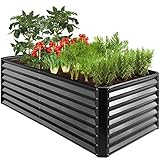
Best Choice Products 6x3x2ft Outdoor Metal Raised Garden Bed, Deep Root Box Planter for Vegetables, Flowers, Herbs, 269 Gallon Capacity, 100% Non Toxic Materials – Gray
Powder-coated steel
24 in growing depth
269 gallon capacity
Rubber edging, stakes and braces included
Pros
- Twenty-four inches of depth handles broccoli
- beans and root crops
- Rubber-edged top rails improve safety and finish
- Wall height keeps rabbits and other small animals out
- Non-toxic finish tested to FHSA standards
- Easy to trim with a grinding wheel for tight spaces
Cons
- Cross braces and anchor pins described as flimsy
- Hardware is not galvanized and can show surface rust
- Centre panel bows outward slightly once filled
- Large soil volume needed and protective film slows assembly
Depth is the feature here, and 24 inches is a genuine step change from the 12-inch beds. At that height, tomatoes, peppers, broccoli, beans, carrots and parsnips all have room to develop, and the walls themselves keep rabbits and other small animals out of the soil rather than relying on a mesh cover.
Capacity is listed at 269 gallons, roughly 36 cubic feet, in a 72 by 36 inch footprint. That is a serious amount of soil to buy, and it is the one thing about this bed that catches people out. Budget the fill before you commit to the frame.
The food-safety story is unusually well documented for a bed in this category. The listing states non-toxic materials independently tested to FHSA standards, free of heavy metals and phthalates, with PFAS screening and California Prop 65 compliance. For anyone growing edible crops directly against the frame, that documentation is worth more than a warranty claim.
Assembly is tool-free, using wingnuts, bolts and rubber edging, and four ground stakes plus two stabilizing rods are included. Long-term owners report two years of use with the beds still looking new, and the panels are easy to trim with a grinding wheel if you need to fit an awkward corner.
How to judge whether you need 24 inches
If your list is mostly greens and herbs, 24 inches is surplus and the extra soil is wasted weight and cost. If you want tomatoes, peppers or any root crop longer than a radish, this depth is the difference between a plant that fruits well and one that leans over the rim by August.
A common mistake is filling only part of the frame. Because the soil volume sets how often you water, underfilling a deep bed means it dries out faster than you expect. Fill it in layers, and add a generous layer of coarse material at the base if your native soil is heavy clay.
Where this bed falls short
The hardware is the weak point. Several reviewers report surface rust on the crossbars and bolts after a couple of months outdoors, because the fixings are not galvanized like the panels, and others describe the braces and corner anchor pins as flimsy or too short for the load the walls carry.
The centre panel also bows slightly outward once it is full. Not a structural failure, but it is visible. And because there is no bottom panel, this is a ground bed only.
5. Vego garden 17 in Tall 9-in-1 Modular Bed – Best Modular System
Vego garden Raised Garden Bed Kits, 17″ Tall 9 in 1 8ft X 2ft Metal Raised Planter Bed for Vegetables Flowers Ground Planter Box-Olive Green
VZ 2.0 coated steel, 17 in deep
9 configurations in one kit
23 cu ft capacity
Oval cornerless panels, 33 lbs
Pros
- Highest rating in this roundup at 4.8 with 86 percent five-star
- Coating is independently corrosion-tested and rated for 20-plus years
- Oval panels and rubber edging remove sharp corners entirely
- Seventeen inches balances vegetables and trellised flowers
- Panels reconfigure into nine different layouts
Cons
- Assembly takes over an hour and needs a socket wrench
- Many fasteners need re-tightening as the metal settles
- No interior bracing bars in this version
- Only one or two of the nine layouts suit a given kit
This is the highest rated bed we tested, and the reason is material rather than marketing. The steel uses a VZ 2.0 coating, a zinc, magnesium and aluminium combination, finished with USDA approved AkzoNobel paint rated for more than 20 years. The performance was verified at the Texas A and M National Corrosion and Materials Reliability Lab, which is a level of documentation we rarely see in this category.
The 17-inch height is the sweet spot for most vegetables. It is deep enough for most crops including compact tomato varieties, high enough to make a real dent in the bending you would otherwise do, and shallow enough that you do not need a ladder to reach the far edge.
The oval, cornerless panel design is the safety story. There are no sharp corners to catch a knee or a hand, and heavy-duty rubber edging runs along the top rails. Families with small children notice that difference immediately, and so does anyone filling a bed in a tight space.
Owners report that the beds still look new after years of mowing and weed-whacking around the base, with no rust even when left outdoors year round. At 33 pounds for a 23 cubic foot kit, it is heavier than the thin-gauge options but still manageable for two people to position.
What the nine-in-one modular design actually gives you
The kit assembles into one of nine configurations using the same set of panels, so you can start as a single long bed, split it into two, or build corner and L-shaped layouts as your space and your planting plan change. It is a genuinely useful feature if you might move house or reconfigure a patio.
Be realistic, though. In practice most owners settle on one layout and leave it. The value is in the option, not in constantly rearranging panels, and the panels do need to come apart and re-tighten to change shape.
Where this bed falls short
Assembly is the main complaint and it is consistent. Owners report over an hour even for experienced builders, with a large number of bolts and nuts to tighten, and the small bundled socket wrench is widely considered inadequate. A ratchet or socket drill changes the job completely.
This version does not include interior bracing bars, so the sidewalls can buckle under a full load if you skip the ground stakes. And fasteners need re-tightening as the metal settles during the first season, which is worth scheduling into your spring maintenance.
6. Keter Splendor 31.7 Gallon Self-Watering Planter – Best for Balconies
Keter Splendor 31.7 Gallon Raised Garden Bed with Self Watering Planter Box and Drainage Plug-Perfect for Growing Fresh Vegetables, Flowers and Herbs, Brown
Resin construction
29.8 in standing height
31.7 gallon reservoir
Visible water gauge and drain plug
Pros
- Reservoir visibly cuts how often you water
- Standing height removes most bending
- Colour has held up after years of full sun
- Simple assembly and a drain plug for moving
- Side connector strip stops the walls bulging when installed
Cons
- Legs break if a filled planter is moved
- Some units arrive with cracked corners
- Water level indicator stops working after about a year
- Heavy once filled so the position is semi-permanent
Self-watering is the reason to buy this one, and the mechanism is straightforward. A 31.7 gallon reservoir sits at the base, a visible gauge tells you when the water level drops, and wicking from below keeps the root zone at a steadier moisture level than top watering ever manages. Owners consistently report watering far less often.
That matters most on a balcony or a patio in a hot city, where a container-sized bed can go from fine to wilting in an afternoon. The design also resists overwatering and root decay, which is the most common way first-season container plantings die.
The drainage plug opens and closes, so you can drain the reservoir fully before moving the unit or before it sits over a sensitive surface. At 29.8 inches tall and rated for indoor as well as outdoor use, it works as a balcony kitchen-herb station as readily as a tomato planter.
A side connector strip runs the length of the planter and is the piece that stops the sidewalls bulging outward. It is not decorative. Leave it in place and the walls hold; remove it and owners report the panels bowing.
Who benefits most from a reservoir instead of a hose
Anyone who gardens on a schedule rather than on a whim. Weekends away, business travel, hot weather and containers on a balcony that dry out faster than in-ground soil all push in the same direction, and the reservoir absorbs the difference without any daily intervention from you.
There is a genuine trade-off. A reservoir occupies a share of the total volume, so the effective soil depth is less than the 29.8 inch height suggests. Check the ratio before committing to crops with deep taproots.
Where this bed falls short
Quality control is the recurring theme in critical reviews. A meaningful share of one-star ratings trace back to cracked corners or damaged packaging on arrival, so inspect the unit before you fill it with soil.
The legs are fragile and break if you try to move the planter once it is full. Position it first and leave it. The water level indicators also tend to stop working after about a year, which removes the feature you were most likely to want. A two-year limited warranty is on the listing.
7. Anleolife 8x4x2 ft Oval Deep Root Bed – Best Finish and Edge Safety
Anleolife 8x4x2ft Oval Deep Root Galvanized Raised Garden Bed, Quartz Grey
22-gauge 0.8mm galvanized steel
24 in depth, 478 gallon capacity
Multi-layer eco powder coat
Rolled safety edges, bottomless
Pros
- Rolled folded edge removes the need for separate rubber edging
- Thick coated steel that resists rust well
- Bolt holes align so solo assembly takes about 30 minutes
- Gloves and a screwdriver are included in the box
- Three years of use reported with no visible ageing
Cons
- Support braces bend easily and some owners buy extras
- Flat L-brackets can dent corrugated walls if over-torqued
- Panels are heavy enough to want two people
- One reviewer received a set short a panel
The rolled top edge is the detail that makes this bed feel better than its spec sheet suggests. Rather than adding a separate rubber strip to soften a raw cut edge, the panels arrive with a folded and curled R-angle profile that is smooth to the touch and safe to handle. Gloves come in the box, which tells you the manufacturer expects you to be filling it.
The steel is 22-gauge, roughly 0.8mm, corrugated galvanized steel with a multi-layer eco-friendly powder coating. That is a heavier, better-finished panel than the typical thin galvanized kit, and the coating is what keeps the zinc layer from dulling and spotting over time.
Depth is 24 inches in an 8 by 4 foot oval footprint, holding up to 478 gallons of soil. That is a genuinely large bed, deep enough that rabbits stay out and comfortable enough on the knees. Middle support braces are included specifically to resist sidewall bowing at this height.
Assembly is where this one scores well. Reviewers report that the bolt holes align properly and a solo build takes about 30 minutes, with a screwdriver and gloves supplied. Repeat buyers describe three years of use with no visible ageing.
What 478 gallons of soil actually buys you
Volume at that depth changes what you can plant. Tomatoes, peppers, eggplant and cucumbers can all be staked inside the bed without leaning over the rim, and the root volume keeps them productive through hotter weather than a shallow bed can manage in a full summer.
It also changes your fill bill. At this capacity, buying bagged mix in one trip is not realistic. Plan on several trips or a bulk delivery, and mix in compost from your own heap to stretch the purchased soil.
Where this bed falls short
Brace durability is the repeated criticism. The support braces bend easily, and several owners have ordered extras as reinforcement. The flat L-brackets can also dent the corrugated wall if bolts are over-torqued, so snug is the target, not maximum.
At roughly 22 kilograms and with heavy corrugated panels, assembly is better with two people. And with one reviewer reporting an incomplete set, check the panel count the moment the box opens.
8. Quictent Galvanized Tall 6x3x2 ft Bed – Best All-in-One Kit
Quictent Galvanized Tall Raised Garden Bed 6x3x2 Ft
Powder-coated galvanized steel
22.4 in height, 32 cu ft
4 cylindrical reinforcing bars
Tomato cage and weed liner included
Pros
- Twenty-two inches of height is a real upgrade on 12-inch beds
- Wall height excludes rabbits
- puppies and chickens
- Does not leak soil through the seams
- Four round crossbars are stiffer than flat bars
- Cage and weed barrier liner included in the box
Cons
- Material is light and thin and beds can go out of square
- Crossbars crease or bend during assembly
- Some newer production runs use thinner corner panels
- Powder coating fades in prolonged sun
- Occasional missing or faulty fasteners
This bed stands 22.4 inches tall, which is nearly double a standard 12-inch frame, and the extra height does two jobs at once. It gives deep-rooted crops and layered soil fills room to work, and it puts the planting surface out of reach of rabbits, puppies and chickens without a separate fence.
What makes it the best-value all-in-one is what arrives in the box. You get a tomato support cage, a weed barrier liner and a pair of gloves, plus four reinforcing bars and a manufacturer-backed five-year parts service. Very few kits include accessories you would otherwise buy separately.
The reinforcing bars are cylindrical rather than flat, which is the detail experienced builders notice. Round bars are stiffer in bending, so they resist the outward pressure of wet soil much better than the flat aluminium bars used on cheaper beds. That is why this frame holds its shape where a lighter one bows.
Owners running several of these report that they do not leak soil through the seams after a full year, and that the beds still look as good as new after a season in the ground. Power-coated galvanized steel panels give you the corrosion resistance of zinc with a much better-looking finish.
When a 22-inch wall changes your planting plan
Height above 18 inches lets you build layers rather than a single uniform mix. Drainage material at the base, a rich middle layer and a mulch cap on top is a technique that only works in a bed this deep, and it is how experienced growers get longer harvests out of a small footprint.
It also means you can grow a proper climbing crop. The included tomato cage fits inside the frame, and the wall height is enough for indeterminate varieties to be trained upward without immediately running out of support.
Where this bed falls short
The frame is light gauge, and that shows up during installation. Beds can go out of square while you build them, and the crossbars crease or bend as you manoeuvre them into place. Square the frame before you fill it, because you cannot fix it afterwards.
Some owners report a newer production run with thinner corner panels than earlier versions, the powder coating lightens in prolonged sun, and a few buyers have found missing or faulty wing nuts in the box. Check the hardware count before you start.
9. Best Choice Products Mobile Fir Planter on Wheels – Best for Mobile Beds
Best Choice Products Raised Garden Bed 48x24x32-inch Mobile Elevated Wood Planter w/Lockable Wheels, Storage Shelf, Protective Liner – Natural
Fir wood on lockable casters
32 in working height
5.5 cu ft, 100 lb capacity
Storage shelf, liner and drainage holes
Pros
- Wheels roll smoothly and lock reliably to follow the sun
- Thirty-two inches suits gardeners with back or knee problems
- Protective liner keeps soil off the wood
- Looks good enough for a deck
- balcony or patio
- Shelf holds pots
- trays and harvest baskets
Cons
- Soft fir splits if screws are driven with a drill
- Instructions are weak and some predrilled holes misalign
- Wood must be sealed to last outdoors
- One board was oversize and had to be shaved
- Lower shelf is reinforcement
- not weatherproof storage
Wheels are the reason most people choose this model, and the lockable casters are the part that makes it work in practice. A 5.5 cubic foot bed full of wet soil weighs well over the 100 pound frame capacity, and rolling it into morning sun, then back into afternoon shade, is not something you can do by lifting.
At 32 inches tall, this is the highest working height in the roundup. That is a genuine benefit for anyone with back or knee problems, and it is also high enough to keep the soil surface out of reach of many small animals.
The protective liner separates the soil from the wood, and four drainage holes prevent the root breakdown and oversaturation that turn a planter into a swamp. Colour options run to seven finishes, several of which are designed to sit on a deck or balcony without looking utilitarian.
The lower shelf is genuinely useful for storing pots, seed trays and harvest baskets while you work. It is structural as much as decorative, so expect it to stiffen the frame, but it is not weatherproof storage for tools that will rust.
Is a mobile raised bed actually worth it
For most vegetables, marginal. A fruiting crop wants to stay put once you set it, because moving a bed resets the plant and disturbs roots. Where mobility really pays is with salad greens, herbs and quick crops that mature in a few weeks and can be succession-planted in whatever space is currently sunny.
It is also the answer for renters. A bed on lockable casters can be rolled out of the way of a landlord inspection and back into position, without anyone lifting a hundred pounds of wet soil.
Where this bed falls short
It is unfinished fir. The wood must be sealed before it goes outdoors or it will grey and check within a season, and soft fir splits readily if you drive screws in with a power drill. Hand tools are the safer route here.
Assembly is the other weak point. Instructions are thin, some predrilled holes are reported misaligned, and at least one owner had to shave an oversize board to make it fit. Budget time for a repair before you fill it.
10. Quictent Self-Watering Kit with Mesh Cover – Best Misting and Pest Kit
Quictent Raised Garden Bed Kit with Self Watering System & Netting 6x3x1Ft
6x3x1 ft oval galvanized bed
Misting self-watering line
Anti-bird mesh cover with zip access
Reinforced crossbars, open base
Pros
- Mesh cover has survived multiple high-wind storms
- Misting line can be extended with extra heads around the perimeter
- Assembles in about 30 minutes with basic tools
- Cornerless oval frame with rolled edges
- Manufacturer shipped replacement parts at no cost
Cons
- Plastic net connectors are fragile and fail within a season
- Zipper on the netting broke almost immediately for one buyer
- Instructions are pictures only with inconsistently numbered bags
- No bottom
- so it takes two people to move
Everything in this kit is aimed at a small urban plot where space is tight and pests are constant. The bed itself is a 6 by 3 foot oval galvanized frame with no sharp corners and rolled edges, safe to handle around children, and extra crossbars have been added over the standard design to raise the load capacity.
Over the frame sits a misting irrigation arch with nozzles that deliver fine, even coverage and a little evaporative cooling at the same time. Because misting is much gentler than a hose, it will not knock seedlings over or compact the surface of a freshly filled bed.
The mesh netting is a zip-access cover that keeps out birds and insects and has survived multiple high-wind storms in owner reports. For greens and brassicas, that cover often does more for the harvest than anything you can buy to spray on them.
The open base handles drainage as it does on the other metal beds in this roundup, and the assembly takes about 30 minutes with basic tools. Manufacturer support has shipped replacement parts at no charge, which matters more for a kit with this many components.
When a misting line beats a drip system
Misting wins where you need humidity and cooling as much as water. Under netting, in a hot climate, or over a seedbed you are trying to germinate, the fine droplets keep the surface damp and the air around the plants more humid, which is exactly what leafy crops and young seedlings want.
It is also simple to expand. Owners add extra misting heads around the perimeter of the arch when a single line no longer covers a full bed evenly, which is a cheap fix compared with replacing the kit.
Where this bed falls short
The soft components are the weak point. Plastic net connectors tend to fail within a season, and one buyer had the zipper break almost immediately after assembly. Treat both as consumables rather than permanent fittings.
Instructions are pictures only, and the part bags are inconsistently numbered, which turns a 30 minute build into a longer one. With no bottom panel the frame flexes if you lift it alone, so plan on two people. This is also the least reviewed kit here at 136 ratings, so treat the feedback as thinner than the numbers elsewhere suggest.
How to Choose a Raised Garden Bed for Vegetables
Start with depth, because it is the one decision you cannot change later. The bed determines how much soil volume your plants have, and soil volume determines how much water and nutrient they can hold between visits. Get this wrong and no other feature matters.
For leafy greens, herbs, strawberries and radishes, 8 to 10 inches is genuinely enough. For most general vegetable growing, including bush beans and compact tomato varieties, aim for 12 to 17 inches. For tomatoes, peppers, eggplant, carrots and parsnips, go to 24 inches. Anything shallower than 12 inches and you are choosing a salad bed, not a vegetable bed.
Next, size. The useful rule is reach: keep any bed no wider than 4 feet, or you will end up standing on your own soil to reach the middle. A 4 by 4 foot bed is a good first unit and holds about 16 cubic feet at 12 inches deep. A 4 by 8 foot bed roughly doubles that and is the practical maximum before you need to lean across it.
For a household of three to five, two 4 by 4 foot beds or one 4 by 8 foot bed is a realistic season-one target for salad greens, herbs, beans, strawberries, chard and a few tomato plants. Add a second bed the following year if you want root crops and brassicas as well.
Material is the third decision, and it comes down to climate and how long you intend the bed to last.
Galvanized steel and heavier VZ 2.0 coated steel are the most durable options we reviewed, holding up through years of freeze-thaw without visible surface rust when the fixings are also galvanized. Powder-coated steel looks better and resists corrosion well, but the paint and the fasteners are separate surfaces, and rust at the bolt points is the most common long-term complaint we saw. Cedar is the traditional choice and looks the best, but it splits, needs sealing and checks with age. Composite wood products wear well and never rot, at the highest cost of the wood options.
Softwood alternatives such as Chinese fir are structurally fine and take screws well, but they are not cedar and should be treated as a shorter-lived material. Gardeners in builders forums consistently describe cedar as splitting too easily for them, and hot-humid zones are where the debate between wood and steel is most active, because rot and rust are both constant pressure there.
One safety question comes up in almost every forum thread: is galvanized steel okay for edible crops. The short answer is that a zinc and aluminium coating is widely used on food-contact surfaces and is not considered a source of contamination in normal soil conditions, and several of the beds here carry explicit non-toxic testing to FHSA standards with Prop 65 compliance. If you want more certainty, line the interior with food-safe fabric and keep the soil slightly damp rather than bone dry, since drying is what concentrates salts against the metal.
Now the open bottom, which is the feature most often misunderstood. An open or bottomless bed drains freely, stops waterlogging and root rot, lets earthworms move up into the soil, and lets heat escape from the bed in summer. It is a genuine advantage in a garden.
It is also why a bottomless bed cannot go straight onto a deck or a sealed patio. Soil and drainage water fall straight through. The fix is straightforward: line the base with heavy-duty liner, set the bed on a tray or in a shallow tub, and check that the ground beneath a ground-level bed drains away rather than sitting in a hollow.
Related to that, mice, voles and gophers burrow up into a bed through the open base. The remedy is a layer of hardware cloth laid flat on the ground beneath the bed before you fill it, with the edges turned up. This is the single most requested piece of practical advice in gardening communities, and none of the ten beds we reviewed include hardware cloth, so you will need to source it separately.
Finally, think about assembly honestly. Metal kits advertise five-minute builds, but the honest number for a 20-bolt Vego Garden kit is over an hour with a socket wrench. Wood planters average 20 to 40 minutes, and elevated wooden frames with dovetail joints take longer for one person. Whichever you choose, count the hardware before you start, and re-tighten fasteners in the spring after the first winter as the metal settles.
Frequently Asked Questions
What is the best type of raised bed for vegetables?
A galvanized or coated steel bed 12 to 17 inches deep is the most reliable all-round choice for most vegetables, because it will not rot, will not bow under wet soil and has a long service life. Cedar is the better-looking option and works equally well if you are prepared to seal it. Elevated beds on legs are the right answer for patios, renters and anyone with back or knee problems.
How deep should a raised garden bed be for growing vegetables?
Twelve inches handles leafy greens, herbs, radishes and strawberries. Seventeen inches is the sweet spot for most general vegetable growing, including bush beans and compact tomatoes. Go to 24 inches for full-size tomatoes, peppers, eggplant, carrots and parsnips. Shallower beds dry out faster and hold fewer nutrients between waterings.
Is it safe to plant vegetables in a galvanized raised bed?
Yes. A zinc and aluminium galvanized coating is widely used on food-contact surfaces and is not treated as a contamination risk in normal soil conditions. Some of the beds we reviewed carry non-toxic testing to FHSA standards with California Prop 65 compliance. Keeping the soil evenly moist and lining the interior with food-safe fabric adds further margin if you are cautious.
What are the downsides of using metal raised garden beds?
Thin-gauge steel can bow outward once filled with wet soil, and the fixings at the corners and crossbars often rust before the panels do, because they are not always galvanized. Raw panel edges can be sharp during assembly unless they are rolled or rubber-edged. Metal also conducts heat into the soil in full sun, and an open bottom means the bed cannot go straight onto a hard surface.
What vegetables should not be grown in a raised bed?
Very large sprawling crops such as pumpkins, sprawling squash and corn are poor fits, because they run well beyond the bed’s footprint and shade everything around them. Deep-rooted crops such as parsnips and daikon need more depth than a 12-inch frame provides. Heavy feeders like brassicas also struggle unless you plan to top up the soil each season.
Can you put a raised garden bed on a deck or patio?
Not directly, because an open-bottomed bed lets soil and water fall straight through. Line the base, set the bed on a drip tray or in a shallow tub, and make sure the liner is secured. An elevated planter with a fitted liner and drainage holes, or one on lockable wheels, is a simpler solution on a hard surface and avoids the problem entirely.
Our Final Verdict for 2026
For most people buying their first set of beds in 2026, the Land Guard galvanized oval is the pick. The sheet is thicker than the category average, it assembles in five minutes without a second pair of hands, and more than 12900 reviews averaging 4.5 stars is a level of evidence you do not get anywhere else in this list.
Buy the FOYUEE two-pack if you want the most growing area and the strongest bracing per bed. Buy the Vego garden modular kit if the coating documentation matters to you or you plan to reconfigure the layout later. Go 24 inches deep with the Best Choice Products metal bed or the Anleolife for tomatoes and root crops, and choose an elevated wooden planter or the Keter self-watering unit if you are on a hard surface, short on time, or would rather not bend at all.
Whichever one you settle on, get the depth right first, line the base if anything sits over decking, and add hardware cloth underneath if mice or voles are a problem in your area. Those three decisions do more for your harvest than any feature on the spec sheet.
1 thought on “10 Best Raised Garden Beds for Vegetables (October 2026) Ultimate Guide”