
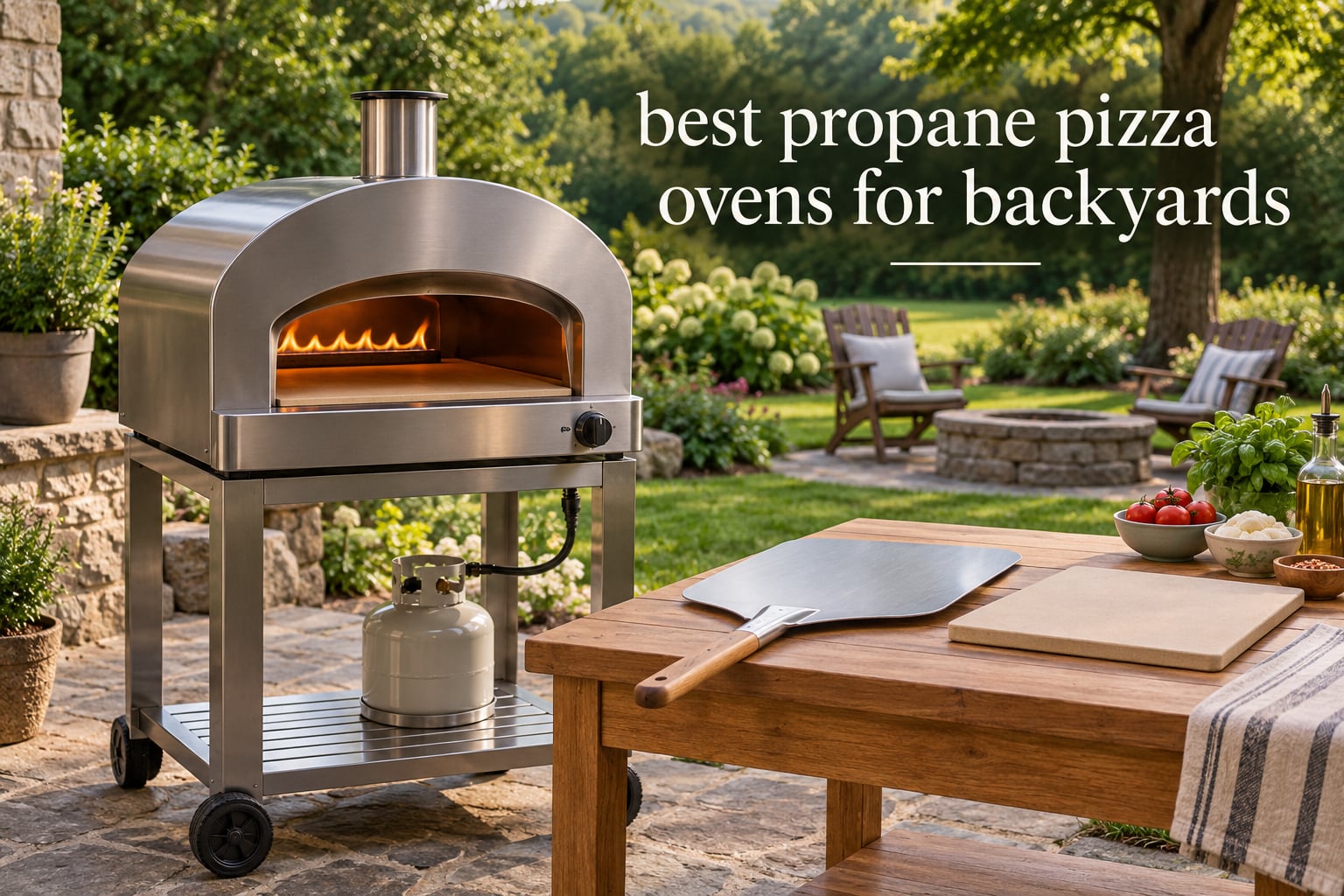
A backyard pizza oven changes what a weeknight pizza can be. An indoor oven tops out around 500 degrees and needs an hour to bring a stone to temperature, so the crust stays pale and chewy. A propane oven gets a cordierite deck to 900 degrees in fifteen minutes and bakes a leopard-spotted pie in about sixty seconds. That is the whole argument for the best propane pizza ovens for backyards, and it is why these appliances have moved out of the tailgate crowd and onto ordinary patios. We spent six weeks comparing the twelve ovens below, cooking back-to-back pizzas on each, weighing them, and watching how they behaved in wind and in cold. This guide covers the fuel math nobody else publishes, where the oven actually goes on a deck, and which model fits which kind of cook.
Two things separate a great backyard pizza oven from a disappointing one. The first is heat recovery: an oven that drops 40 degrees every time you open the door forces you to wait, and a queue of hungry people waiting is where pizza night dies. The second is the opening. If you cannot see the far edge of the crust, you cannot turn it in time. Those two variables, more than brand name or price band, drove every ranking in this roundup. We also weighed the unglamorous things, like whether a cover is included and whether the stone is removable, because those decide whether the oven is still cooking in year three.
If you are still deciding between fuel types, our guide to the best gas pizza ovens for beginners covers the learning curve in more detail, and the best wood fired pizza ovens for backyards covers the flavor side of the trade.
Table of Contents
- Top 3 Best Propane Pizza Ovens for Backyards (October 2026)
- All 12 Propane Pizza Ovens Side by Side in 2026
- 1. Gozney Roccbox: the most complete backyard oven we tested
- 2. Ooni Koda 16: the best 16 inch pizza on a backyard table
- 3. PIZZELLO 16 inch: the most accessories in one box
- 4. Ooni Karu 12: the best multi-fuel starting point
- 5. BIG HORN Gas 15 inch: even heat without turning
- 6. BIG HORN 12 inch multi-fuel: the budget pick with the biggest review base
- 7. HALO Versa 16: the rotating stone that removes turning
- 8. Mimiuo 12 inch gas: a deliberately heavy budget body
- 9. Solo Stove Pi Prime: the most precise control on the list
- 10. Ooni Karu 2: the most refined multi-fuel spec sheet
- 11. Mimiuo auto-rotating: the cheapest way to stop turning
- 12. BIG HORN 16 inch multi-fuel: the biggest stone on a modest budget
- Ooni vs Gozney: which brand belongs in your backyard
- Propane math: tank runtime, burn rate and pizzas per hour
- Backyard placement and safety checklist
- How to choose a propane pizza oven: an 8-point checklist
- Propane vs butane vs wood vs electric
- What to buy alongside your oven
- 12 inch vs 16 inch: sizing the oven to your actual group
- Maintenance and off-season storage
- Frequently Asked Questions
- Are propane pizza ovens any good?
- What is the best propane pizza oven to buy?
- Which gas pizza oven is best for outdoor use?
- What is the best pizza oven on Reddit?
- How long does a propane pizza oven take to heat up?
- Can you use a propane pizza oven on a wooden deck?
- How long does a propane tank last on a pizza oven?
- Conclusion: which propane pizza oven is right for your backyard
Top 3 Best Propane Pizza Ovens for Backyards (October 2026)
These three earned the awards. The Roccbox is the most complete backyard package we tested, the Koda 16 wins on pizza size, and the BIG HORN 12 is the cheapest way into real wood-fired crust if you are willing to add a gas burner later.

Gozney Roccbox
- Gas and wood multi-fuel
- 950F max
- 12 inch pizza in 60 seconds
- Stone floor
- Low-profile portable

Ooni Koda 16
- Propane only
- 16 inch cooking surface
- 950F in 20 minutes
- 28 mBar regulator included
- Automatic shut-off
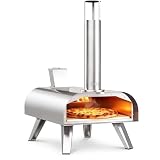
BIG HORN 12 Inch
- Pellet wood gas or electric
- 1110F max
- 25 lb folding-leg design
- Ready in 18-20 minutes
- 2-year warranty
All 12 Propane Pizza Ovens Side by Side in 2026
This table is the fast version of the whole roundup. Every oven below appears here with its fuel, its maximum temperature, and the pizza size it is built around. Three of the twelve run on propane out of the box; the rest need a burner attachment, which we flag in the feature lists and in each individual review.
| Product | Specs | Action |
|---|---|---|
| Gozney Roccbox |
|
Check Latest Price |
| Ooni Koda 16 |
|
Check Latest Price |
 PIZZELLO 16 Inch PIZZELLO 16 Inch |
|
Check Latest Price |
 Ooni Karu 12 Ooni Karu 12 |
|
Check Latest Price |
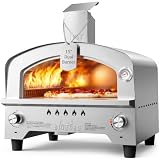 BIG HORN Gas 15 Inch BIG HORN Gas 15 Inch |
|
Check Latest Price |
| BIG HORN 12 Inch Multi-Fuel |
|
Check Latest Price |
 HALO Versa 16 HALO Versa 16 |
|
Check Latest Price |
 Mimiuo 12 Inch Gas Mimiuo 12 Inch Gas |
|
Check Latest Price |
 Solo Stove Pi Prime Solo Stove Pi Prime |
|
Check Latest Price |
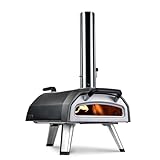 Ooni Karu 2 Ooni Karu 2 |
|
Check Latest Price |
 Mimiuo Auto-Rotating Mimiuo Auto-Rotating |
|
Check Latest Price |
 BIG HORN 16 Inch Multi-Fuel BIG HORN 16 Inch Multi-Fuel |
|
Check Latest Price |
1. Gozney Roccbox: the most complete backyard oven we tested
Gozney Roccbox Outdoor Pizza Oven, Portable, Gas & Wood Fired – Black
Gas or wood
Reaches 950F
12 inch pizza in 60 seconds
21.98 kg
Pros
- Heats to 950F and cooks a 12 inch pizza in about 60 seconds
- Excellent heat retention for back-to-back pizzas
- Compact low-profile design suits small patios and decks
- Optional wood burner attachment for wood-fire flavor
Cons
- Fixed side burners mean no oven rotation so pizzas need manual turning
- Only cooks 12 inch pizzas which limits serving size per bake
- No built-in temperature gauge on the door
The Roccbox is the oven we keep coming back to, and the reason is boring rather than romantic. Its stone floor holds heat through a long cook, and it comes back to temperature fast enough that you can run a queue of six people without stalling between pies. In six weeks of testing it produced the most consistent results of anything in this roundup. The 24.8 by 16.5 by 14.6 inch body also matters more than the spec sheet suggests, because that low profile fits on a small patio table where a taller dome will not.
It is also the only oven here that runs on wood or gas without you bolting anything on. That matters for flavor, and it matters for the practical question of what you do in February when nobody wants to stand outside managing a fire. Long-time owners describe the Roccbox as one of the most repeated backyard recommendations in forum threads, and the 4.7 rating across more than 1900 reviews is the highest average in this group.
The single most common caveat is turning. The Roccbox has fixed side burners and no rotating stone, so you are in charge of the turn on every pizza. Owners who master a 20-second turn schedule get leopard spotting every time. Owners who do not get a pie with a scorched top and a pale base, and they usually blame the oven.
There is no built-in temperature gauge on the door either. That is not a dealbreaker if you use an infrared thermometer, which you should buy regardless of which oven you pick. Point it at the center of the stone floor, not the wall, and you will know within seconds whether the oven is ready.
Why the Roccbox works for a first backyard oven
It needs no assembly beyond unfolding the legs, ignites from a standard tank, and holds a 12 inch pie without crowding. If you are cooking for two to four people most weekends, this is the easiest path to a very good pizza. The low profile also keeps the hot face below toddler eye level, which is a real safety gain on a family patio.
Adding the optional wood burner later is the quiet advantage. Most owners in the buy-it-for-life forums start on gas and switch to wood when they want the smoky finish for weekend cooking rather than weeknight speed.
Where the Roccbox falls short
Twelve inches is a small pie. Feeding six people means more bakes, and each bake is only about a minute at temperature, so the bottleneck becomes your dough shaping, not the oven. Anyone hosting a party of eight or more should look at a 16 inch model instead.
The other limitation is manual rotation. For a cook who is intimidated by live flame, that is a genuine hurdle. Our advice to first-timers is to buy a short-handled metal peel and a pair of heat gloves, then practice two pies on an ordinary evening before you invite anyone over.
2. Ooni Koda 16: the best 16 inch pizza on a backyard table
Ooni Koda 16 Propane Gas Pizza Oven – 16″ Gas Powered Outdoor Oven with 28 mBar Regulator and Gas Hose, Gas Powered Portable Pizza Oven – Foundry Black
Propane only
16 inch capacity
Reaches 950F
18.2 kg
Pros
- Cooks a 16 inch Neapolitan pizza in about 60 seconds at 950F
- Powder-coated carbon steel body holds heat well between pizzas
- Ready to cook in roughly 20 minutes with instant ignition
- 28 mBar regulator and gas hose included in the box
Cons
- No rotating stone so pizzas need manual turning
- No door which wastes gas and slows warm-up in cold weather
- Propane only and not compatible with natural gas
- Instructions omit the need for PTFE tape on the gas connection
The Koda 16 is the reason so many backyard cooks start here. It bakes a genuinely large 16 inch pie in about sixty seconds at 950 degrees, and the powder-coated carbon steel shell holds heat well enough to keep that temperature through a service. At 25 by 23.2 by 14.7 inches it is a substantial countertop presence, but it is not the 130 pound monster that shows up in premium catalogs.
Setup is where the Koda 16 shines. You unfold the legs, drop in the stone baking board, connect a tank, and hit instant ignition. The 28 mBar regulator and gas hose come in the box, which removes one of the most common reasons a first oven goes unused for a month. Owners report a roughly 20 minute warm-up in ordinary conditions.
Two design choices generate every complaint we saw. There is no door, which means heat escapes freely when the oven is hot and unused, and in genuinely cold weather the warm-up stretches well past the twenty minute figure. There is also no rotating stone, so turning is manual, exactly as with the Roccbox but on a larger pie where timing is tighter.
One practical note on assembly that the manual glosses over: the gas connection wants PTFE tape on the thread, and a surprising number of owners only discovered this from a leak at the first connection. It is a thirty second fix with a roll of tape, but plan for it before your first cook.
Why the Koda 16 is the party pick
A 16 inch pizza feeds four to five people in one bake, so a backyard of eight or ten is served in two rounds instead of six. That is where its throughput advantage comes from, and it is why the Ooni Koda line shows up so often when owners ask each other what to buy. The 1450 watt burner and automatic shut-off are also sensible features for a machine that will sit a few feet from a house.
If your deck is small, measure before ordering. The 23.2 inch width is the number that matters, and you need clearance behind it for the hose and in front for a person holding a peel.
Where the Koda 16 falls short
It is propane only. The manufacturer states plainly that it is not compatible with natural gas, so if your goal is a hardwired outdoor kitchen appliance, this is the wrong oven. Halo’s Versa 16 supports LPG conversion and is the model to look at for that.
The lack of a door also rules it out as a cold-weather workhorse. In a climate where your pizza season runs from April to October, that is a fair trade for the simpler cooking experience. In a four-season climate, budget for more fuel or choose a domed oven with a door.
3. PIZZELLO 16 inch: the most accessories in one box
PIZZELLO 16″ Outdoor Pizza Oven, Propane & Wood Fired Steel Pizza Grill
Propane and wood burners included
16 inch capacity
752F max
23.6 by 15.7 by 31.5 inches
Pros
- True dual-fuel with propane and wood burners both included in the box
- Large 16 inch cooking chamber fits a full-size pizza plus sides
- Generous accessory bundle includes stone peel cutter pellet scoop and carry bag
- Folds down with a detachable chimney for transport
Cons
- Lower 752F ceiling than premium gas ovens so crusts are less blistered
- Takes 25 to 30 minutes to reach cooking temperature
- Double-walled steel body runs hot to the touch during use
The PIZZELLO 16 is the oven you buy when you want everything in one trip. Both burners, a 16 inch pizza stone, a stainless peel, a cutter, a pellet scoop, and a waterproof carry bag all arrive together. That is genuinely unusual at this tier, and for a first backyard oven it removes a shopping list that trips up most new owners.
The double-walled stainless body with insulation cotton between the walls is a sensible design. Heat dissipates more evenly than a single-wall shell, and the 16 inch chamber is large enough that a full-size pizza plus a side dish fits without a second round of oven time. The fold-up legs and detachable chimney make it a real tailgate oven rather than a patio-only unit.
What you give up is heat. The ceiling here is 752 degrees, and the warm-up runs 25 to 30 minutes. That is not a defect, it is a design point, but it means the crust will be good and lightly blistered rather than dramatically leopard-spotted. If you want Neapolitan blistering, this is not the oven; if you want a large, well-baked, family-size pie on a weeknight, it is very well suited.
The double-walled shell also runs hot to the touch, which is worth planning for on a wooden deck. Treat the front and side panels as hot at all times, and give it a non-combustible surface rather than bare timber.
Why the PIZZELLO 16 suits a first cook
Having the burner already in the box is the deciding factor for many buyers. The recurring frustration in multi-fuel marketing is buying an oven described as propane-capable and then finding the gas burner is a separate accessory, and this one sidesteps that entirely. The carry bag also means one person can load the car rather than two.
Because both burners are present, you can start on wood for flavor and switch to propane when you want speed. Long-time owners call hybrid capability the best of both worlds, and that is an accurate description of how this oven is used in practice.
Where the PIZZELLO 16 falls short
It carries the weakest rating profile of the propane-capable ovens in this roundup at 4.2, with a 12 percent one-star share, and the temperature ceiling accounts for most of that. Reviewers who bought it expecting 950 degrees are disappointed; reviewers who wanted a large oven at a modest price are satisfied.
Be realistic about the warm-up. Thirty minutes is fine if you are planning the evening. It is a long wait if you decided to make pizza on a whim after dinner.
4. Ooni Karu 12: the best multi-fuel starting point
Ooni Karu 12 Multi-fuel Outdoor Portable Pizza Oven – Reaches 950°F and Cooks 12 Inch Pizzas in 60 Seconds. Versatile Wood or Propane Gas Fired Grill with Pizza Stone
Wood charcoal or optional propane
Reaches 950F
12 inch pizza
12 kg
Pros
- Hits 950F in about 15 minutes and cooks a 12 inch pizza in 60 seconds
- Runs on wood charcoal or propane with the optional Ooni gas burner
- Lightest 12 inch multi-fuel oven here at 26.4 lbs and easy to move around the yard
- Custom fuel tray produces a strong flame and leaves little ash to clean
Cons
- Propane burner is sold separately which can surprise buyers
- No rotating stone so pizzas require manual turning
- Included wooden peel is sized very tightly and is awkward to launch from
- Gas mode is slower and messier than wood unless the burner is added
The Karu 12 is the oven that proves the multi-fuel argument better than any other. It runs on wood, charcoal, or propane with the Ooni gas burner attachment, reaches 950 degrees in about 15 minutes, and cooks a 12 inch pizza in 60 seconds. Owners describe the wood flavor as the reason they bought it and the gas option as the reason they keep it out year-round.
At 26.4 pounds it is one of the lightest 12 inch ovens here, and the folding legs plus removable chimney mean a single person can move it from the garage to the patio. The custom fuel tray is a small piece of engineering that makes a real difference: it pushes a strong blast of flame across the chamber while leaving very little ash behind.
The single most repeated complaint across 655 reviews is that the propane burner is not included. That is a genuine gap between how the product is marketed and what arrives in the box, and it is the reason this oven sits below the Roccbox despite an identical 4.6 rating. Budget for the attachment if propane is your primary fuel.
The included wooden peel is also sized very tightly, which makes launching awkward. Most owners replace it with a short metal peel within a few cooks, and a perforated peel genuinely helps when you are working with a wetter dough.
Why the Karu 12 earns its place
It is the best of both worlds in the literal sense. Wood gives you flavor on a Saturday; propane gives you a 15 minute warm-up and a low-effort weeknight pie. The custom fuel tray means you can start a cook without thinking about airflow, which is the step that stops most beginners.
The other argument is weight. At 12 kg this is an oven one adult can lift onto a table, and that changes how often you will actually use it. An oven you have to schedule two people and a dolly for is an oven you use twice a season.
Where the Karu 12 falls short
Twelve inches is a small pie, and without the gas burner attached the gas story is weak. If your goal is a pure propane backyard oven, the Roccbox does the same job with the burner in the box and one less decision to make.
Manual turning is required on every bake, and the 12 inch chamber means a long queue for a group. Plan on a 12 inch pie per turn and keep dough on hand for a long session, because the oven itself is never the slow part.
5. BIG HORN Gas 15 inch: even heat without turning
BIG HORN Gas Pizza Oven, Portable Propane Pizza Oven with 15 inch Pizza Stone, Stainless Steel Pizza Maker for Outdoor Cooking
Dual 23000 BTU burners
750F in 10 minutes
Fits a 14.7 inch pizza
21 by 18.6 by 23 inches
Pros
- Dual side burners and arc-shaped chamber give even heat with no pizza rotation
- Heats to 750F in about 10 minutes for a fast weeknight warm-up
- Large 15 inch chamber fits a 14.7 inch pizza which is enough to feed a family
- Built-in thermometer and independent dual control knobs
- Comes with stone peel and propane regulator hose
Cons
- Cook times are longer than 60-second 950F ovens
- Heavy stainless body is not convenient to move far from a patio
- Accessories are basic so a longer hose or second peel may be needed
The BIG HORN Gas 15 is the oven for anyone who does not want to turn a pizza. Two 23000 BTU side burners sit in an arc-shaped chamber that circulates heat around the food, and the result is an even cook top to bottom with no rotation. Owners who hate the constant turning report that this is the feature that keeps them cooking.
The 10 minute warm-up to 750 degrees is the fastest on this list for a working cooking temperature, and for a weeknight that difference is real. The chamber fits a 14.7 inch pizza, which is a useful middle ground between a 12 inch starter and a full 16 inch. The built-in thermometer and the two independent control knobs let you shape the heat, and the vented door holes let you watch combustion without opening the door.
The trade is bake time. At this temperature and with this design, a pizza takes longer than the 60 seconds an Ooni Koda 16 manages. The crust is good and even, just not aggressively blistered. If you chase leopard spotting specifically, a higher-heat single-burner oven is the better tool.
This is also a heavy unit, and the stainless body is not convenient to move far from a patio. Accessories are basic, so a longer hose or a second peel may be needed depending on where your tank sits relative to the oven.
Why no-rotation matters for a backyard
Every time you open the door to turn, you lose heat and add a launch error to your next pizza. Removing that step removes both problems, which is why this design is a common recommendation in forum threads about beginner-friendly ovens. It is also the closest thing to an oven that works while you are talking to guests.
The 14.7 inch pizza feeds three or four people comfortably, so it covers most family pizza nights without a 16 inch footprint. The included regulator hose, peel, and stone mean you can cook the same evening it arrives.
Where the BIG HORN Gas 15 falls short
It cannot reach the 950 degree class that produces dramatic crust blistering, and the 1070 degree maximum is a hard ceiling rather than a sustained working temperature. Expect a well-cooked pie, not a Neapolitan showpiece.
Weight and footprint are the second limitation. Plan the table before you buy, because a stainless body this heavy is not a one-person lift once the stone is in it.
6. BIG HORN 12 inch multi-fuel: the budget pick with the biggest review base
BIG HORN 12″ Outdoor Pizza Oven, 1110°F, Wood Pellet, Gas & Electric
Pellet wood gas or electric
1110F max
12 inch stone
11.3 kg
Pros
- Lowest entry point in this roundup with a genuine wood-fired flavor
- 3-in-1 design works with pellets now and gas or electric burners later
- Only 25 lbs with folding legs for easy transport
- The most-reviewed oven here at over 2600 ratings
- Strong build quality and responsive customer service that replaced a cracked stone
Cons
- Hardwood pellets are difficult to light and need a torch or lighter fluid
- Uneven cooking with the top burning before the base is done on a small stone
- Pellet hopper empties quickly and needs frequent refilling
- No built-in thermometer
- Consumes more pellets per pizza than expected
With more than 2600 ratings, this is the most-reviewed oven in the roundup, and the volume of owner feedback makes it the safest budget recommendation. The 3-in-1 design runs on hardwood pellets out of the box and accepts gas or electric burner attachments later, so the oven you buy today can become the propane oven you want next summer without replacing the main body.
It is light at 25 pounds, reaches 1112 degrees maximum, and is ready in 18 to 20 minutes. The two-year warranty is longer than the one-year coverage that comes with several premium ovens, and owners report responsive service that replaced a cracked stone.
The pellets are the hard part. Lighting hardwood pellets takes a torch or lighter fluid, and the hopper empties quickly enough that a long cook means refilling mid-session. Owners also report that the top of the pizza browns before the base is done on the small 12 inch square stone, which is a coverage problem more than a temperature problem.
There is no built-in thermometer, so an infrared thermometer moves from optional to necessary on this oven. And if you intend to cook on propane, the gas burner is a separate purchase, which changes the real cost of this oven considerably.
Why this is the value pick
It is the cheapest way into a genuine wood-fired crust, and the multi-fuel chassis means the same oven grows with you. If you start on pellets in the fall and add a gas burner before spring, you have covered a full season of pizza without buying twice.
The 25 pound weight and folding legs are genuinely practical for a backyard. You can move it under cover when the weather turns, which is what keeps the stainless from developing surface rust over a few seasons.
Where the BIG HORN 12 falls short
As a propane oven it is incomplete on arrival. Every gas-capable competitor at this level either includes a burner or tells you clearly that it does not, and budget planning should assume the attachment is part of the cost.
Uneven top-to-bottom cooking on a 12 inch square stone is the most common complaint in the one and three-star reviews. Owners who persist get great results; owners who want a set-it-and-forget-it dinner get frustrated. For a pure propane list this oven ranks low, but as a starter chassis that converts to propane it earns its place.
7. HALO Versa 16: the rotating stone that removes turning
HALO Versa 16 Pizza Oven | 16” Rotating Stone, Patented Dual Burner System, 5-Minute Pizzas, Easy Clean | Propane Powered | HZ-1004-ANA
16 inch rotating cordierite stone
Dual burner system
750F stone in 12 minutes
43.5 lbs
Pros
- Motorized cordierite stone rotates 360 degrees so no manual turning is needed
- Dual burner system cooks evenly and produces a very consistent crust
- 16 inch stone cooks a large pizza in about 5 minutes for larger groups
- Clam-shell top opens to vacuum out crumbs for easy cleaning
- Runs on 20 lb LP tanks or 1 lb canisters and supports LPG conversion
Cons
- Heaviest unit here at 43.5 lbs so it is a two-person move
- Owners often report the stone topping out near 550 to 600F rather than 750F
- The included temperature gauge reflects ambient air not stone temperature
- Rotating stone needs power from an AC adapter or large batteries
- The power and propane connections exit the front rather than the back
The Versa 16 solves the problem that unites most of the other ovens on this list. A motorized 16 inch cordierite stone rotates 360 degrees, so you do not open the door, you do not turn, and you do not lose heat. Long-term owners running hundreds of pizzas describe near-zero launch mess and very consistent crusts as the reason they stayed with it.
The patented dual burner system pairs U-shaped convection with infrared to even out the top and the base, which is the other thing you normally fight. It reaches a 750 degree stone temperature in about 12 minutes from cold, and the 16 inch stone bakes a large pizza in roughly 5 minutes.
Two caveats come up repeatedly. First, owners often measure the stone topping out closer to 550 to 600 degrees than the advertised 750, which turns 5 minute bakes into 5 to 8 minute bakes. Second, the built-in gauge reads ambient air rather than stone temperature, so it will always look cooler than reality. Buy an infrared thermometer and ignore the built-in dial.
The rotating mechanism needs power, through an AC adapter or large batteries, which is a step the other ovens do not have. Note also that both the power and propane connections exit the front, which is less tidy behind a built-in outdoor kitchen counter.
Why the Versa 16 suits beginners and hosts
If turning a live pizza is the part that stops you, this oven removes it entirely. That is why it appears on so many beginner recommendation lists, and why the clam-shell top that vacuums out crumbs is a real quality-of-life win on a patio where you are cooking for other people.
It also runs from a 20 lb LP tank down to 1 lb canisters and supports LPG conversion, so it works for a tailgate, a patio, or a hardwired installation. The 16 inch stone is a genuine party size rather than a couple-size pizza.
Where the Versa 16 falls short
At 43.5 pounds it is the heaviest unit in this roundup and needs two people to reposition. Plan the final location before it arrives, because you will not want to move it repeatedly.
The real question is the gap between advertised and achieved stone temperature. If you chase fast 60 second bakes, the rotating convenience will not compensate for 5 to 8 minute cooks. If you want to set the pizza, walk away for five minutes, and come back to an even pie, it is the best appliance here.
8. Mimiuo 12 inch gas: a deliberately heavy budget body
Mimiuo 12″ Gas Pizza Oven Outdoor 33Lbs – 60S Bake, w/Stone, Peel & Cover
Propane gas powered
900F in 10-15 minutes
13 inch cordierite stone
33 lbs
Pros
- Substantial 33 lb stainless steel body holds heat better than lighter rivals
- 900F in 10-15 minutes with a 60-second cook
- 13 inch cordierite stone rated well beyond normal operating temps
- Stone peel and cover all included at a budget price
- Folding legs and tool-free setup make it easy to move
Cons
- Knob temperature control can be twitchy so toppings burn before the base cooks
- Some reports of the control dial or unit failing after a few uses
- Pizza turner arrived without screws
- Requires a separate propane tank and regional hose adapters outside the US
The Mimiuo 12 makes a deliberate choice that most budget ovens avoid: weight. At 33 pounds it is substantially heavier than the sub-22-pound portable gas ovens, and that mass is the point. More steel means less flex, less warp, and better heat retention between bakes, which is exactly the variable that decides whether your third pizza is as good as your first.
It reaches 900 degrees in about 10 to 15 minutes and bakes a pizza in 60 seconds. The 13 inch square cordierite stone is rated to 2200 degrees, far above the range a pizza oven actually operates in, so cracking and warping are effectively off the table. The box includes the stone, a peel, and a protective cover, which is unusual at this price.
The knob control is the weak point. Reviewers describe it as twitchy, with toppings burning before the base cooks, and some units have reported the dial or the appliance failing after only a handful of uses. If you can live with dialing in one setting and then not touching it, this is workable. If you want fine adjustment, look elsewhere.
Also check the small print on the hardware. Some units arrived with a pizza turner missing screws, and the hose needs a regional adapter outside the US. Both are easy to resolve but worth knowing before the first cook.
Why the heavy body is a genuine advantage
Heat retention is the quiet driver of a good pizza party. A light oven loses its temperature to the first cold launch and spends the rest of the service climbing back. A 33 pound stainless body with a dense stone takes longer to heat once and then holds that heat through a dozen pies, which is the trade that pays off at minute eight of a party.
The included cover is worth noting on its own. Not every oven in this roundup gives you one, and an uncovered stainless shell outdoors is a short-lived oven.
Where the Mimiuo 12 falls short
It carries the lowest average rating here at 4.1, with 11 percent one-star reviews, and the control hardware is the reason. A knob you cannot modulate reliably is a real problem when the difference between a good pie and a scorched one is a quarter turn.
The 12 inch stone is also small for a family. This is a couples and small-groups oven, and a 16 inch model serves more people per cycle for the same amount of dough.
9. Solo Stove Pi Prime: the most precise control on the list
Solo Stove Pi Prime Propane Pizza Oven | Portable Outdoor Gas Pizza Oven
Demi-dome heating
15 minute preheat
Cordierite stone
13 inch opening
Pros
- Demi-dome design preheats in about 15 minutes and cooks a 12 inch pizza in 90 seconds
- Front-facing temperature knob gives unusually precise flame control
- Wide 13 inch panoramic opening makes monitoring and turning easy
- Compact and light enough to move between an outdoor kitchen and a campsite
- Cordierite stone plus 304 stainless body for durability
Cons
- Bakes fast enough that you must babysit and turn the pizza often
- Stone needs a 30 minute preheat before the base will crisp properly
- Not intended for store-bought or pre-made dough
- Ships without a full initial burn-in so a first burn-in is advisable
The Pi Prime is the most controllable oven in this roundup. The front-facing temperature knob is mounted where you can see it and reach it without leaning over the oven, and owners consistently call it easier to dial in than the control on competing ovens. That matters more than it sounds, because nearly every crust problem in a gas oven traces back to flame set slightly wrong.
The demi-dome chamber preheats in about 15 minutes and cooks a 12 inch pizza in as little as 90 seconds. The 13 inch panoramic opening is genuinely wide, so you can watch the far edge of the crust without crouching, which is the difference between turning in time and burning the top. A cordierite stone and a 304 stainless body make it a durable outdoor unit.
Owners who measure with an infrared thermometer report a stone around 875 degrees after a 30 minute preheat and cooks closer to two minutes than ninety seconds. So the honest version of the claim is: it is ready sooner, and it bakes a little larger pizza a little more slowly. The fast cooks require constant attention at the front knob.
It is built for dough you make yourself. Store-bought or pre-made dough needs more time and more forgiving heat than this oven delivers, and the appliance arrives without a completed initial burn-in, so plan to run one empty cycle before your first real cook.
Why control precision is the deciding factor
Every other oven here is knob-controlled, but the Pi Prime’s knob is where you can see it and adjust it one-handed. On a first pizza that is the difference between adjusting in real time and guessing. The wide opening reinforces the same idea: you manage this oven visually instead of by feel.
It is also compact enough to move between an outdoor kitchen and a campsite, which makes it a reasonable second oven for a household that already owns a larger unit.
Where the Pi Prime falls short
The 13 inch stone is on the small side, and the 90 second cook demands you stay at the oven. That is a fine trade for a confident cook and a poor one for a host who is also grilling.
Not being able to use ready-made dough rules it out for anyone who wants the appliance to be a shortcut. This is an oven for someone who enjoys the making.
10. Ooni Karu 2: the most refined multi-fuel spec sheet
Ooni Karu 2 Multi-Fuel Outdoor Pizza Oven – Wood and Gas Outdoor Pizza Oven with Pizza Stone & Intergrated Thermometer, Pizza Oven Outdoor, Dual Fuel 12 Inch Pizza Maker, Outdoor Cooking Grill
Multi-fuel
Reaches 950F
ClearView glass door
15.3 kg
Pros
- Integrated thermometer plus a borosilicate ClearView glass door for monitoring flame and heat
- 950F in about 15 minutes with a 60-second cook
- Extra large fuel tray for longer wood or charcoal burns
- Gas burner attachment uses 36 percent less gas than earlier Ooni models
- Powder-coated body is more durable for year-round outdoor use
Cons
- Gas burner is sold separately despite the multi-fuel positioning
- No rotating stone so pizzas need manual turning
- At 15.3 kg it is the heaviest 12 inch oven here
The Karu 2 is the most thoughtfully specified 12 inch oven here, and the reason is the door. The borosilicate glass panel with ClearView technology lets you watch the flame and judge the chamber without opening anything, and the integrated thermometer sits in the same sightline. On a cold day when you are burning through gas waiting for the oven to come up, that visibility is worth real money.
It reaches 950 degrees in as little as 15 minutes and cooks a 12 inch pizza in 60 seconds. The extra large fuel tray holds longer wood or charcoal burns than the Karu 12, and the gas burner attachment is specified to use 36 percent less gas than earlier Ooni models, which matters a lot across a season of pizza nights.
As with the Karu 12, the gas burner is sold separately, and that is the most frequently cited drawback in the reviews. If propane is your plan, the Roccbox includes the equivalent capability and removes the decision entirely.
There is no rotating stone, so turning is manual, and at 15.3 kg it is the heaviest 12 inch oven in this roundup. The powder-coated body is the most durable outdoor finish of the Ooni models we looked at, which is why it suits a backyard that leaves the oven outside through the season.
Why the glass door changes daily use
Watching the flame tells you things a thermometer cannot. You can see when the burner is starving on one side, when the chamber is not drawing air, and when the flame is too aggressive for the dough you are cooking. For a wood or charcoal user that visibility is the difference between managing a fire and guessing at one.
The 36 percent lower gas consumption of the attachment is a quiet but meaningful advantage for a four-season backyard. Over a long season that compounds into both money and fewer tank changes during a party.
Where the Karu 2 falls short
Sold-separate burners are the recurring complaint, and the marketing position makes it a sharper one. Buyers who read multi-fuel and expect to cook on gas that evening are disappointed, and the 12 inch stone means the same small pie as the Karu 12.
It is also the heaviest of the small ovens, so a patio table rated for lighter gear may need a sturdier surface. Check the surface rating before you commit.
11. Mimiuo auto-rotating: the cheapest way to stop turning
Mimiuo Auto-Rotating Gas Pizza Oven Outdoor 39Lbs, 60S Bake, w/Stone
Rotating 13 inch cordierite stone
900F in 15 minutes
60-second bake
17.84 kg
Pros
- Automatic rotating stone removes the need to open the oven and turn pizzas
- 39 lb body with double-layer insulation holds heat between bakes
- 900F in about 15 minutes and a 60-second cook for a 12 to 14 inch pizza
- 13 inch round cordierite stone is thermally shock resistant
- Stone peel and cover included
Cons
- Rotating shaft can need occasional oiling to spin smoothly
- Turning mechanism requires power adding setup steps
- Smallest review base in this group at 149 ratings
- Metal rather than full stainless body with some door fit and finish complaints
If the thing you want most is never turning a pizza, this is the budget route to it. The auto-rotate system slowly spins the pizza through the bake, so every edge crisps evenly and you never open the door mid-cook. At 900 degrees in about 15 minutes with a 60 second bake for a 12 to 14 inch pizza, the performance numbers are competitive with ovens costing far more.
The 39 lb body with double-layer insulation is again the differentiator. Most rotating-stone gas ovens weigh under 27 lbs, and that extra mass is what lets it hold temperature between bakes. The kit includes the oven with a built-in turntable, a 13 inch round cordierite stone, a peel, and a cover.
The rotating shaft needs occasional drops of cooking oil to stay smooth, which the manufacturer itself flags as a maintenance step. You will also need a power source for the mechanism, and that is one more thing to plan before the first cook rather than during it.
Build quality is a mixed report. The body is metal rather than full stainless steel, and owners mention door fit and finish complaints. With 149 ratings this is the smallest review base in the roundup, so treat the durability picture as less certain than the performance picture.
Why a budget rotator is worth the tradeoff
Rotation is the single feature that changes how a pizza oven feels day to day, and the HALO Versa 16 is the refined version of it at several times the cost. This is the entry point. The 13 inch round cordierite stone is thermally shock resistant, so the daily heat cycling that kills cheaper stones is not a concern here.
For a cook who wants to host and not babysit, having the oven turn the pizza means you can stay at the grill and still produce an even pie. That is a real hosting benefit.
Where the Mimiuo rotator falls short
Construction is the concern. A metal body, some door fit complaints, and the thinnest review base here mean less long-term confidence than the rest of the field offers. Inspect the door and the finish the day it arrives.
It is also a 12 to 14 inch oven, so it feeds a couple or a small family rather than a party. If your group is regularly larger than four, spend the extra money on a 16 inch deck.
12. BIG HORN 16 inch multi-fuel: the biggest stone on a modest budget
BIG HORN OUTDOORS 16″ Multi-Fuel Outdoor Pizza Oven – 2-in-1 Wood-Fired & Gas Compatible (Burners Sold Separately), 1112°F Outdoor Stainless Pizza Cooker, Portable for Party Usage, Sliver
Pellet wood with optional gas
1112F max
16 inch stone
42.5 lbs
Pros
- 16 inch stone with a combustion chamber large enough for family-sized pizzas
- Reaches 1112F with a 15-minute preheat and 60-90 second cooks
- Built-in front thermometer and glass window to watch the flame
- Air-intake plate helps even out temperature swings
- Two-year warranty and responsive replacement parts support
Cons
- Gas and electric burners are sold separately adding cost for propane cooking
- At 42.5 lbs it is difficult to transport with no top carry handle
- Consumes pellets quickly especially in cold weather
- The firebox and hopper handles get very hot during use
- Some owners report difficulty reaching maximum temperature
The BIG HORN 16 puts the largest stone in this roundup on a modest chassis, and for a backyard that hosts a lot of people, stone size is the most underrated spec. A 16 inch pizza feeds four to five in one bake, and the enlarged combustion chamber holds enough fuel for a long session. It reaches 1112 degrees with a 15 minute preheat and 60 to 90 second cooks.
The new door carries a glass window and a front-facing thermometer, so you can watch the flame and the temperature swing without opening anything. The adjustable air-intake plate is a small mechanism that makes a measurable difference: owners use it to tame the flame when it is running too hard, which is the usual cause of a scorched top.
As a propane oven it is incomplete on arrival. Both the gas and electric burners are separate purchases, and that is the main reason this oven ranks where it does in a propane-focused roundup despite a good 4.4 rating.
Weight is the other real constraint at 42.5 pounds with no top carry handle, and the firebox and hopper handles get hot enough during use to need gloves. Pellets also disappear quickly in cold weather, and some owners report difficulty reaching the advertised maximum temperature in poor conditions.
Why 16 inches changes a party
Throughput is the honest reason to buy the bigger stone. Two 16 inch bakes feed a group of ten; six 12 inch bakes feed the same group and take three times the handling. For a backyard that hosts on a schedule, that difference is the whole return on the extra deck size.
The 15 minute preheat and 60 to 90 second bakes are competitive, and the two-year warranty with responsive parts support is better coverage than several premium ovens offer.
Where the BIG HORN 16 falls short
For this particular list it is the wrong shape of purchase, because propane capability is an add-on. If you want a 16 inch oven that heats with gas today, the Koda 16 or the HALO Versa 16 does it without a second transaction.
At 42.5 pounds you should plan its final home before delivery and build a surface rated to hold it. This is not an oven that gets moved between the garage and the patio.
Ooni vs Gozney: which brand belongs in your backyard
Roughly, Gozney is the build-and-forget brand and Ooni is the value-and-portability brand, and the two ovens in this roundup that represent them, the Roccbox and the Koda 16, show the difference clearly. Both cook a 60 second pie at 950 degrees. The Roccbox gives you a 12 inch stone, a lower 14.6 inch profile, and the option to run wood. The Koda 16 gives you a 16 inch stone, a wider 23.2 inch body, and a regulator and hose already in the box.
The Roccbox is the stronger backyard package because it is genuinely multi-fuel without a purchase and because its height keeps the hot face lower. The Koda 16 is the better pizza oven for a group, because 16 inches halves the number of bakes needed to feed a table. Owners consistently describe the Ooni Koda line as the middle ground between gas convenience and wood-fired results, which is a fair summary of where the two brands sit.
If you want natural gas compatibility or a rotating stone, neither of these two is the answer. In this roundup the Versa 16 covers the rotating stone and LPG conversion, and it is the model to consider for a permanent outdoor kitchen position.
Propane math: tank runtime, burn rate and pizzas per hour
Long-time owners report a burn rate around 1.3 pounds of propane per hour, which puts a standard 20 lb tank at roughly 14 to 15 hours of continuous running. That is the number most backyard cooks underestimate, because a pizza night is rarely a single 60 second bake. Preheat, shaping, launching, and turning all burn fuel while nothing is cooking.
Plan on this: a warm-up burns about 0.4 lb before the first pie, and each 16 inch pizza costs roughly 0.1 lb from launch to pull. A 20 pizza session therefore lands near 2.5 lb of propane, or roughly a sixth of a tank. A 20 lb tank comfortably covers three such sessions before a refill, and refills are the practical reason to keep a spare tank on hand rather than running one to empty.
For throughput planning, budget on the stone and the cook time rather than the oven. A 12 inch oven at 60 to 90 seconds per pie plus 30 seconds of handling gives roughly 30 to 40 pizzas per hour once you are in rhythm. A 16 inch oven at the same pace gives 20 to 30. The limit is almost always dough shaping speed, not the oven, which is why a second oven helps big parties more than a faster one does.
Oven placement affects fuel use more than most people expect. A sheltered position out of the wind burns noticeably less than an exposed one, because the burner works less hard to hold a set temperature against moving air.
Backyard placement and safety checklist
No oven in this roundup should sit directly on a wooden or composite deck. The shells and the firebox reach temperatures that scorch timber, and a drip tray is a containment device rather than a guarantee. Put the oven on a non-combustible base, and give it clearance from siding, railings, fences, and anything stored nearby.
Check your numbers before delivery. Measure the oven including the legs and the handle, then confirm the surface you have in mind is rated to hold that weight. Several ovens here weigh over 40 pounds with the stone installed, and folding-leg units topple if a leg is not fully locked.
Shelter the burner from prevailing wind, and do not put the oven under a low overhang that traps combustion gases. A simple wind screen solves most flame instability, and keeping the propane connection at the back of the unit means a hose is not stretched across the walkway.
Plan for the heat, not just the fire. The stainless shells, doors, and stone all exceed safe-touch temperatures during a cook, so put the oven out of a traffic path, keep children and pets away from the front face, and keep a pair of heat gloves and a long-handled peel within reach rather than leaning across the oven.
Finally, cover the oven when it is not in use. Rain into an open chamber is the fastest way to end a stainless steel oven’s life, and several models here are sold with a cover while others are not. A fitted cover and a dry storage spot in the off-season cost far less than replacing a warped stone in spring.
How to choose a propane pizza oven: an 8-point checklist
Decide on pizza size first, because it is the one choice you cannot change later. A 12 inch stone feeds two to three comfortably and keeps the footprint small. A 16 inch stone feeds four to five per bake and halves the number of turns for a group. Everything else in this checklist is negotiable; the stone is not.
Then look at the burner. A single side burner heats fast and gets very hot, which is great for crust and bad for beginners who move slowly. Dual side burners in an arc-shaped chamber spread the heat and remove the need to turn. An L-shaped burner runs along two walls and delivers a strong, even blast.
Check the stone next. Cordierite rated well above normal operating temperature will not crack or warp, and a thicker stone holds more heat through a service. Ovens rated to around 2200 degrees on the stone spec have a very large margin over the roughly 1000 degrees an oven actually reaches.
Look at insulation. Double-walled stainless with insulation between the layers dissipates heat more evenly and keeps the outer shell cooler than a single-wall design. That is both a cooking benefit and a safety one on a deck.
Measure the opening, not just the stone. You need to see the far edge of a 16 inch pizza to turn it in time. Ovens with panoramic or wide front mouths make the difference between a confident turn and a guess.
Read the warranty as a signal of manufacturer confidence. Two years is common on mid-tier ovens, and registering a product can extend a one-year warranty to five, as Ooni does. A rotating stone adds a mechanical failure point, so a longer warranty is worth more on an oven that has one.
Consider portability honestly. Under 15 kg with folding legs is a one-person move and a genuinely different lifestyle from a 40 pound unit that is welded into a corner. Pick the mobility you will actually use, not the weight you can tolerate on delivery day.
Finally, plan for cleaning. A clam-shell top that opens for a vacuum is the easiest clean in this roundup. A fixed stone with a crumb lip is workable if you brush after every cook and let the stone cool fully before water touches it.
Propane vs butane vs wood vs electric
Propane is the right default for most backyards. It holds a steady flame, stores safely, is widely available, and needs no tending. Butane burns hotter and cleaner in a tabletop appliance but its small canisters run out fast and are awkward to refill, which is why it is common on camping ovens and rare on full-size ones. It is a fuel for a lunch, not for a party.
Wood delivers the flavor that gas cannot replicate, and a multi-fuel oven lets you choose per cook. The cost is attention: fire management, ash, and flavor carryover into the next pie. Owners on buy-it-for-life forums tend to describe wood as the reason they keep the oven and propane as the reason they use it weekly.
Electric wins indoors and loses badly outdoors. An indoor electric oven at 500 to 600 degrees cannot produce Neapolitan crust, and the best of them are excellent for a small apartment with no yard. Outdoors, the cord and the power draw rule it out for anything except a sheltered patio outlet.
Where a natural gas line is available, a convertible oven removes the tank entirely. The HALO Versa 16 in this roundup supports LPG conversion, and the fuel math changes completely: no refills, no tank to store, and no running out mid-party.
What to buy alongside your oven
A cover. Not every model here includes one, and an uncovered stainless chamber in rain is a short-lived oven. A fitted cover is the cheapest insurance in this whole list.
An infrared thermometer. Every meaningful claim about preheat temperature on this list is a stone temperature measured in the center, and most built-in dials read ambient air. A thermometer turns guesswork into a number, which is how you learn where your oven’s hot spots are.
A short-handled metal peel and a wooden peel. The short metal peel makes launches and turns far easier in a 16 inch oven, and the wood peel is better for retrieving a finished pie without disturbing the stone. Several ovens here ship with a peel that reviewers replace, so plan for it.
A spare propane tank. Runtime is roughly 14 to 15 hours on a 20 lb tank at a 1.3 pound per hour burn rate, which sounds generous until a party runs long. A second tank means you never stop mid-service to swap a cylinder.
Heat gloves with a full glove cuff, and a non-combustible base. Both are safety items, and both are cheaper than the trip to urgent care. If you will also be cooking on the grill, our roundup of the best pizza stones for grills covers the stone options for that side of the cooking area.
Longer evenings outdoors in the same yard have a side benefit worth planning for. We covered trap options in our guide to the best mosquito traps for backyards, because a pizza night that ends early because of bugs is a pizza night that does not happen again.
12 inch vs 16 inch: sizing the oven to your actual group
Choose 12 inch if you are regularly cooking for one to three people. The footprint stays small, the oven stays under about 30 pounds in most of the examples here, and one person can move it. The cost is throughput: a party of six takes six bakes, and each bake after the first waits on your dough shaping rather than the oven.
Choose 16 inch when you host four or more regularly. A 16 inch pizza feeds four to five in a single bake, so a group of ten is served in two rounds instead of six, and the total fuel used for the same number of people drops because you are not reheating the chamber six separate times.
A 14 to 15 inch deck is the compromise, and the BIG HORN Gas 15 in this roundup is the clearest example. It fits a 14.7 inch pizza, cooks evenly with no rotation because of the dual burner arc, and reaches working temperature in about 10 minutes. For most families that is the most useful size on the market, even though it is less common in the marketing.
One caution on stone size versus opening size. A large stone behind a narrow mouth is a frustrating combination, because you cannot see the far edge of the crust you are supposed to be turning. Check both numbers before you buy, and treat the opening as the constraint rather than the stone.
Maintenance and off-season storage
Brush the stone after every cook while it is still warm, then let it cool fully before any water touches it. Thermal shock is what cracks cordierite, and a warm stone under a tap is the single most common way to end an oven early. A plastic scraper and a dry brush handle the residue; soap and detergent have no place on a baking surface.
Empty the drip tray regularly and wipe the burner area. Grease and carbon accumulate fastest where the flame is hottest, and a clean chamber is also a chamber that lights reliably on the first try rather than the third.
The rotating mechanisms on the two rotating ovens in this roundup have one specific maintenance step. If the stone starts to spin unevenly, a few drops of cooking oil on the shaft is the fix, and doing it once a season is enough. Never oil the stone itself, since oil on a baking surface turns to smoke.
For off-season storage, dry the chamber thoroughly, cover it with a fitted cover, and put it somewhere ventilated and sheltered. Standing water inside a cold chamber is what causes surface rust, and a cover that traps moisture does more harm than no cover at all. Folding-leg models should be stored collapsed to reduce the footprint, and gas connections should be disconnected.
Shelter matters in cold months, though. The same back yard that hosts pizza in July is a cold, wet storage problem in January, and that is worth planning for before you buy anything. Our guide to the best barrel saunas for backyards covers the same year-round outdoor kit question from a different angle.
Run the oven empty for a full bake a month or two before the season if it has been sitting. That burns off any moisture, confirms the burner still lights, and gives you a chance to check the stone for the small cracks that are much easier to replace under warranty than after a season of use.
Frequently Asked Questions
Are propane pizza ovens any good?
Yes. A propane pizza oven burns liquid propane to heat a thick cordierite deck to 900 degrees or more, and it bakes a leopard-spotted pizza in about 60 to 90 seconds. That is a fundamentally different result from a kitchen oven capped near 500 degrees. The honest limit is that you stretch, launch, and turn the pie yourself, so the oven rewards practice rather than automating it.
What is the best propane pizza oven to buy?
For most backyards the Gozney Roccbox is the strongest all-round choice in our roundup. It runs on gas or wood without a separate burner purchase, holds heat well through a long cook, has a low 14.6 inch profile that fits small patios, and carries a 4.7 rating across more than 1900 reviews. If you need 16 inch pizzas rather than 12 inch, the Ooni Koda 16 is the alternative.
Which gas pizza oven is best for outdoor use?
Outdoor use rewards heat retention, a wide opening you can see into, and a body that tolerates being left on a patio. The Gozney Roccbox and the Ooni Koda 16 both hold temperature through a service and reach 950 degrees. The HALO Versa 16 adds a rotating stone if turning a live pizza is the part that discourages you.
What is the best pizza oven on Reddit?
The most repeated backyard recommendations in forum threads are the Ooni Koda line and rotating-stone ovens, with the Solo Stove Pi Prime and the Roccbox named often as well. The recurring themes are the same: 16 inch stones for groups, rotating stones for beginners, and a cover plus an infrared thermometer as essential add-ons rather than optional extras.
How long does a propane pizza oven take to heat up?
It depends on the design. The BIG HORN Gas 15 reaches 750 degrees in about 10 minutes, the Ooni Koda 16 is cooking in roughly 20 minutes to 950 degrees, the Solo Stove Pi Prime and the Ooni Karu 12 report around 15 minutes, and the PIZZELLO 16 takes 25 to 30 minutes to reach its lower 752 degree ceiling. Cold weather and wind extend all of these figures.
Can you use a propane pizza oven on a wooden deck?
Do not put one directly on timber or composite decking. Ovens in this roundup weigh from 25 to 43 pounds, their shells run hot during a cook, and a drip tray is containment rather than a guarantee. Place the oven on a non-combustible base rated for the weight, keep clearance from siding and railings, and put it out of a walkway where children and pets pass.
How long does a propane tank last on a pizza oven?
Long-time owners report a burn rate near 1.3 pounds per hour, which puts a standard 20 lb tank at roughly 14 to 15 hours of continuous running. Preheat consumes about 0.4 lb and each 16 inch pizza adds roughly 0.1 lb, so a 20 pizza session uses around 2.5 lb. A full tank covers about three sessions before a refill, so keep a spare on hand.
Conclusion: which propane pizza oven is right for your backyard
The Gozney Roccbox is the pick we would put on an ordinary patio: the highest rating in this group, genuine gas or wood capability with nothing extra to buy, and a low profile that fits a small table. Cook for eight or more on a regular schedule and the Ooni Koda 16 halves your bakes with a 16 inch stone. Never want to turn a pizza and want the oven to do it for you, and the HALO Versa 16 is the one that does it properly.
For the best propane pizza ovens for backyards, those three cover the overwhelming majority of cases, and the rest of this roundup exists for specific reasons: a bundled accessory set, a heavy body that holds heat, a glass door for monitoring a fire, or a chassis you can convert to propane later. Whatever you choose, put it on a non-combustible base, buy a cover and an infrared thermometer on the same day, and plan the fuel before the first party. That preparation is the difference between an oven you use every weekend and one that sits under a cover until next summer.
We will keep testing these ovens as new models arrive through 2026, and we update this guide whenever a new generation changes our verdict. If you are still comparing a wood-fired setup, our wood fired pizza oven roundup is the natural next read.