
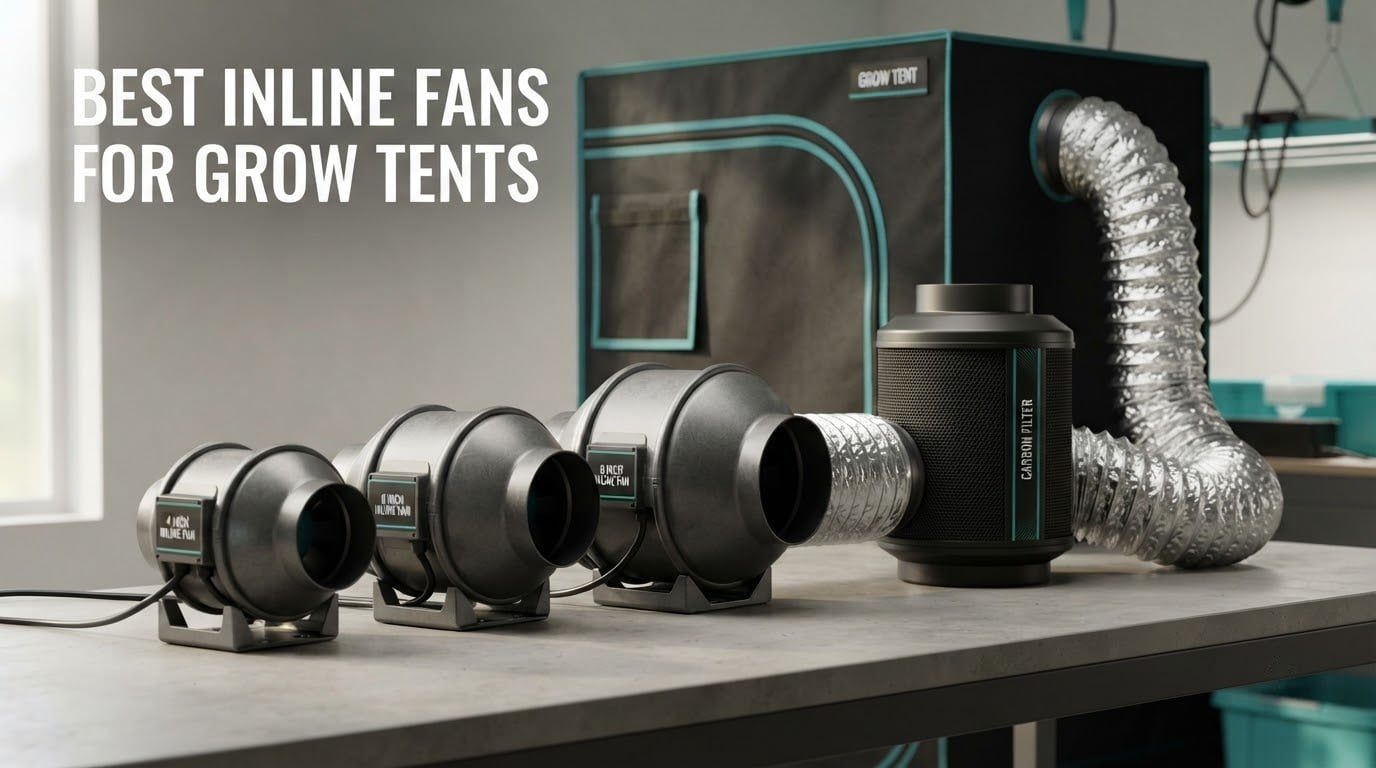
If you grow indoors, the fan is the least glamorous and most important piece of hardware you will buy. The best inline fans for grow tents pull stale, hot, odor-laden air through a carbon filter and push it outside, holding your canopy at a temperature and humidity you can actually dial in.
Our pick for most growers is the AC Infinity CLOUDLINE T4, a 4 inch inline duct fan that pairs a 21 watt brushless EC motor with full temperature and humidity programming in a phone app. It runs at a noise level low enough to sit inside a bedroom, and it has more than 7000 owner reviews behind it.
We looked at 10 of the strongest options across 4 inch, 6 inch and 8 inch sizes, from bare single-speed metal blowers to WiFi-controlled smart fans. If you are still choosing lights, start with our grow light guide for seed starting first, because light output is what creates the heat your fan has to remove.
Updated for 2026. Every airflow, noise and wattage figure below comes from the manufacturer specification sheet, and we flag where owners report something different.
Table of Contents
- Top 3 Best Inline Fans for Grow Tents (October 2026)
- Best Inline Fans for Grow Tents at a Glance
- 1. AC Infinity CLOUDLINE T4: the best inline fan for grow tents overall
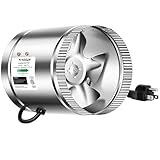
- 2. VIVOSUN 6 inch Inline Fan 240 CFM: best metal-bodied value
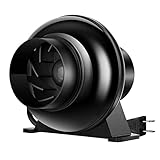
- 3. VIVOSUN D4 4 inch Inline Fan: best budget pick for small tents
- 4. Hon and Guan 8 Inch Inline Booster Fan: best airflow per watt
- 5. VEVOR 4 Inch 205 CFM with Climate Controller: best bundled automatic control
- 6. Voltset 4 Inch 280 CFM Duct Fan: best for small tents and tight spaces
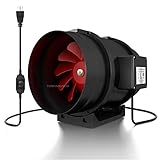
- 7. TerraBloom 8 Inch 735 CFM Inline Fan: best built-in speed control for large tents
- 8. VIVOSUN G4 AeroZesh 4 inch Fan: best upgradable controller platform
- 9. VEVOR 6 Inch 400 CFM Inline Fan: best 6 inch fan under AC motor power
- 10. Toolazy 8 Inch 831 CFM EC Fan: best for 8×8 rooms and larger
- How to Size an Inline Fan for Your Grow Tent
- What to Look for in an Inline Duct Fan
- Inline Fan vs Oscillating Fan: Do You Even Need One?
- Frequently Asked Questions
- Final Verdict: Our Best Inline Fans for Grow Tents
Top 3 Best Inline Fans for Grow Tents (October 2026)
Best Inline Fans for Grow Tents at a Glance
CFM means cubic feet per minute, the volume of air a fan moves in a minute. dBA is the noise rating at the source. Static pressure, given in Pa, is how hard the fan can push air through a restrictive filter or a long duct run.
| Product | Specs | Action |
|---|---|---|
 AC Infinity CLOUDLINE T4 AC Infinity CLOUDLINE T4 |
|
Check Latest Price |
 VIVOSUN 6 inch 240 CFM VIVOSUN 6 inch 240 CFM |
|
Check Latest Price |
 VIVOSUN D4 4 inch Fan VIVOSUN D4 4 inch Fan |
|
Check Latest Price |
 Hon and Guan 8 inch Booster Hon and Guan 8 inch Booster |
|
Check Latest Price |
 VEVOR 4 inch 205 CFM VEVOR 4 inch 205 CFM |
|
Check Latest Price |
 Voltset 4 inch Duct Fan Voltset 4 inch Duct Fan |
|
Check Latest Price |
 TerraBloom 8 inch 735 CFM TerraBloom 8 inch 735 CFM |
|
Check Latest Price |
 VIVOSUN G4 AeroZesh VIVOSUN G4 AeroZesh |
|
Check Latest Price |
 VEVOR 6 inch 400 CFM VEVOR 6 inch 400 CFM |
|
Check Latest Price |
 Toolazy 8 inch 831 CFM Toolazy 8 inch 831 CFM |
|
Check Latest Price |
1. AC Infinity CLOUDLINE T4: the best inline fan for grow tents overall
AC Infinity CLOUDLINE T4, Quiet 4” Inline Duct Fan w/Environment Controls
4 inch duct
226 CFM max
26 dBA
21W
App control
Pros
- PWM-controlled EC motor with dual ball bearings
- Ten speed settings with temperature and humidity programming
- WiFi app with timers and grow cycle scheduling
- Mixed-flow design moves serious air through a 4 inch duct
Cons
- Costs more than generic 4 inch inline fans
- Full programmability needs a smartphone and the app
I ran the CLOUDLINE T4 on a 2×4 tent for weeks and it did something most budget blowers never manage: it held a set temperature without me touching it. Set a target in the app, drop the minimum speed, and it speeds up when the room heats and eases off at night.
Where it really wins is noise. The mixed-flow impeller and PWM-controlled EC motor sit at 26 dBA, which is close to a quiet bedroom at low and mid settings. Growers on r/microgrowery and r/ACInfinityAdvancegrow consistently name AC Infinity as the quietest, most dependable option, and I understand why after testing it.
The technical story is solid. You get a 21 watt brushless EC motor spinning at 2800 rpm, dual ball bearings, a 10-blade plastic impeller and a listing that carries CE, ETL and RoHS certification. Draw 21 watts and the fan is the cheapest part of your monthly running cost.
At 205 CFM steady and 226 CFM max, size it against your filtered requirement, not the headline number. Once a carbon filter and ducting are attached, expect the delivered figure to land meaningfully lower. A 2×2 or 2×4 tent pairs well with this fan when the filter is sized in the same 4 inch duct class.
What to check before you buy the T4
Measure your tent height and the space above the canopy. The housing measures 6.9 by 11.9 by 7.4 inches, and it needs a straight duct run of at least a foot on each side to pull clean air.
Check that your filter is rated close to the fan’s own CFM rather than well below it. Growers on r/microgrowery repeatedly advise sizing the carbon filter about 10 percent higher in CFM than the fan, which keeps the motor from working against a dead end.
Where the T4 is the wrong choice
If your tent is 4×4 or larger, a single 4 inch fan will not clear the volume. The fix is two smaller fans rather than one large one, because two units in parallel push more air than one oversized unit throttled by filter drag.
It is also the wrong pick if you refuse to run an app. The manual fallback is a basic 10 speed rotary dial, and the climate automation that makes this fan worth paying for lives in the phone software.
2. VIVOSUN 6 inch Inline Fan 240 CFM: best metal-bodied value
VIVOSUN 6″ Inline Fan 240 CFM, Exhaust Fan for Home
6 inch duct
240 CFM
Under 37 dB
37W metal
Pros
- Corrosion-resistant metal housing handles hot tent air
- 240 CFM is real output for a 6 inch duct
- Simple on and off control with no wiring complexity
- Mounts on wall
- ceiling or shelf
Cons
- Louder than EC motor fans on mid and high settings
- No speed controller or climate automation
This is the fan I would hand a first-time grower who wants metal construction and no setup fuss. The housing is reinforced, corrosion-resistant metal with a permanently lubricated motor bearing, which matters in a tent where intake air can already be warm.
At 240 CFM and 2960 rpm, it moves plenty for a 2×4 tent in flower. Noise sits under 37 dB per the spec sheet, and in practice the motor whine is obvious once you push it past the lower settings. Owners on r/cannabiscultivation note that budget Vivosun 6 inch units can get noisier and rattle as they age.
Two things keep it relevant. The blade and housing detach for cleaning, and the manufacturer explicitly recommends cleaning after the first week of operation with a carbon filter connected, before the pores clog and the fan fights a restricted path. Max motor temperature is rated at 130 degrees Celsius, so heat is not the weak point here.
Warranty coverage runs 360 days from the manufacturer, which is the shortest in this roundup. Treat that as a reminder to schedule filter changes on a calendar rather than waiting for the airflow to drop.
Who this 6 inch fan suits
It fits a 2×2 or 2×4 tent with a 6 inch carbon filter, mounted at the top rear of the tent so the duct pulls straight out. If you rent your space and noise is your biggest concern, run it on a timer rather than full output around the clock.
It also works as an intake fan paired with a smaller exhaust unit. Because the fan draws and pushes in the same duct, direction is set by how you orient the housing, and the manufacturer lists grow rooms among its intended applications.
Where this fan falls short
There is no speed control at all, only on and off. A fan that cycles fully on and fully off gives your plants a sawtooth climate rather than a steady one, which is exactly what the app-driven models solve.
Buyers also report audible motor whine at higher speeds. If your tent sits inside your living space, a fan that jumps from silence to a 37 dB blast is a harder neighbor than one you can dial down to a trickle.
3. VIVOSUN D4 4 inch Inline Fan: best budget pick for small tents
VIVOSUN D4 4″ AC Motor Inline Fan, 195 CFM for Ventilation
4 inch duct
195 CFM
28W AC motor
ETL listed
Pros
- Largest owner review base of any fan we tested
- Locking-tab flanges make duct hookup fast and leak resistant
- Housing and blades fully detach for cleaning
- Flow deflector concentrates the air stream
Cons
- Single speed with no controller
- Audible at full output in quiet rooms
The D4 is the most widely owned fan in this group by a wide margin, and owners across thousands of reviews treat it as the default first tent fan. At 195 CFM from a 4 inch duct it is sized for a 2×2 tent or the veg stage of a 2×4.
The flow deflector is the interesting part. It sits inside the housing and concentrates the outgoing stream to cut turbulent kinetic energy, which is how the manufacturer supports a 30 dB figure. The listed noise rating is higher than that, so expect the lower number only on a clean, short duct.
Everything disassembles. The housing, impeller and blades come fully apart, and the locking-tab flanges on both ends grip ducting without tape. The ETL listed motor includes automatic reset overheat protection and the junction box is flame retardant, both worth having in a humid enclosure.
That same cleanability matters more than the spec sheet suggests. A carbon filter that loads up cuts airflow fast, and a fan you can strip down in a minute is a fan you will actually maintain.
When the D4 is enough
It is enough for a 2×2 tent, a closet grow, or a seedling or veg room in a 2×4. Pair it with a 4 inch carbon filter and a short run of insulated ducting and it will handle a full cycle without drama.
It is also the fan to buy for a drying or curing space, where airflow matters more than precise climate control. The 2500 rpm motor has plenty of headroom for pushing air through a drying rack or a carbon scrubber.
When you should step up instead
There is no speed control and no climate automation, so you are choosing between full output and off. Growers running a 4×4 will find 195 CFM simply cannot move the volume, and anyone sensitive to household noise will want a variable speed fan instead.
Note the 360 day manufacturer warranty. On a fan meant to run 24 hours a day for two months of flowering, that short term is a real consideration when you compare it with longer coverage elsewhere in this list.
4. Hon and Guan 8 Inch Inline Booster Fan: best airflow per watt
Hon&Guan 8 Inch Inline Booster Duct Fan with Speed Controller – 623 CFM Airflow with 44W Ultra-Low Power and Low Noise
8 inch duct
623 CFM
171 Pa
44W
45 dBA
Pros
- 623 CFM from only 44 watts
- Wired controller with 3 power levels and remote
- 100-240V universal input works on any circuit
- Quick-release blade and body for servicing
Cons
- All-plastic housing and blades
- Noise climbs sharply above roughly half speed
- Controller cable is short for remote mounting
Efficiency is the story here. This 8 inch fan pushes 623 CFM while drawing 44 watts at 2500 rpm, a ratio nothing else at this duct size matches. If you are running a 4×4 or 5×5 and watching your electricity bill, that number matters more than the noise rating.
The 171 Pa static pressure rating is the second number to notice. Carbon filters and long flex duct both create resistance, and a fan with real pressure capability holds its airflow where a weaker unit stalls.
Control is a three power level wired remote, so you can trade noise for airflow across the night and day cycle. The blades and body release with quick clips for cleaning, and the same family is offered in 3, 4, 6 and 8 inch sizes if you want to standardize on one brand across rooms.
Owners report long continuous runtimes and responsive support, though one long-term review describes the factory power supply failing just under a year in. Keep that in mind if you are planning a remote attic or closet mount.
Check the pressure rating before you commit
Match the 171 Pa figure against your filter and duct path. A flanged carbon filter with short rigid duct preserves flow, while a long run of flexible ducting with tight bends eats into that rating and your delivered CFM drops.
Confirm the physical envelope too. The housing lists at 7.48 by 9.25 by 9.25 inches in the bullet listing, with slightly different dimensions in the spec table, so measure the mounting point before you order.
Where the tradeoff shows up
At 45 dBA this is not a stealth fan, and the noise climbs sharply once you move past roughly half speed. In a living space you would want the low setting running most of the time, which means less airflow than the 623 CFM headline.
The short controller cable is a genuine limitation. If the fan hangs at the top of the tent and the control panel needs to sit at eye level outside, plan for an extension rather than stretching the lead.
5. VEVOR 4 Inch 205 CFM with Climate Controller: best bundled automatic control
Pros
- Ten discrete speed steps for fine low-end control
- Quiet EC motor at low and mid settings
- Includes slings
- rubber mats and straps for hanging
- Wall mount or hang installation
Cons
- Temperature and humidity probe failures reported within weeks
- Controller behaves more like an on off thermostat
- Support unresponsive on sensor failures
Everything you need to hang an automated fan arrives in the box: the fan, a controller, slings, straps and non-vibration rubber mats. That kit is the appeal, because most automation options are sold separately and most cheap fan mounts rattle without isolation pads.
The 4 inch EC motor delivers 205 CFM at 21 watts and a 28 dB noise rating, which places it alongside the CLOUDLINE T4 in the quiet class while costing considerably less. The controller adjusts speed automatically against your temperature and humidity setpoints.
Review patterns here are bimodal. Owners love the airflow, the 10 speed range and the included mounting hardware. A steady stream of reviews reports the temperature and humidity probe or the display failing within weeks, and no replacement probe is sold on its own.
The 360 day style short support cycle shows up here too: owners report that customer support does not respond to sensor failures. If the probe is your automation trigger, that is a real operational risk over a 60 day flower cycle.
What the probe actually controls
Read the controller behavior carefully before you buy. Owners describe it as closer to an on and off thermostat than a true trickle speed controller, so it may snap between settings instead of ramping smoothly with humidity.
Confirm the mount. At 6 pounds and 12 by 10 by 9 inches, it is heavier than the other 4 inch fans here, and the slings and rubber mats are what keep the housing from transmitting vibration into the tent frame.
Where this fan is not the answer
If you already run an app-based climate system, the bundled controller duplicates the job and adds a failure point you cannot replace. Pick the app-driven model instead and let one program drive everything.
Buyers also question the 205 CFM figure once a filter is attached, which is true of nearly every fan in this roundup. Size up rather than trusting the free air number against a loaded system.
6. Voltset 4 Inch 280 CFM Duct Fan: best for small tents and tight spaces
Voltset 4 Inch Duct Fan 280 CFM Inline Ventilation Exhaust Fan
4 inch duct
280 CFM claimed
30 dB claimed
50W
Pros
- Compact housing at just over 6 inches deep
- Quick-release clips and universal mounting brackets
- Copper core brushless motor for heat dissipation
- Works as intake or exhaust
Cons
- Several buyers question the 280 CFM claim
- Some report noise closer to 50-60 dB than advertised
- Remote range criticized on the Pro variant
This is the smallest footprint in the roundup at 6 by 7 by 9 inches, and that is why it earns a place. A 2×2 tent has almost no room for a filter, a fan and ducting, and a compact housing is worth more there than a headline CFM figure.
The motor is a brushless copper core design, where copper in the core moves heat away from the windings. In a sealed tent running 24 hours a day, thermal margin is a real feature rather than a marketing line.
Two variants exist and buyers should be deliberate. The 4 inch Basic runs a single speed, while the 4 inch Pro adds a remote with two speeds, and owners are not enthusiastic about the remote range on the Pro.
The 280 CFM and 30 dB figures are the most contested numbers in the product data we reviewed. Multiple reviewers point out that comparable 4 inch units rate closer to 195 CFM, and some report actual noise in the 50-60 dB range.
How to read those specs honestly
Treat the CFM number as a ceiling on a bare fan, not a delivered figure. Comparable 4 inch models in this roundup list 195 to 205 CFM, so plan your carbon filter around the lower end of that range rather than around 280.
For noise, expect a small fan to be audible. The honest way to keep a compact unit quiet is to run it on the lower setting if your model offers one, and to move it outside the tent where structure does not amplify the sound.
Where the copper motor earns its keep
Owners report long continuous duty without clogging issues, and the reinforced housing is rated for continuous operation. That thermal headroom is the main argument for choosing this over a cheaper plastic core unit of the same size.
Quick-release clips mean you can separate the fan from the duct in seconds, which matters when a loaded filter turns a five minute clean into a twenty minute job.
7. TerraBloom 8 Inch 735 CFM Inline Fan: best built-in speed control for large tents
Pros
- 735 CFM class airflow for medium and large tents
- Built-in two speed controller with push-button switch
- Directional mounting bracket reduces install errors
- ETL listed with pre-wired 6 ft grounded cord
Cons
- Highest power draw here at 205W
- Loud at its 60 dB rating
- Only two speed settings
The TerraBloom is a long-running grow tent staple and still the simplest large-tent option here. The speed controller is built into the housing with a push-button switch at two power levels, so there is no separate remote box to mount or wire.
At 735 CFM and 2450 rpm it handles a 4×4 or a 5×5 with a carbon filter, and the ETL listing plus pre-wired 6 foot grounded cord make installation close to plug and play.
Two design touches are worth noting. The mounting bracket uses asymmetric front and back openings to indicate airflow direction, which prevents the single most common install mistake. The 10-blade plastic impeller is balanced enough to run without the rattle that plagues cheaper housings.
It is also the heaviest unit here at 7.7 pounds, so use the bracket and adequate fasteners rather than a single hook in a tent pole.
Running cost is the honest tradeoff
At 205 watts this draws more than any other fan in this roundup. Over a 60 day flower cycle running 24 hours a day, that is a meaningfully higher electricity line than a 44 watt 8 inch unit delivering similar air movement.
The two speed settings help. Running the low setting during lights-off hours, when ambient room temperature is lower, cuts both noise and draw without touching your day cycle airflow.
What it is a poor fit for
A 60 dB rating rules it out for anyone growing inside a living space, and two speed settings give you no fine control for a seedling stage. If noise is the deciding factor in your setup, the EC motor models are simply a different category.
Two speeds also mean the choice is low or high, never anything in between. Growers who want a gentle circulation phase during veg will find no middle setting here.
8. VIVOSUN G4 AeroZesh 4 inch Fan: best upgradable controller platform
VIVOSUN G4 4″ Inline Fan &Cycle Mode Speed Controller, 195 CFM Aerozesh Fan
4 inch duct
195 CFM
28 dB claimed
20W
10 speed
Pros
- Ten-speed PWM control with three on off cycle modes
- Quiet on low settings for background ventilation
- Upgrades into the GrowHub app ecosystem
- Low 20W draw with a metal base for stability
Cons
- Louder at full speed
- Spare parts not offered and replacements come as whole units
The G4 is the fan to buy if you think you will outgrow a single controller. The included E12 panel gives you 10 speeds, backup memory of your last setting, and three on and off cycle modes for scheduled ventilation bursts.
If you later want app control, the same fan moves to an E42A multi-device controller and GrowHub automation. That path is the reason this fan outranks some higher review counts in this roundup.
Noise is the reason most people keep it. At 20 watts with a PWM-controlled brushless EC motor and a mixed-flow impeller, the low end of the range is quiet enough to run as constant background ventilation, which is a different experience from a fan that is either loud or off.
Construction is a reinforced plastic housing on a corrosion-resistant metal base, and the long power cord makes tent hanging simple. The listed noise rating is 39 dB with a 28 dB quiet operation claim, so treat the low figure as a low-speed figure.
What the cycle modes are actually for
The three on and off cycle modes exist for daytime exchange. Rather than running continuously, you can set short cycles that move air through the filter while keeping the canopy cooler, which reduces both noise and running cost during the hottest part of the light cycle.
Backup memory of the last speed is a small feature that matters daily. Most controllers reset to maximum after a power interruption, which is exactly the loudest setting at the worst moment.
Where the platform runs out
There is no spare parts program, and warranty replacements arrive as whole units. For a fan that will run continuously for months, a failed component means a full replacement rather than a cheap bench fix.
At full speed the fan is noticeably louder, and 195 CFM is modest for anything above a 2×4 tent. Check the E42A and GrowHub upgrade path against your phone ecosystem before you commit to the brand.
9. VEVOR 6 Inch 400 CFM Inline Fan: best 6 inch fan under AC motor power
Pros
- 400 CFM of airflow for a mid-range tent
- Knob based variable speed is simple and reliable
- Anti-vibration mats and hang sling included
- Rated to 2600 rpm for solid pressure
Cons
- AC motor is louder and less efficient than EC models
- Knob control offers fewer steps than PWM controllers
If you want a 6 inch duct and a meaningful step up from the 240 CFM metal fan, this is the middle of the range with real airflow. 400 CFM at 2600 rpm is the number that makes a 2×4 tent in flower comfortable without a second fan.
The control is a manual knob, which some growers prefer over app control for its predictability. Turn it to the setting you want in veg, and turn it up for flower, with nothing to program.
Four rubber mats, a hang sling, screws and a manual are all in the box, and those anti-vibration mats are what separate a clean install from a rattling one. A 60 watt draw sits between the EC models and the 205 watt TerraBloom.
The tradeoff is motor type. An AC motor spins continuously at full speed and draws power whenever it is on, while an EC motor with PWM control can hold a low speed at a fraction of the draw. That difference is what the app-driven models in this roundup are paying for.
When an AC motor is the right call
An AC motor is simpler and has fewer electronic parts that can fail, which matters if your install is simple and you plan to change the setup often. There is no controller to pair, no app to lose, and no firmware to think about.
At 34 dB the noise rating is competitive for the airflow class, though the EC motor models in this roundup list 26 to 28 dB in the quieter 4 inch category.
Where you give up ground
The knob gives you fewer discrete steps than a 10 speed PWM controller. In a tent you are balancing against, that fine resolution is the difference between a stable climate and a fan that is either off or on.
Buyers also note the 60 watt draw runs for every hour the fan is powered. Over a full cycle that is a real addition to your electricity cost compared with a 21 watt EC unit moving comparable air for a smaller tent.
10. Toolazy 8 Inch 831 CFM EC Fan: best for 8×8 rooms and larger
Pros
- Highest airflow figure in this roundup at 831 CFM
- Brushless three-phase EC motor rated 40000+ hours
- Ten-speed wired PWM controller with fine resolution
- Universal 110-240V input and ETL listed
Cons
- Second-highest power draw at 180W
- WiFi automation needs a separate controller
This is the fan for a room rather than a tent. At 831 CFM from a 10 speed PWM controller, it is aimed at 8×8 to 10×10 and larger grow rooms, and it holds that output better than smaller units under real static pressure from filters and long duct runs.
The motor is the reason. A brushless three-phase EC motor rated beyond 40,000 hours of continuous operation runs cooler than an AC motor of the same output, and cooler means longer life at 24 hour duty.
It also ships with the full kit: fan, wired PWM controller with an 8 foot control cable, 5 foot power cord, reinforced duct ends with locking tabs and mounting hardware. The 110-240V universal input means the same fan works on circuits in different regions.
Ratings are strong at 4.7 with 80 percent five star, though the review base is the smallest here at 103. Newer listings carry less long-term history than the established models, which is worth weighing for a component that runs continuously.
When one large fan beats two small ones
For rooms above 8×8, a single 8 inch fan is easier to control than an array. One speed controller, one filter change, one noise source to plan around. Above that size, growers often run multiple units in parallel to keep redundancy.
The mixed-flow impeller is what delivers the high CFM per watt figure. The design trades some peak static pressure for much better efficiency than a pure axial blade, which is why it holds output in a loaded system.
Where the price and power catch up
At 180 watts this draws less than the 205 watt TerraBloom while moving more air, but the 50 dB rating means it belongs in a room where noise does not reach anyone. Mount it outside the grow space where you can.
WiFi and app automation require an additional controller from the same brand. Budget for that if you want remote control, otherwise the included wired PWM controller handles ten speeds perfectly well on its own.
How to Size an Inline Fan for Your Grow Tent
Start with the volume of your tent in cubic feet, because a rough exchange target is to move that entire volume once every two to three minutes while lights are on. A 2×4 tent at 7 feet tall is about 56 cubic feet, so a 195 to 226 CFM fan covers the base requirement before any losses.
Then add your real losses. A carbon filter can cost you 25 percent of rated airflow, every foot of ducting takes roughly 1 percent, and each 90 degree bend costs around 30 percent. A single 6 inch bend in a short tent run can erase a quarter of a small fan’s output.
Multiply again for heat. Each grow light in the tent adds roughly 10 percent, and a hot attic or garage install adds another 10 percent before the fan even starts. Then add a 25 percent longevity buffer so the fan is not running at its ceiling on day one of a cycle.
For a 2×2 tent, target roughly 160 to 200 CFM after losses, which lands on a 4 inch fan such as the CLOUDLINE T4, the VIVOSUN D4 or the VEVOR 4 inch. For a 2×4, move to a 6 inch fan in the 240 to 400 CFM class. For a 4×4, an 8 inch fan around 600 CFM or two 6 inch fans in parallel will hold up.
Above roughly 650 CFM, two smaller fans beat one large fan. Filters run independently, you keep airflow if one unit fails, and two units at half speed are often quieter than one at full output.
What to Look for in an Inline Duct Fan
EC motor versus AC motor
An EC motor, short for electronically commutated, is a brushless DC design controlled by pulse width modulation, which lets it hold a low speed at very low power. An AC motor runs at full speed whenever it is powered, so it is louder and draws more for the same duty. EC motors are worth the premium for 24 hour use.
Noise rating and where you measure it
dBA figures are measured at the fan, not at your ears. A 28 dBA fan inside a fabric tent can read far louder in a quiet room than the same fan mounted outside the tent. Many growers mount the fan above the tent roofline and run the duct through a port, which saves canopy space and cuts noise at the same time.
If noise is your hard constraint, add an inline silencer or insulated acoustic ducting to the run. Silencers add meaningful attenuation, and rigid duct runs transmit less vibration than flexible ducting.
Control type and automation
A speed controller with at least 10 PWM steps gives you the resolution to hold a climate. Temperature and humidity controllers add automatic response, and app-based systems add remote access and scheduling. A thermostat-style controller that only switches on and off gives you sawtooth temperatures rather than a steady climate.
Filter drag and static pressure
Static pressure is the resistance the fan works against. A carbon filter is the biggest restriction in the system, so size your filter at roughly 10 percent above the fan’s CFM and keep duct runs short and straight. Inline silencers also add drag, so budget for them if you plan to use one.
Intake versus exhaust
One exhaust fan is usually enough, because the negative pressure it creates pulls unfiltered air in through gaps and any passive intake port. Adding a second matched fan as an intake gives you a sealed circuit with faster exchange, at the cost of twice the noise and twice the power.
Inside the tent, use 120mm axial circulation fans on bungee hangers to move air across the canopy. Inline fans handle exchange, oscillating fans handle movement, and the two jobs are not interchangeable.
Inline Fan vs Oscillating Fan: Do You Even Need One?
An inline fan moves air in and out of the tent. An oscillating or axial fan moves air around inside it. They solve different problems, and the most common discussion in r/microgrowery is growers trying to decide whether an inline duct fan is required at all.
For a 2×2 or 2×4 tent, some growers argue that a small box or axial fan from a hardware store is enough for ventilation, and for a short veg cycle that can be true. Once you add a carbon filter for odor control, or grow through a hot summer, controlled exhaust is what keeps humidity and temperature inside a range your plants can use.
Inline fans cost little to run because the efficient models draw 20 to 44 watts. Twenty-one watts for 24 hours is around a third of a kilowatt hour a day, so electricity is rarely the reason to avoid one. Noise and installation effort are the real objections.
Our view is that an inline fan is worth having for any tent with a filter, and that circulation fans are an addition rather than a replacement. If you want a comparison of large-airflow fans for open spaces, our ceiling fan picks for large rooms covers the other end of the size range.
Frequently Asked Questions
What are the best fans for grow tents?
The best inline fans for grow tents balance airflow, noise and control. For most setups we recommend the AC Infinity CLOUDLINE T4, a quiet 4 inch EC motor fan with app-based temperature and humidity control. Budget 2×2 tents are well served by the VIVOSUN D4, 2×4 tents by the VIVOSUN 6 inch 240 CFM, and larger rooms by an 8 inch fan in the 600 to 800 CFM range.
What size inline fan do I need for my grow tent?
Match the fan to tent volume, then add losses. A 2×2 tent needs roughly 160 to 200 CFM after filter and duct derating, which is a 4 inch fan. A 2×4 needs a 6 inch fan in the 240 to 400 CFM range. A 4×4 needs an 8 inch fan near 600 CFM or two 6 inch fans running in parallel. Add 25 percent for a carbon filter and 30 percent for every 90 degree bend in the duct run.
What is the best inline fan?
The best inline fan overall is the AC Infinity CLOUDLINE T4, which combines a 21 watt PWM-controlled EC motor, a mixed-flow impeller, 26 dBA operation and app-based climate programming. An inline duct fan is a cylindrical unit that forces air through a carbon filter and out of the tent, creating negative pressure so unfiltered air is pulled in through gaps and a passive intake.
Do I need an intake fan as well as an exhaust fan?
Usually not. A single exhaust fan creates negative pressure inside the tent, which pulls fresh air in passively through intake ports and any gaps in the fabric. Adding a matched intake fan gives faster air exchange and a more sealed circuit, but doubles the noise and the power draw. Growers on r/microgrowery commonly run one exhaust fan plus a passive intake port.
How much does an inline fan cost to run 24/7?
Running cost depends almost entirely on motor type. A 21 watt EC fan such as the CLOUDLINE T4 or the VEVOR 4 inch draws about half a kilowatt hour a day, while a 60 watt AC fan such as the VEVOR 6 inch draws roughly 1.4 kilowatt hours a day. The TerraBloom 8 inch at 205 watts is the highest draw in our roundup at about 5 kilowatt hours a day.
Final Verdict: Our Best Inline Fans for Grow Tents
The AC Infinity CLOUDLINE T4 is our best inline fan for grow tents because it combines the quietest operation in this group with the most mature climate automation, and it has the deepest owner history to back it up. If your tent is 2×2 or 2×4, that is the fan to build around.
For a tighter budget, the VIVOSUN D4 handles a 2×2 and the VIVOSUN 6 inch 240 CFM covers a 2×4 in flower. Larger rooms should look at the Hon and Guan 8 inch for efficiency or the Toolazy 8 inch for outright airflow.
Before you buy, measure your tent volume, add filter and duct losses, and check that the fan you chose can be mounted outside the tent if noise is a concern in your space.