

Short answer: the Hydor Koralia Evolution 850 is the best aquarium wave maker for most reef tanks in 2026, because it delivers 850 GPH from a 5-watt draw, mounts magnetically without tools, and has a shaftless impeller with nothing to snap or corrode. For tanks of 120 gallons and up, the Uniclife 3400 GPH is the one to look at. For a nano reef under 20 gallons, the hygger Mini 530 GPH is the right size.
That is the shortlist. Below it sit ten pumps I compared side by side, from 530 GPH nano pumps to a 3400 GPH unit built for 300-gallon displays, so you can match flow to volume instead of guessing.
Are aquarium wave makers any good? Yes, with one condition: they earn their place when they are sized to your tank volume and mounted so the flow reaches the rockwork. A wave maker that is too large for the tank strips detritus straight off the sand, blasts LPS and anemones off their rock, and creates a permanent dead zone on the far side of the display.
The other thing worth knowing before you buy is that plenty of products sold as “wave makers” are fixed-output powerheads with no programmability at all. They move water in one steady jet from the moment they switch on until you unplug them. That is fine for a small freshwater tank, and it is the reason a dedicated controller matters in a reef.
Our team spent weeks going through owner feedback on each of these pumps, and the pattern in the reviews is consistent: quiet DC motors win on long-term satisfaction, magnetic mounts beat suction cups, and controllers fail more often than pumps. We weighted our ranking accordingly.
Table of Contents
- Top 3 Picks for the Best Aquarium Wave Makers in 2026
- All 10 Wave Makers Compared Side by Side in 2026
- 1. Hydor Koralia Evolution 850 Circulation and Wave Pump – Best Overall
- 2. Uniclife 3400 GPH Wave Maker – Best for Tanks of 120 Gallons and Up
- Uniclife Aquarium Wave Maker for 120-300 Gallon Fish Tanks 3400 GPH Adjustable Circulation Pump with Controller and Strong Magnetic Suction Base Submersible Power Head for Fresh and Salty Water
- Best for long, deep displays where one small pump will not cover the footprint
- Not suitable for nano, small, or medium reef tanks
- 3. hygger 18W Cross Flow Wave Maker – Best for a Full-Tank Gyre
- hygger Aquarium Wave Maker, 18W Adjustable Cross Flow Pump with LED Display Controller, Magnetic DC 24V Aquarium Powerhead for Freshwater and Marine Reef Aquariums Up to 135 Gallon
- Best for mixed reefs of roughly 40 to 135 gallons with rockwork dead zones
- Not ideal for a bedroom reef or a very small nano tank
- 4. Jebao SOW-8 Wave Maker – Best for Linked Multi-Pump Setups
- 5. Fluval Sea CP2 Wave Maker – Best Low-Cost Fixed Flow Pump
- 6. AQUANEAT 800 GPH Two-Pack – Best Value Two-Pack
- 7. FREESEA Magnetic Wave Maker – Best for Quick Repositioning
- 8. hygger Mini 530 GPH Wave Maker – Best for Nano Tanks
- 9. Jebao PP-4 Wavemaker – Best Budget Controller Upgrade
- 10. Jebao SCP-70 Sine Cross Flow Pump – Best for SPS Colonies
- Where to Place a Wave Maker and How Many You Need
- Buying Guide: Seven Checks Before You Buy a Reef Wavemaker
- Frequently Asked Questions
- Conclusion: Our Top Reef Wavemaker Picks for 2026
Top 3 Picks for the Best Aquarium Wave Makers in 2026
These are the three we would actually buy today, depending on tank size.
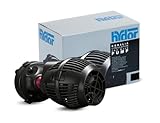
Hydor Koralia Evolution 850
- 850 GPH from 5W
- Shaftless impeller
- Quiet AC motor
- Mounts to 1/2 inch glass
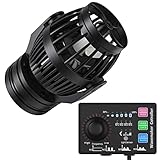
Uniclife 3400 GPH Wave Maker
- 3400 GPH maximum flow
- 40W 24V DC
- Four wave modes
- 10-minute feed stop

hygger 18W Cross Flow Wave…
- Up to 1850 GPH
- Cross flow gyre
- Five wave modes with LED controller
- Magnetic mount
All 10 Wave Makers Compared Side by Side in 2026
Every pick, with the two or three things that actually separate one from another.
| Product | Specs | Action |
|---|---|---|
| Hydor Koralia Evolution 850 |
|
Check Latest Price |
| Uniclife 3400 GPH Wave Maker |
|
Check Latest Price |
| hygger 18W Cross Flow Wave Maker |
|
Check Latest Price |
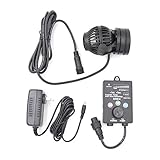 Jebao SOW-8 Wave Maker Jebao SOW-8 Wave Maker |
|
Check Latest Price |
 Fluval Sea CP2 Wave Maker Fluval Sea CP2 Wave Maker |
|
Check Latest Price |
 AQUANEAT 800 GPH Two-Pack AQUANEAT 800 GPH Two-Pack |
|
Check Latest Price |
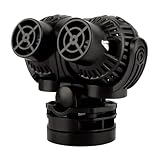 FREESEA Magnetic Wave Maker FREESEA Magnetic Wave Maker |
|
Check Latest Price |
 hygger Mini Wave Maker 530 GPH hygger Mini Wave Maker 530 GPH |
|
Check Latest Price |
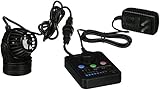 Jebao PP-4 Wavemaker Jebao PP-4 Wavemaker |
|
Check Latest Price |
 Jebao SCP-70 Cross Flow Pump Jebao SCP-70 Cross Flow Pump |
|
Check Latest Price |
1. Hydor Koralia Evolution 850 Circulation and Wave Pump – Best Overall
Hydor Koralia Evolution Circulation & Wave Pump , 750-850 GPH, 115 Volts, Black
850 GPH maximum flow
5W power draw
Shaftless impeller
Glass or acrylic to 1/2 inch
2 year warranty
Pros
- Very quiet at steady running with only a faint low hum
- Strong flow for a 5 watt draw with SPS corals showing good polyp extension
- Magnet and suction cup mount grips glass or acrylic up to 1/2 inch thick
- Compact body with a sphere joint for adjustable flow direction
- Enclosed housing is safe for small inverts to perch on
Cons
- AC motor clicks and pops at start-up on every cycle when paired with an external wave controller
- Outer housing cover can be hard to snap back into place
- Impeller housing can deteriorate after a few years and the rotor is not user serviceable
I keep coming back to the Koralia Evolution because it is the only pump in this group where the complaint that matters is a nuisance rather than a failure. Out of 745 ratings it holds a 4.4 average, which for a pump category is high, and the complaints cluster around start-up noise rather than performance.
At 850 GPH from a 5-watt draw, it is among the most efficient pumps in this list, roughly 170 gallons per hour for every watt. The shaftless impeller means there is no ceramic or stainless shaft to snap or corrode, which removes the single most common failure point on reef pumps. Owners running SPS on it report extended polyps and healthy growth, and the 2 year manufacturer warranty backs that up.
What you get is one-directional flow, and that is the one real limitation. This is a circulation pump, not a programmable wave maker. Most owners run two of them facing each other to create a gyre, which is a perfectly good approach and costs less than a single controller-driven pump, but it will not give you random laminar flow or a feed timer.
The magnetic mount with suction cup support holds on glass or acrylic up to 1/2 inch thick and does not creep over weeks the way a bare suction cup does. The sphere joint gives you some aiming range, though the range is narrower than a full ball joint, and the body is small enough to disappear behind rockwork in a mature aquascape.
Best for tanks that need flow without a controller
If your system already has a solid return pump and you want to add a second circulation pattern without spending on a programmable driver, this is the pick. Two of these on opposite ends of a 60 to 100 gallon tank produce a genuine circular current, and neither one will ever need a controller reprogrammed after a power cut.
It also suits tanks with urchins, puffers, parrotfish, and triggerfish, because the enclosed housing gives them something safe to grip and the shaftless design has nothing to break off in the rockwork.
Not ideal if you need programmed wave modes or quiet start-up
The clicking and popping at start-up is real, and on a timed cycle it happens every single time the pump kicks in. It is more noticeable if the pump runs off a wave controller rather than a plain outlet, and some owners find it distracting in a bedroom reef.
Long-term reliability is the other caution. The impeller housing on these can deteriorate after a few years, and the rotor is not serviceable without a replacement part, so budget for a replacement rather than assuming the pump is a forever purchase. If you need random or pulse modes, look at a DC controller pump instead.
2. Uniclife 3400 GPH Wave Maker – Best for Tanks of 120 Gallons and Up
Uniclife Aquarium Wave Maker for 120-300 Gallon Fish Tanks 3400 GPH Adjustable Circulation Pump with Controller and Strong Magnetic Suction Base Submersible Power Head for Fresh and Salty Water
3400 GPH maximum flow
40W 24V DC
Rated for 120-300 gallon tanks
Four wave modes
10-minute feed stop
Pros
- Very high 3400 GPH output suited to large 120 to 300 gallon systems
- Strong magnetic base with a freely repositionable rotatable head
- Four selectable wave modes on a simple control panel
- 10-minute feed stop triggered by holding the speed button about 3 seconds
- Reported as a quiet ringing while running with good aeration and sediment lifting
Cons
- Specification restricts use to tanks of 120 gallons and larger
- Four wave modes is fewer programming choices than the controller drives on other picks
- 40W DC draw is the highest power consumption in this group
This is the only pump here rated specifically for large displays, and the spec sheet is unusually honest about that. It is listed for 120 to 300 gallon tanks and not for smaller ones, which tells you the manufacturer expects it to be mounted high in a big tank rather than tucked behind a small display.
At 3400 GPH from 40W of 24V DC, it is roughly four times the flow of the Hydor. On a 125-gallon reef with a 3000 GPH return, that combination moves the tank volume a little over forty times an hour, which is more than enough to keep detritus in suspension and to break up surface film in a long tank.
The control panel is deliberately simple: four wave modes, a speed control, and a feed stop. You engage the ten-minute feed pause by holding the speed and feed button for about three seconds, so it is a deliberate action rather than a setting you can bump by accident.
The strong magnetic base lets you move the pump to a different position on the glass without draining anything, and the head rotates freely once it is on. For a long tank, that freedom is the feature that matters, because a pump bolted to one end of a six-foot footprint does not cover the other end.
Best for long, deep displays where one small pump will not cover the footprint
Owners report good aeration and sediment lifting, and describe the running sound as a quiet ringing rather than a hum or a whine. That matters in a living room, where a seven-foot display is often close to where people sit.
It works in both fresh and salt water, and the 40-watt DC draw on 24 volts is straightforward to wire to an appropriate supply. If your display is deep and you have a heavy rockscape, this is the pump that puts flow at the far end without a second head.
Not suitable for nano, small, or medium reef tanks
This is the pump most likely to be returned by a buyer who did not read the tank rating. The maker specifies 120 gallons and up, and on anything smaller the flow will strip your sand and pin every coral in the tank against the far glass.
Four wave modes is also fewer than you get from the controller-driven pumps here, and 40 watts is the highest draw in the group, so on a long schedule the running cost difference is measurable. If your tank is under about 100 gallons, the 1850 GPH and 2245 GPH pumps cover the same ground more gently.
3. hygger 18W Cross Flow Wave Maker – Best for a Full-Tank Gyre
hygger Aquarium Wave Maker, 18W Adjustable Cross Flow Pump with LED Display Controller, Magnetic DC 24V Aquarium Powerhead for Freshwater and Marine Reef Aquariums Up to 135 Gallon
Up to 1850 GPH
18W 24V DC
Five wave modes
30-100 levels
Mount to 1/2 inch glass
Pros
- Cross flow design spreads flow 360 degrees and eliminates dead spots
- Quiet 24V DC sine wave control compared with buzzier AC pumps
- LED controller with five wave modes plus night mode; feed mode; and linkage mode
- Two independently aimable outlets on the pump body
- Installable at the top; middle; or bottom of the tank for different wave shapes
Cons
- Noticeable hum above roughly 50 percent power in a very quiet room
- Occasional Er04 pump blockage error reported after short run time
- Visible spark at the power connection on first plug-in
Cross flow is the design idea here, and it is the reason this pump performs above its size. Water leaving the outlet is drawn back across the pump body and pushed again, so the flow wraps around the tank instead of shooting in a straight line and dying at the opposite glass.
The listing puts maximum flow at 1850 GPH on an 18-watt 24V DC motor, sized for tanks up to 135 gallons. The cross flow outlet is the reason the maker specifies a single head rather than a dual head: it covers more of the volume per pump.
The LED controller is where most of the value sits. It runs pulse, sine, constant, random, and cross flow modes, with flow levels adjustable from 30 to 100 and frequency adjustable across the same 30 to 100 range, plus night mode, feed mode, and a linkage mode for pairing with a second pump.
Two independently aimable outlets on the pump body let you send flow in two different directions from one mounting point, which is helpful on a wide tank where a single aim wastes half the output. Mounting position is also a tool: the maker notes you can install it at the top, middle, or bottom to change the wave shape and how well it moves debris.
Best for mixed reefs of roughly 40 to 135 gallons with rockwork dead zones
This is our pick when a tank has a heavy aquascape and you keep finding settled detritus behind a rock ledge. Cross flow wraps around obstructions instead of stalling on them, which is the failure mode that most often makes owners add a second pump.
Owners report good polyp response and detritus lifting once the pump is tuned down from maximum. The random and sine modes on this controller cover both a high-flow SPS system and a gentler LPS or soft coral tank on the same hardware.
Not ideal for a bedroom reef or a very small nano tank
The hum above roughly 50 percent power is audible in a very quiet room at night, and this pump has no true night mode that takes the motor below that threshold. If the tank sits in a bedroom, a pump with a lower maximum output is a better match.
Two other things to know: some owners have seen the Er04 pump blockage error appear after only a short run time, usually from a small piece of rock or a hair reaching the intake, and a visible spark at the power connection on first plug-in is reported by a minority. Neither is common, but both are worth a quick check before the pump goes into your rockwork.
4. Jebao SOW-8 Wave Maker – Best for Linked Multi-Pump Setups
Jebao SOW-8 Wave Maker Flow Pump with Controller for Marine Reef Aquarium
Up to 2245 GPH
23W at 24V DC
Pulse, sine, gyre, constant modes
2.4GHz wireless sync
Pros
- Sine wave electronic motor drive dampens motor noise and vibration
- 2245 GPH from only 23W of 24V DC power
- Digital controller with pulse; sine wave surge; reef gyre random and constant patterns
- Built-in 2.4GHz wireless master-slave synchronization for multiple pumps
- 360-degree ball joint magnetic bracket that holds firmly on thick glass
Cons
- Runs on 24V DC so it needs a matching power supply rather than a direct wall plug
- Wireless linking only pairs with other Jebao pumps
- Single pump head covers a limited footprint in a wide display
Jebao is the brand that comes up more often than any other in reef forum recommendations, and the SOW-8 is one reason. At 214 ratings it holds a 4.5 average, and the reason to choose it over an equivalent single pump is the built-in 2.4GHz radio.
That wireless link lets you pair two or three pumps as master and slave, so they run offset from one another and produce a genuine gyre rather than two streams pointing in roughly the same direction. It is the closest thing to a multi-pump setup you can get without buying a controller ecosystem.
The drive uses sine wave electronic motor control, which is the technique that dampens motor noise and vibration on a DC motor. Reviewers consistently describe it as quiet, and 23 watts for 2245 GPH is a genuinely strong flow-per-watt figure.
The controller offers pulse, sine wave surge, reef gyre random, and constant flow patterns, and the 360-degree ball joint magnetic bracket holds firmly on thick glass, which is worth having on a rimless display with thick glass. The maker recommends aquariums from 20 gallons up to 60 gallons and beyond.
Best for 40 to 90 gallon tanks running two or three pumps
If your plan is two SOW-8s on linked random mode pointing across each other, this is the build. The offset timing is what turns two jets into a circular current that actually clears the corners behind your rockwork, and reef2reef members describe linked multi-pump setups as the reason a tank finally has no dead corners.
It also suits anyone who wants the wave mode vocabulary of a premium controller without the app. Pulse, sine, surge, random, and constant cover essentially everything a reef needs day to day.
Not ideal if you run mixed brands or a very small tank
The 2.4GHz link only pairs with other Jebao pumps, so if you already own a different brand you cannot sync them. And while the SOW-8 has a flow range, the 2245 GPH ceiling means it is oversize for anything under about 30 gallons, where the PP-4 is the better-sized sibling.
Because it runs on 24V DC, you need a matching power supply rather than plugging it straight into a wall outlet, which means one more piece of hardware to hide behind the stand. Check that your supply is rated for the pump’s current draw before you commit.
5. Fluval Sea CP2 Wave Maker – Best Low-Cost Fixed Flow Pump
Fluval Sea CP2 Wave Maker Circulation Pump for Aquariums
Compact fixed flow output
270-degree nozzle
Suction cup mount
Up to 25 gallons
Pros
- Compact body that intrudes very little on tank space
- 270-degree adjustable nozzle for directing flow and clearing dead spots
- Strong suction mount that grips glass reliably
- Runs near-silently once broken in
- Suited to both freshwater and saltwater and doubles as a saltwater mixing pump
Cons
- Suction cup grips so tightly it can be hard to remove without disassembling the unit
- AC motor can start with a loud shriek and need several unplug and replug attempts
- Cannot realistically be used with an external wave controller
The CP2 is the fixed-output pump most reef owners on this list have actually run for years, and at 764 ratings it holds a 4.3. It is a fixed-output circulation pump, not a wave maker, and the difference matters the moment you expect a program to change.
What you are buying is a compact, near-silent pump with a 270-degree adjustable nozzle and a strong suction mount, listed for aquariums up to 25 gallons. Owners in that range use it for circulation, detritus lifting, and improved oxygen exchange, and several use it as a saltwater mixing pump in a brute.
Size is the real advantage. At 3.6 by 5.6 by 3.8 inches it disappears into a nano or a small cube reef, and the 270-degree nozzle gives you more aiming range than the sphere joint on the Hydor at a fraction of the size.
Once broken in it runs near-silently, which is the most common positive comment across hundreds of reviews. The nozzle is what turns a fixed output into something useful: aimed across the front glass it lifts detritus, aimed at the surface it adds agitation and oxygen exchange.
Best for nano cubes, fry tanks, and tanks under 25 gallons
This is the pump to reach for when you have a 10 to 20 gallon reef and a return pump that already handles volume turnover. It adds directional flow and surface agitation without taking up space you do not have, and it works in fresh or salt water.
It is also a good second opinion pump in a quarantine or frag tank, where you want circulation without a controller and without a second power supply to install.
Not ideal if you need programmability or a powered mount
It cannot be driven by an external wave controller, so if your plan involves feed timers, night modes, or random flow, this pump is the wrong category. It runs at one speed until you switch it off.
Two practical complaints recur. The suction cup grips so tightly that removing the pump can mean partially disassembling it, and the direction joint is described as cheap, with the cable limiting travel to roughly 45 degrees. The AC motor can also start with a loud shriek that takes several plug cycles to clear.
6. AQUANEAT 800 GPH Two-Pack – Best Value Two-Pack
AQUANEAT 2 Pack Aquarium Circulation Pump,800 GPH Fish Tank Powerhead, Saltwater Wave Maker, Submersible Water Pump with Suction Cup
Two 800 GPH pumps in one pack
1600 GPH combined
Suction cup ball joints
6 foot cords
110V
Pros
- Two pumps in one pack make a gyre from a single purchase
- Very quiet running
- Suction cups hold well and allow full 360-degree ball joint aiming
- Easily lifts detritus off the substrate so the filter can catch it
- Compact enough to mount inside the tank out of sight
Cons
- Flow is limited per pump so wide tanks need more than one
- Some pumps are noticeably noisy and one pump in a pair can be much louder than the other
- Pumps in some pairs have failed after only a few months
Two pumps in one pack give you a gyre from a single purchase, and a pair pointed at each other produces a circulation pattern that neither pump could create alone.
At 1225 ratings and a 4.3 average, this is one of the more heavily reviewed products in this group, and the volume of owner feedback is unusually consistent. Quiet running, secure suction mounting, effective detritus lifting, compact size: those four things come up again and again.
Suction cups with articulating ball joints give full 360-degree aiming, and the pumps mount inside the tank where they stay out of the sightline. The listing recommends them for 75 to 120 gallon freshwater and 60 to 75 gallon saltwater tanks, which is a sensible range for 1600 GPH combined.
Installation is quick: suction the cup to the inner wall, submerge fully, and press the latch. There is no controller, no DC supply, and no settings to configure, so there is nothing to fail and nothing to reprogram after a power cut.
Best for building a first gyre on a mid-size tank without a controller
Place one pump low on one end wall and the other high on the opposite end wall, and the circular current does the work of breaking up detritus before it settles. On a freshwater tank of 75 gallons or more, or a saltwater reef up to about 60 gallons, that is genuinely sufficient circulation.
The pumps are also useful as auxiliaries. Move one to a different corner during a rescape, or aim it at the sand to lift settled particles into your filter floss, without draining anything.
Not ideal for wide saltwater displays or long-term dependability
Flow per pump is limited, so on a wide tank you need more than a pair, which erodes the value argument quickly. The maker also warns against connecting these to a timer or an external controller, because reversal or malfunction can result.
Noise is uneven between pumps in a pack, with one sometimes much louder than the other, and some pumps have failed after only a few months. If you are building a display you intend to run for years, treat this as a temporary layer of circulation rather than the primary system.
7. FREESEA Magnetic Wave Maker – Best for Quick Repositioning
FREESEA Magnetic Wave Maker for Aquarium: 1s Mounts on 15mm Glass Secure
Dual aimable heads
Magnetic mount to 15mm glass
Repositions in a second
55-125 gallon tanks
Pros
- Magnetic mount slides the pump to a new position in about a second with dry hands
- Dual heads adjust independently for targeted flow and dead spot elimination
- Strong magnetic grip that holds on thick glass even at high flow settings
- Quick tool-free installation
- Also useful for redirecting flow during algae cleaning; coral feeding; and rescapes
Cons
- Several owners report a propeller
- a head
- or the whole pump failing within 30 days to a year
- Some arrive with only one of the two heads working
- Flow is weak for larger tanks and some are reported as noisy
At 1877 ratings this is the most reviewed product we analyzed, and the number tells you more about the category than any spec sheet. It is the budget dual-head magnetic pump that a huge number of hobbyists have bought, mounted, and moved around with.
The magnetic mount is sized for glass up to 15mm, or about 0.6 inch, which means it fits most rimless tanks and all standard tanks. You can slide the pump to a new position quickly, without draining the tank and without getting wet hands into the water.
Dual independently adjustable heads let you send flow in two different directions from one mounting point, which is what makes it useful for chasing dead spots. Owners also use it to redirect flow during algae cleaning, targeted coral feeding, and rescapes, which is a genuinely handy habit to build.
The holding power holds up on thick glass even at high flow settings, and installation is tool-free. Variants come in 1050 GPH and 1600 GPH, and the maker positions it for tanks of 55 to 125 gallons.
Best for hobbyists who constantly rework their flow
If you rescape often, dose manually, or keep finding detritus in one corner, the ability to move the pump in a second is the feature you will use most. Most fixed-mount pumps force you to drain half your tank to change anything.
Two heads on one body is also a cheaper way to get cross-tank flow than buying two single-head pumps, and it takes up a single mounting position on the glass, which matters on a small rimless display.
Not ideal if you need long service life or heavy flow
Reliability is the honest concern here. A meaningful share of reviews describe one propeller or a whole head failing within thirty days to a year, and some pumps arrive with only one head working. That failure rate is the main reason this sits at number seven despite the huge review base.
Flow is also weak for larger tanks even at the higher variant, and the cord is short relative to deep displays, so you may need an extension to reach a rear-mounted position. If you are buying once and want it to run for years, the DC pumps further up this list are the better bet.
8. hygger Mini 530 GPH Wave Maker – Best for Nano Tanks
hygger Mini Wave Maker for 15-40 Gallon Aquarium with Magnetic Mount Quiet Powerhead for Saltwater and Freshwater Fish Tank 530 GPH
530 GPH maximum flow
3 watt power draw
360-degree ball joint
Mount for 4-10mm glass
Pros
- Moves surprisingly strong flow for a 3 watt unit and can supplement a 55 gallon reef
- Very quiet with no audible vibration outside the tank
- Compact enough to hide in a corner or behind rockwork
- 360-degree ball joint for directing flow in any direction
- Removable guard makes cleaning straightforward and the ceramic shaft resists saltwater corrosion
Cons
- No adjustable flow control on the pump
- Flow can be too strong for small nano tanks and blast sand and LPS corals
- Ceramic shaft is fragile and can snap during cleaning
For tanks under 20 gallons this is the size that works. At 530 GPH from a 3-watt motor, it moves enough water to keep a nano reef clean without the surface agitation and sand blasting that a full-size pump produces in a small volume of water.
Owners describe it as surprisingly strong for a 3-watt unit, and several use a second one as a supplement on a 55 gallon reef rather than as the primary circulator. At 515 ratings it holds a 4.4 average, which is strong for the budget tier.
Quirks are all in its favour for a nano. It is very quiet with no audible vibration outside the tank, the body is small enough to hide in a corner or behind rockwork, and the 360-degree ball joint lets you aim it up, across, or down at the substrate.
The magnetic base is rated for 4 to 10mm glass and includes a cotton pad to absorb vibration, and the removable guard comes off for cleaning. The ceramic shaft resists corrosion in saltwater, though it is also the part that snaps if you force it.
Best for nano reefs, cubes, and frag tanks where space is tight
A 10-gallon reef with a 700 GPH return needs maybe 300 to 500 GPH of extra movement, which is exactly what this delivers. Aimed upward it adds surface agitation and helps with oxygen exchange and gas exchange without stripping the sand.
It is also the pump to reach for when you want to break up surface film, and for coral acclimation in a frag tank where you want gentle but constant movement without a controller.
Not ideal if you need to dial the flow down
There is no flow adjustment on the pump, only the 360-degree aiming. On a pico or a very small nano the flow can be too strong even when pointed upward, and owners report sand and LPS corals getting blasted. If your tank is under about 10 gallons, aim across the glass rather than down at the sand.
The ceramic shaft is fragile and can snap during cleaning if the impeller is jammed, so pull the head straight off and soak it rather than prying at it. One owner also reported buzzing after about a year followed by total failure, so keep the cleaning routine regular.
9. Jebao PP-4 Wavemaker – Best Budget Controller Upgrade
Jebao PP-4 Wavemaker with Controller, 530–1,000 GPH
130 to 1000 GPH adjustable
10 to 20 watt motor
Light sensor, feed and night modes
Ceramic shaft
Pros
- For its small size it moves a lot of water with visible surface agitation
- Very quiet at lower and mid settings with a small footprint that keeps the display uncluttered
- Easy maintenance by soaking the disassembled head in vinegar and water
- Strong magnet mount with no small pegs that can break off into rockwork
- Controller includes a light sensor plus feed mode; night mode; and wireless master-slave linking
Cons
- Controller can fail within about six months to a year and pumps can stick at the highest flow setting
- Settings are lost after a power outage and must be reprogrammed
- Master-slave mode C drifts out of sync over time
The PP-4 is a low-cost way into a controller-driven wave maker, and the 130 to 1000 GPH adjustable range is what makes it interesting. The maker positions it for nano reefs and aquariums up to 30 gallons, but the low end of the range lets you run it gently in a tank far smaller than the maximum.
It has been available since 2014 and the PP-4 name carries a lot of history in reef keeping. At 297 ratings it holds a 4.1, which is tied for the lowest average in this group, and the reason is almost always the controller rather than the pump head.
Wave modes include pulse, clockwise surge, continuous high and low, and reef mode, plus a ten-minute one-touch feed mode. The light sensor for night mode is a feature many competitors omit, and owners on linked PP-series setups use wireless master and slave pairing to build a larger gyre.
Two practical details make it good value: the head disassembles for a vinegar and water soak, which is one of the easiest cleaning routines of any pump here, and the strong magnet mount has no small pegs that can snap off and end up in your rockwork.
Best for 10 to 30 gallon tanks that want programming on a tight budget
The adjustable low end is the reason to pick this. A 10-gallon reef that would be overwhelmed by the 530 GPH pumps on a fixed output can be dialled back to 130 GPH, and feed mode lets you stop the flow for ten minutes with one press while you target-feed.
Owners also report it stays quiet at lower and mid settings, and the small footprint keeps a small display uncluttered. The ceramic shaft and copper-free construction are appropriate for reef use.
Not ideal if you want a controller you never have to think about
Controller failure within roughly six months to a year is the most reported problem, and pumps that stick at the highest flow setting are also documented. That combination is frustrating because the pump itself is the part that works well.
Night mode is not reliable on every unit, master-slave mode C drifts out of sync over time, and settings are lost after a power outage so you have to reprogram. If you can accept re-setting the controller after a storm, this is a good buy. If you cannot, spend up on a DC pump with a more robust controller.
10. Jebao SCP-70 Sine Cross Flow Pump – Best for SPS Colonies
Jebao SCP-70 Sine Cross Flow Pump Wave Maker with Controller, Black
925 to 1850 GPH range
Crossflow 360-degree gyre
18W DC
Controller included
Pros
- Crossflow design returns flow to the pump for 360-degree circulation with no dead spots
- Quiet rhythmic sound in wave mode and effectively silent on constant flow
- Lowest flow setting is often enough for a 30 to 90 gallon tank
- Reported to grow SPS corals well with torch and frogspawn responding
- Easily cleaned with a citric acid soak
Cons
- Whining noise and a small hum each time the gyre restarts
- No setting below the lowest gyre speed which can still be too strong for small tanks
- Reliability concerns with a pump failing after about six months
The SCP-70 is the cross flow pump in the Jebao range, and its flow rating of 925 to 1850 GPH puts it in the same class as the hygger 18W while drawing the same 18W of DC power. The body is a slim 8.5 by 2.0 by 1.2 inches, which helps it hide in a tight rockscape.
Cross flow means flow returns to the pump, producing 360-degree circulation and even distribution across the whole aquarium with no dead spots. On a 203-rating base it averages 4.1, and the reviews are unusually consistent about the two things people like and the two things they do not.
What people like is the low end. Owners report that the lowest flow setting is often enough to run a 30 to 90 gallon reef, which is not true of most pumps this size, and SPS keepers mention torch and frogspawn responding well to the flow quality.
Cleaning is easy with a citric acid soak, and the controller supports multiple wave types and functions. On constant flow it is described as effectively silent, which is a different acoustic signature from the AC pumps on the market at this level.
Best for SPS colonies that need even coverage more than a loud wave
Because cross flow returns water to the pump, the flow is distributed evenly through the volume instead of thinning out along a straight jet, which is exactly what branching SPS colonies need. The quiet constant mode also suits a display in a room where noise is a real consideration.
If your system is between 30 and 90 gallons, the low flow setting makes this a good single-pump solution rather than something that needs a partner pump immediately.
Not ideal for very small tanks or for buyers sensitive to pump noise
The whine and small hum each time the gyre restarts is the most repeated complaint, and it is more noticeable at night in a quiet room. Reviewers also report that the noise increases with use, so a pump that starts quiet may not stay that way.
There is no setting below the lowest gyre speed, which means the slowest it will run can still be too strong for a small tank, and at least one pump has failed after about six months. For a tank under about 25 gallons, the adjustable PP-4 or the 530 GPH nano pump is the safer choice.
Where to Place a Wave Maker and How Many You Need
Placement changes results more than the model you buy. A correctly sized pump pointed at a rock ledge will do less than a smaller pump pointed across open water from the far end of the display.
Start by aiming across the longest open span of the tank rather than at the front glass. Cross-flow and gyre designs should be mounted so the return path along the glass is as long as possible, and the two heads on dual-head pumps should be pointed in different directions so one does not simply cancel the other.
For one pump on a mid-size tank, mount it high on one end wall and angle it down and across. For two pumps, mount them on opposite end walls at different heights, one high and one low, so the currents cross in the middle of the tank. On linked random mode this produces a rotating gyre instead of two parallel streams.
Watch for the detritus trap. If you always find settled waste behind one specific rock, that corner is a dead zone. Reposition the pump higher or further around the glass before you buy a second one, because a move costs nothing and a second pump on a shelf is another power supply to hide.
On the question of whether a standing or sloshing wave is safe, the advice from experienced hobbyists is to cap the amplitude. Reef2Reef members with decades of tank experience report 15-year-old tanks with silicone that still looks new and call the seal damage fears exaggerated, and another caps wave amplitude at about an inch on a six-foot tank. Our advice matches that: let a low-amplitude wave run, and do not chase a visible standing wave on a long display with a surge mode at full power.
Never let a wave maker pull sand, coral, or livestock hard toward its intake in a small tank. If it does, the tank is too small for that pump, and the return should be gentle enough that you can see the water moving without watching particles vanish.
Buying Guide: Seven Checks Before You Buy a Reef Wavemaker
Before you commit, work through these seven things. Most reef disappointments trace back to skipping one of them.
1. Flow rate against tank volume. Use the 10 to 20 times turnover rule from the sizing section and add the wave maker to your return pump, not instead of it. Do not pick a pump by wattage, since flow per watt varies more than most listings suggest.
2. Wave modes, and whether it is programmable at all. A fixed-output powerhead runs at one speed until you unplug it. If you want random flow, a feed timer, or a night mode, you need a pump with a controller, and you should confirm the specific modes on the controller rather than assuming.
3. AC versus DC. AC motors like the Hydor and Fluval are simple and long-lived, but they start with a click or a shriek and cannot be throttled smoothly. DC motors use an electronic drive that varies speed precisely and runs quieter, at the cost of one more piece of electronics that can fail.
4. Mounting method and glass thickness. Magnetic mounts let you move a pump without draining, and they are far better for ongoing tweaks. Check the rated glass thickness against your actual glass: common ratings run from 4 to 10mm, up to 12mm, up to 1/2 inch, and up to 15mm, and a mount rated for 10mm will not hold properly on a 15mm rimless pane. Mount the two magnet halves together slowly from the side, because they pull together hard.
5. Noise at your intended setting. Do not judge a pump at full power if you will run it at forty percent. A DC pump that is quiet at low output can hum at high output, and an AC pump’s start-up noise is the part most likely to wake you.
6. Maintenance and spare parts. The routine is a soak in vinegar and water, and the question is whether the pump comes apart for it. A shaftless impeller has nothing to snap, a ceramic shaft is corrosion resistant but fragile, and a rotor that needs a replacement part is a maintenance cost, not a one-time purchase.
7. Salt creep and magnet care. Rinse the pump and the glass around the mount in fresh water on your normal cleaning schedule. Salt crystallising around a magnet is what turns a dry mount into a leak, and it takes two minutes to prevent.
If you also run audio equipment near the tank, a quiet pump matters more than a spec sheet suggests. Our guide to the best studio headphones for beat makers covers the other half of that setup, since a wavemaker hum in a quiet room is the first thing you will hear when you sit down to work.
One more habit worth building: rotate modes daily across linked pumps. It is a small thing that keeps the flow from settling into a fixed daily pattern, which is the pattern that lets detritus find permanent hiding places in your rockwork.
Frequently Asked Questions
Which wave mode is best for a reef tank?
Random mode is the best default for a reef tank, because it varies both strength and pulse interval so flow is never identical, which keeps detritus suspended and stops food particles settling in the same crevices. Use sine for gentle soft corals, pulse around feeding, cross flow for a full-tank gyre, and constant only for short cleaning bursts.
What is the best wave maker for a saltwater aquarium?
The Hydor Koralia Evolution 850 is the best overall for a saltwater aquarium, delivering 850 GPH from a 5 watt draw with a shaftless impeller and a magnetic mount that holds to half inch glass. It has no controller, so if you need programmed modes, the hygger 18W cross flow or the Jebao SOW-8 are the programmable alternatives.
What size wavemaker for reef tank?
Size by turnover rate, not tank size alone. Aim for 10 to 20 times your tank volume in total circulating flow per hour, counting your return pump, which leaves roughly 200 to 400 GPH of wave maker for a nano, 600 to 1200 GPH for a 20 to 60 gallon reef, 1200 to 2500 GPH for 60 to 125 gallons, and 2500 GPH or more for larger displays.
Are aquarium wave makers any good?
Yes, when they are sized to your tank volume and mounted so flow reaches the rockwork. A wave maker too large for the tank strips detritus off the sand, blasts corals off their rock, and leaves a permanent dead zone. Many products sold as wave makers are fixed output powerheads with no programmability, so confirm the modes before buying.
Should I leave my wavemaker on all the time?
Yes, leave wave makers running most of the day and night, since that is what keeps detritus suspended and food reaching your corals. Use a night mode or a low setting overnight if noise bothers you, and use feed mode to pause for ten minutes during target feeding. Leaving flow off for long stretches lets detritus settle in the rockwork.
How many wavemakers do I need for a reef tank?
One well-placed wave maker is enough for tanks up to about 40 gallons. Tanks of 60 to 125 gallons usually do better with two pumps on opposite walls at different heights, and larger SPS systems often run two or three plus a gyre pump. Linked pumps on different modes produce a rotating gyre that a single pump cannot cover.
Conclusion: Our Top Reef Wavemaker Picks for 2026
After working through all ten, the Hydor Koralia Evolution 850 remains the best aquarium wave maker for most reef tanks. It is quiet, it draws 5 watts, it has a shaftless impeller with nothing to corrode or snap, and it carries a 2 year warranty backed by hundreds of long-term owner reports. Buy two and you have a working gyre without adding a controller to the setup.
For the tiers around it: the Uniclife 3400 GPH is the only pick here rated for 120 to 300 gallon displays, the hygger 18W cross flow is the best single pump for a full-tank gyre with real programming, the Jebao SOW-8 is the choice when you want linked multi-pump sync, and the hygger Mini 530 GPH is the correct answer for a nano under 20 gallons.
Before you buy anything, run this checklist. Confirm the pump’s flow rating is appropriate for your tank volume at a 10 to 20 times turnover rate including your return. Confirm the glass thickness rating is at least your thickest pane. Confirm the controller has the modes you need, or accept fixed flow. Confirm the impeller disassembles for cleaning. And confirm you have a 24V DC power supply if the pump is DC, because that is the piece most first-time buyers forget.
Get the sizing right first and any of these ten will serve you well. Get it wrong and the best pump on this list will still strip your sand.