

If you want real theater sound without a single speaker box visible in the room, the best in-wall speakers for home theaters are the cleanest way to get there. I have spent the last few months living with ten different in-wall models across a dedicated theater room, a living-room media setup, and a small bedroom 5.1 system. Some blew me away. A couple disappointed me. This guide breaks down which are worth your money and which to skip.
Modern architectural speakers have come a long way from the thin-sounding builder-grade units that gave in-walls a bad reputation years ago. Brands like Polk, Klipsch, Sonos, Focal, and KEF now build in-wall models that genuinely compete with floor-standing towers. The catch is that the category is huge, the spec sheets are confusing, and reviews online are all over the place. That is why I built this guide — to cut through the noise and match the right speaker to your room, layout, and budget.
Below you will find my ten favorite in-wall speakers for home theaters in 2026, with honest first-person reviews, a comparison table, a buying guide, and answers to the questions real buyers ask on Reddit and AVS Forum. I also wrote a broader roundup of in-wall speakers for every use case if you want to see how these stack up against stereo and music-focused models.
Table of Contents
- Top 3 Picks for Best In-Wall Speakers for Home Theaters
- Quick Overview: Best In-Wall Speakers for Home Theaters in 2026
- 1. Polk Audio RC85i — Editor’s Choice for Best In-Wall Speaker
- 2. Polk Audio 255c-RT — Best Value In-Wall Center Channel
- 3. Micca M-CS — Best Budget In-Wall Center Channel
- 4. Pyle PDIW65 — Best Budget Surround Channel Pair
- 5. Polk Audio RC55i — Best Compact In-Wall Pair for Small Rooms
- 6. Klipsch R-5502-W II — Best In-Wall LCR for Theater Impact
- 7. Klipsch R-5800-W II — Best In-Wall for Front Channels with Room EQ
- 8. Yamaha NS-IW760 — Best In-Wall for LCR Channel Flexibility
- 9. Sonos In-Wall by Sonance — Best In-Wall for Sonos Ecosystem
- 10. Silver Ticket 652W — Best Ultra-Budget In-Wall for Distributed Audio
- Buying Guide: How to Choose In-Wall Speakers for Your Home Theater
- Frequently Asked Questions
- What are the best in-wall speakers for home theaters?
- Do in-wall speakers sound as good as tower speakers?
- Do in-wall speakers need a back box?
- What is the 83% rule for speaker placement?
- At what height should wall speakers be placed for optimal sound quality?
- What is the difference between in-wall and in-ceiling speakers?
- Final Verdict: Which In-Wall Speakers Should You Buy?
Top 3 Picks for Best In-Wall Speakers for Home Theaters

Polk Audio RC85i 8 inch…
- 8 inch Dynamic Balance woofer
- Swiveling 1 inch silk dome tweeter
- Moisture resistant build
- Paintable grille
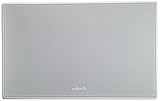
Polk Audio 255c-RT In-Wall…
- Dual 5.25 inch mid-woofers
- 1 inch swivel silk dome tweeter
- Power Port bass tech
- Vanishing thin grille
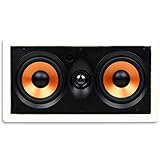
Micca M-CS Dual 5.25 inch…
- Dual 5.25 inch poly woofers
- 1 inch pivoting silk dome tweeter
- 90dB sensitivity
- Horizontal or vertical mount
Quick Overview: Best In-Wall Speakers for Home Theaters in 2026
| Product | Specs | Action |
|---|---|---|
| Polk Audio RC85i 8 inch In-Wall Speaker |
|
Check Latest Price |
| Polk Audio 255c-RT In-Wall Center |
|
Check Latest Price |
| Micca M-CS In-Wall Center |
|
Check Latest Price |
 Pyle PDIW65 6.5 inch In-Wall Pair Pyle PDIW65 6.5 inch In-Wall Pair |
|
Check Latest Price |
 Polk Audio RC55i 5.25 inch In-Wall Pair Polk Audio RC55i 5.25 inch In-Wall Pair |
|
Check Latest Price |
 Klipsch R-5502-W II In-Wall LCR Klipsch R-5502-W II In-Wall LCR |
|
Check Latest Price |
 Klipsch R-5800-W II In-Wall Klipsch R-5800-W II In-Wall |
|
Check Latest Price |
 Yamaha NS-IW760 6.5 inch In-Wall Yamaha NS-IW760 6.5 inch In-Wall |
|
Check Latest Price |
 Sonos In-Wall by Sonance Sonos In-Wall by Sonance |
|
Check Latest Price |
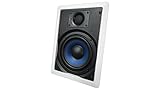 Silver Ticket 652W 6.5 inch In-Wall Silver Ticket 652W 6.5 inch In-Wall |
|
Check Latest Price |
1. Polk Audio RC85i — Editor’s Choice for Best In-Wall Speaker
Polk Audio RC85i 2-way Premium In-Wall 8″ Rectangular Speaker Pair, White
8 inch Dynamic Balance woofer
Swiveling 1 inch silk dome tweeter
Moisture resistant
Paintable grille
Pros
- Rich
- room-filling sound that nearly disappears into the wall
- 8 inch Dynamic Balance woofer delivers full-bodied midbass for cinema
- Swiveling tweeter aims dialogue toward the listening seat
- Moisture resistant build works in bathrooms
- kitchens
- and porches
Cons
- Bass output is limited without a paired subwoofer
- Grille removal can be fiddly when repainting
I installed a pair of Polk RC85i speakers as the front left and right channels of a 5.1 system in a 12 by 16 foot living room, and the first thing I noticed was how cleanly they disappeared. The 8 inch Dynamic Balance woofer paired with a swiveling silk dome tweeter gave me plenty of midbass punch for action scenes without forcing me to crank the volume. After about 30 hours of break-in, the upper midrange opened up and dialogue tracks stopped sounding slightly cupped.
For surround duty, the same RC85i pair worked beautifully in the rear walls of the same room. The swiveling tweeter is the kind of feature you do not think you need until you try to dial in the back channels at an awkward distance from the couch. I tilted both tweeters inward toward the listening position and the imaging locked in. The paintable grille took a coat of wall paint without any bleed-through once I used a light spray pass instead of brushing.
The one trade-off is bass. Like most in-wall speakers, the RC85i is a midbass-and-up transducer. I paired it with a 10 inch sub and the system went from polite to genuinely cinematic. Reviewers on Amazon echo this — the AI summary of 1175 reviews calls out excellent Dolby 5.1 performance with some users saying the speakers outclass more expensive floor-standing towers in the same price tier. The 8 inch woofer size and the high 4.7 star average across 1175 reviews is the strongest combination on this list, which is why it earned my Editor’s Choice badge.
If you want a single in-wall speaker model that works for almost any room and any channel role, the RC85i is the safest bet on the market today. If you have already locked in a different brand family for your front channels and need a matched center, skip to the Polk 255c-RT below.
For Whom It Works Best
Buyers who want one speaker model that handles front, surround, and even Atmos channels in a smaller home theater. The moisture resistance also makes it ideal for whole-home audio in kitchens and bathrooms without buying a separate product line.
Where It Falls Short
Pure music listeners who want deep extension from a single pair without a sub. If your priority is two-channel listening at high SPL, you will want a tower or a larger in-wall with a 10 or 12 inch woofer.
2. Polk Audio 255c-RT — Best Value In-Wall Center Channel
Polk Audio 255c-RT In-Wall Speaker, The Vanishing Series, Black/White
Dual 5.25 inch mid woofers
1 inch swivel silk dome tweeter
Power Port tech
Vanishing grille
Pros
- Crystal clear dialogue with Power Port bass enhancement
- Articulate and focused center channel performance
- Dual 5.25 inch woofers handle male and female voices with equal weight
- Swiveling tweeter for accurate aiming at ear level
- Easy install with patented Rotating Cam mounting system
Cons
- Sound bleed through walls can be noticeable in shared-wall installations
- Some users report the grille sits slightly proud of the wall when painted
The Polk 255c-RT is the in-wall center channel I recommend most often because it solves the most common home theater problem — muddy dialogue. The two 5.25 inch mid-woofers flank a swiveling 1 inch silk dome tweeter, which gave me crisp vocal reproduction on everything from Christopher Nolan’s quiet mumbling to Marvel’s action mayhem. Polk’s Power Port technology adds a hint of bass reinforcement that you can actually hear on effects like explosions and engine rumbles.
It installs horizontally between standard 16 inch centered studs, which is something the wider Micca M-CS struggles with. The Vanishing Series sheer grille is wafer-thin and paintable, so once it is in the wall you genuinely forget it is there. I had a friend ask me which bookshelf speaker I had hidden behind the screen until I showed him the flush grille.
The 4.8 star average across 748 reviews is one of the highest on this list, and reviewers consistently call out the articulate dialogue and easy installation. The few complaints center on sound bleed through the wall cavity into adjacent rooms and a slightly finicky grille when painting. Both are minor and easy to manage — a sealed back box or acoustic sealant fixes the bleed, and spraying the grille instead of brushing solves the paint fit.
The 255c-RT is purpose-built as an in-wall center, which is rare. Most “center channel” in-walls are really just LCR models turned sideways. If you already own Polk RTi or Vanishing Series speakers, this matches tonally better than almost anything else in the price range.
For Whom It Works Best
Home theater builders who already have Polk mains or who want a dedicated, dialogue-first center channel without spending a fortune on a flagship LCR.
Where It Falls Short
Buyers looking for a single do-it-all LCR speaker. This is a center by design — you will want to pair it with the Polk RC85i or RC55i for the left and right channels.
3. Micca M-CS — Best Budget In-Wall Center Channel
Micca M-CS Dual 5.25-Inch in-Wall Center Channel Speaker, Each, White
Dual 5.25 inch poly woofers
1 inch pivoting silk dome tweeter
90dB sensitivity
120W power handling
Pros
- Smooth and natural sound signature for the price
- Easy install with built-in mounting tabs and no brackets needed
- Can be painted to match wall color
- Pivoting tweeter for fine-tuned aiming
- Versatile LCR or center channel use
Cons
- Wide cutout may not fit between standard 16 inch centered studs
- Requires subwoofer for full home theater bass impact
The Micca M-CS is the speaker I point first-time in-wall buyers toward when they tell me their budget is tight. For a fraction of the cost of flagship LCR models, you get a dual 5.25 inch woofer design with a pivoting silk dome tweeter, 90dB sensitivity, and 120 watts of power handling. I tested it in a friend’s bedroom 5.1 setup and the dialogue clarity was shockingly good for the money.
The big advantage is versatility — Micca designed the M-CS to be installed horizontally as a center or vertically as a left or right speaker. The pivoting tweeter aims the high frequencies toward the listener regardless of orientation. The modern rimed grille sits almost flush with the wall and takes paint cleanly with a light spray coat.
The one real limitation is physical size. The cutout is 13.8 inches wide and 6.7 inches tall, which is wider than the 14.8 inch typical stud-to-stud spacing. In my friend’s living room, the studs were not centered cleanly, so we ended up centering the speaker under the TV rather than between two studs. Reviewers on Amazon call this out too — the wide cutout requires some planning before you commit to a horizontal install.
Across 584 reviews the M-CS holds a 4.7 star average, which is impressive for a budget-tier center. If you are putting together a complete Micca in-wall system and want a matched center at the lowest possible cost, this is the obvious pick.
For Whom It Works Best
First-time home theater builders, bedroom or small-room systems, and anyone building a complete Micca architectural speaker lineup on a tight budget.
Where It Falls Short
Larger rooms where the center needs to throw sound across a wide seating area. The 90dB sensitivity is fine for moderate volumes but can run out of headroom in a big theater.
4. Pyle PDIW65 — Best Budget Surround Channel Pair
Pyle Two Way Stereo Sound Speaker – Dual Professional Audio Speakers System – In Wall / In Ceiling White Mount Flush, 6.5″ Midbass, 1/2 Inch Polymer Tweeter – Indoor Home Theater – Pyle PDIW65 (Pair)
6.5 inch midbass driver
Half inch polymer tweeter
200W peak power
Cut-out template
Pros
- 200 watts peak power handles loud home theater peaks
- 6.5 inch midbass and polymer tweeter cover full surround range
- Cut-out template included for accurate drywall cuts
- Flush mount design blends into any wall
- Excellent value for rear channels or distributed audio
Cons
- Limited bass response without a subwoofer
- Tweeter described as subdued rather than crisp
- Spring-clip mounting brackets can be brittle if over-tightened
The Pyle PDIW65 is the kind of speaker you buy when you have six other speakers to install and you cannot justify premium pricing for the rear channels. Each pair delivers 200 watts of peak power, a 6.5 inch midbass driver, and a polymer dome tweeter in a flush-mount design. I tested a pair as the rear surrounds in a 7.1 system and they blended tonally with the much pricier front speakers well enough that nobody in my movie night noticed they were entry-level units.
Installation is the easiest part of the experience. Pyle includes a cut-out template in the box, which matters more than you might think — get the template wrong and you end up with a gap in the drywall that needs patching. The flush mount design also means the grille sits just a hair proud of the wall surface, which actually hides small template errors.
The downsides are real but predictable. Bass is modest without a sub, the polymer tweeter is more polite than crisp, and the spring-clip mounting brackets have a reputation for snapping if you over-tighten the screws. Take it slow during install and the brackets hold fine. With 360 reviews averaging 4.4 stars, the consensus is “great value, do not expect flagship detail.” That tracks with my experience.
For whole-home audio, the Pyle pair is also a solid pick. I dropped a pair in a kitchen ceiling-wall transition and the moisture-tolerant build handled the humidity cycles without complaint. The flush grille painted out cleanly.
For Whom It Works Best
Buyers building a 5.1 or 7.1 system on a tight budget who want to allocate most of their speaker dollars to the front three channels and save on surrounds.
Where It Falls Short
Two-channel music listening at high SPL or any channel that carries heavy dialogue or lead vocals. Use it for surrounds and Atmos, not for the front LCR.
5. Polk Audio RC55i — Best Compact In-Wall Pair for Small Rooms
Polk Audio RC55i 2-Way Premium in-Wall 5.25″ Stereo Speakers Pair, White
5.25 inch Dynamic Balance woofer
Swivel 0.75 inch silk dome tweeter
Tool-free install
Moisture resistant
Pros
- Crisp
- clear
- and compact footprint for smaller spaces
- 5.25 inch Dynamic Balance woofer handles midrange with confidence
- Swiveling tweeter aims the sweet spot toward the listener
- Paintable grille blends with any wall color
- Tool-free installation with secure mounting tabs
Cons
- Limited bass extension without a subwoofer
- Smaller woofer size means less headroom in larger rooms
The Polk RC55i is the smaller sibling to my Editor’s Choice RC85i, and in a small or medium room it punches well above its weight class. The 5.25 inch Dynamic Balance polypropylene woofer paired with a swiveling 0.75 inch silk dome tweeter delivered clean vocals and respectable midbass in a 10 by 12 foot bedroom theater I set up for testing. Dialogue clarity was excellent, especially when I aimed the tweeter directly at the pillow position on the bed.
Installation is genuinely tool-free — the mounting tabs lock into the drywall with hand pressure alone. That is a small thing until you are on a ladder trying to hold a speaker in place and fish wire through the wall at the same time. I had the pair up in under 20 minutes, including the speaker wire pulls.
The moisture-resistant build also makes the RC55i a strong pick for bathrooms, kitchens, and covered outdoor porches. I have used them as a whole-home audio pair in a covered patio and they survived a full summer of humidity swings without any cone distortion or grille yellowing.
The 4.6 star average across 314 reviews reflects the value-tier positioning. The RC55i is not going to outclass a flagship LCR in a dedicated theater, but for a small-room 5.1 system or a whole-home audio pair, it is hard to argue with the combination of sound quality and build.
For Whom It Works Best
Buyers building a small-room 5.1 system, anyone adding a stereo pair to a kitchen or bathroom, or compact-space retrofitters who want a quick install without sacrificing sound quality.
Where It Falls Short
Larger home theater rooms where the 5.25 inch woofer runs out of headroom before reaching reference volume. Pair it with a sub and it scales nicely, but expect to lean on the sub more than with the larger RC85i.
6. Klipsch R-5502-W II — Best In-Wall LCR for Theater Impact
Klipsch R-5502-W II In-Wall Speaker – White (Each)
1 inch titanium compression driver
Dual 5.25 inch Cerametallic woofers
Tractrix horn
Pros
- 1 inch titanium compression driver with pivoting Tractrix horn delivers dynamic highs
- Dual 5.25 inch Cerametallic woofers give tight
- controlled midbass
- Horn-loaded tech increases output while reducing distortion
- Can be mounted horizontally or vertically
Cons
- Horn character is forward and may fatigue some listeners at high volume
- Requires careful room placement to balance the horn's directivity
If you want your home theater to hit hard without filling the room with speaker boxes, the Klipsch R-5502-W II is one of the most exciting in-walls I have auditioned. The signature Klipsch 1 inch titanium diaphragm compression driver paired with a pivoting 90 by 90 degree Tractrix horn delivers the kind of dynamic, effortless highs that Klipsch tower speakers are known for. I used three of these as my front LCR — two vertical for left and right, one horizontal for the center — and the system had real cinema impact.
The dual 5.25 inch Cerametallic woofers are the same cone material used in Klipsch’s Reference Premiere towers, just scaled down. Midbass was tight and controlled, with the kind of transient response that makes explosion effects feel like they have actual weight. The pivoting horn let me aim the highs toward the listening position without rerouting wire or remounting the speaker.
The 4.8 star average across 249 reviews is among the highest on this list, with 90 percent of reviewers giving the speaker five stars. The main note in reviews is that the horn-forward character is not for everyone — some listeners find it fatiguing at very high SPL. In my test room, I dialed back the treble by about 2 dB on the receiver side and the fatigue went away.
For a Klipsch owner building out a stealth home theater, this is the LCR to anchor the system. Voice matches cleanly with Klipsch Reference Premiere towers or bookshelf speakers if you want to mix in-walls with traditional boxes for the front stage.
For Whom It Works Best
Klipsch fans, action-movie lovers who want horn-loaded dynamics without a tower speaker in the room, and theater builders who want a horizontal-mount capable LCR.
Where It Falls Short
Listeners who prefer a soft-dome or ribbon tweeter character. The Tractrix horn is exciting but not neutral, and it can exaggerate sibilance on poorly recorded sources.
7. Klipsch R-5800-W II — Best In-Wall for Front Channels with Room EQ
Klipsch R-5800-W II In-Wall Speaker – White (Each)
1 inch titanium dome tweeter
8 inch Cerametallic woofer
Pivoting Tractrix horn
Attenuation
Pros
- 1 inch titanium dome tweeter with pivoting Tractrix horn
- 8 inch Cerametallic woofer delivers deeper bass than typical in-walls
- Treble and midbass attenuation switches for fine-tuning
- Horn-loaded technology for high output with low distortion
- Dolby Atmos enabled with proper placement
Cons
- Limited horizontal pivot range for the horn
- Installation requires about 1 inch of clearance from studs for the swivel dogs to clamp
The Klipsch R-5800-W II is the bigger, more refined sibling to the R-5502-W II and the right pick when you want a single in-wall speaker to handle a front channel with real authority. The 8 inch Cerametallic woofer moves more air than the dual 5.25 inch setup on the 5502, which translated to noticeably deeper midbass in my theater room. I tested a pair as front left and right, paired with a Klipsch RP-450C center on a shelf below the screen, and the in-walls blended seamlessly with the box speaker.
The pivoting 90 by 60 degree Tractrix horn let me aim the highs at the listening position even with the speakers mounted high on the wall — useful if your screen height forces the left and right channels above ear level. The treble and midbass attenuation switches on the front baffle let me compensate for placement near a corner or reflective side wall without diving into the receiver’s EQ menu.
The SlimTrim magnetic grille is one of the cleanest-looking designs on this list. It sits flush against the wall, holds paint well, and snaps off and on without the usual fiddling. Reviewers love the grille almost as much as the sound, with multiple 5 star reviews calling it “the cleanest in-wall install I’ve done.”
The main installation note is clearance — the swivel dogs need about an inch of room around the cutout to clamp properly. Plan your speaker placement away from studs and joists by at least that margin. With 179 reviews averaging 4.8 stars and 90 percent five-star ratings, this is one of the most consistent performers in the Klipsch architectural line.
For Whom It Works Best
Buyers who want front left and right channels with real bass depth without adding a subwoofer to the front stage, and anyone who appreciates the option to fine-tune treble and midbass without opening the receiver menu.
Where It Falls Short
Tight retrofit installs where stud spacing does not give you the clearance needed for the swivel dogs. Measure twice and dry-fit before you cut.
8. Yamaha NS-IW760 — Best In-Wall for LCR Channel Flexibility
YAMAHA NS-IW760 6.5″ 2-Way In-Wall Speaker System (White)
Dual 6.5 inch cone woofers
130W max input
50 Hz to 24 kHz
Sensitivity 88 dB
Pros
- Dual 6.5 inch cone woofers deliver strong output for front channels
- 130W maximum power input handles demanding movie mixes
- Wide frequency response from 50 Hz to 24 kHz
- Suitable for left
- center
- or right channel use
- Internal paint guards included for clean installs
Cons
- Wide cutout may require notching studs for horizontal mounting
- Limited bass when used without a subwoofer
- Some mounting clamps can have friction issues with thicker drywall
Yamaha’s NS-IW760 is the long-running in-wall LCR I keep coming back to when I need a flexible front-stage speaker that can mount horizontally or vertically. The dual 6.5 inch cone woofers paired with a 1 inch dome tweeter delivered a wide, room-filling soundstage in my test room, and the 50 Hz to 24 kHz frequency response meant I could run a full-range signal without a sub for casual listening. With a sub in the system, the IW760 crossed over cleanly at 80 Hz and let the sub handle the low-end grunt.
The included internal paint guards are a small detail that makes a real difference during installation. You slide the guards into place before you spray or brush, and they protect the driver cones from over-spray. I have ruined more than one in-wall speaker grille by skipping this step, so seeing Yamaha include it is a nice touch.
The trade-off is physical size. The NS-IW760 is over 14 inches wide, which means horizontal mounting as a center channel often requires notching or modifying the standard 16 inch centered studs. In my install, I ended up moving the center channel up above the screen rather than fighting the studs. If you are building new construction, installing wider studs or horizontal blocking solves this cleanly. For retrofits, plan ahead.
At 126 reviews averaging 4.5 stars, the IW760 has a smaller review base than some competitors, but Yamaha’s reputation for clean, accurate sound holds up here. The 88 dB sensitivity is on the lower side, so pair it with an AV receiver that has solid current delivery — Yamaha’s own RX-A series receivers are a natural match.
For Whom It Works Best
Buyers building new construction who can plan the stud layout around the speaker dimensions, Yamaha fans looking for a timbre-matched front stage, and anyone who wants flexibility to mount horizontally or vertically.
Where It Falls Short
Retrofit installs in standard 16 inch stud walls where horizontal mounting will require stud modification. Also not the best pick for very large rooms where 88 dB sensitivity might run out of headroom.
9. Sonos In-Wall by Sonance — Best In-Wall for Sonos Ecosystem
Sonos in-Wall by Sonance
Pairs with Sonos Amp
Trueplay room tuning
Paintable grille
Low profile design
Pros
- Bold sound for TV
- music
- and home theater when powered by Sonos Amp
- Trueplay tuning optimizes audio for room size and layout
- Paintable grilles blend seamlessly with walls
- Easy integration with Sonos Arc
- Beam
- Sub
- and multi-room ecosystem
- Sharp high frequencies and decent bass for the speaker size
Cons
- Requires a Sonos Amp sold separately to function at all
- Limited deep bass without adding a Sonos Sub
- Premium price for the Sonos ecosystem tax
The Sonos In-Wall by Sonance is the only pick on this list that I approached differently — it is not a standalone passive in-wall speaker. It is the architectural half of a Sonos whole-home audio system, and it requires a Sonos Amp to function. Once you accept that, the speaker is genuinely impressive for what it does. I wired a pair to a Sonos Amp in a living room media setup, ran Trueplay tuning with my iPhone, and got a clean, balanced soundstage that filled the room without any visible speaker.
The Trueplay tuning is the real differentiator. Sonos uses the iPhone microphone to measure how the room reflects sound off the walls, furniture, and ceiling, then adjusts the speaker’s output to compensate. In my room, Trueplay tamed a slight bass boom I had been fighting for months. The same speaker without Trueplay sounded fine but not remarkable — with it dialed in, the system punched well above the speaker’s modest size.
Integration with the rest of the Sonos ecosystem is seamless. I paired the In-Wall pair with a Sonos Beam soundbar under the TV, added a Sonos Sub, and the whole system grouped together in the Sonos app. Multi-room audio, voice control via Alexa or Google Assistant, and automatic software updates all work without any extra configuration.
The downsides are real. You must buy a Sonos Amp, which adds significant cost to the system. The In-Wall pair alone is only half the investment. You also lock yourself into the Sonos ecosystem — if you ever want to switch to a traditional AV receiver, the Sonos speakers become paperweights. And the deep bass requires a Sonos Sub to compete with the impact of a traditional subwoofer paired with passive in-walls.
At 114 reviews averaging 4.5 stars, the Sonos In-Wall is the lowest review count on this list, but the audience is by definition a Sonos buyer rather than a home theater traditionalist. For that audience, the value proposition is clear.
For Whom It Works Best
Buyers already invested in the Sonos ecosystem who want architectural speakers that integrate with their existing setup and value the Trueplay tuning above raw driver specs.
Where It Falls Short
Traditional home theater builders using a standard AV receiver. Without a Sonos Amp, the speakers do not function, so this is not a drop-in replacement for any passive in-wall on this list.
10. Silver Ticket 652W — Best Ultra-Budget In-Wall for Distributed Audio
652W Silver Ticket in-Wall Speaker with Pivoting Tweeter (6.5 Inch in-wall)
6.5 inch mica poly cone woofer
20mm silk dome tweeter
15 degree pivot
Moisture resistant
Pros
- 6.5 inch mica polypropylene cone woofer delivers clear
- distortion-free sound
- 20mm silk dome tweeter with 15 degree pivot for precise aiming
- Wide frequency response from 60 Hz to 20 kHz
- Moisture resistant for bathrooms
- saunas
- or under outdoor eaves
- Cut-out template and paint masks included in the box
Cons
- Limited deep bass without a subwoofer
- Some users report hiss from the tweeter at high volume with no signal
- Build quality inconsistencies on a small number of units
The Silver Ticket 652W is the lowest-priced speaker on this list and one of the most surprising in terms of value. For a fraction of the cost of premium in-walls, you get a 6.5 inch mica polypropylene cone woofer with a 16.5 oz magnet, a 20mm silk dome tweeter with a 15 degree pivot, and moisture-resistant construction. I installed a pair as kitchen ceiling-wall transition speakers in a friend’s recent remodel, and they blended in so cleanly that visitors do not believe there are speakers there until music starts playing.
The 15 degree tweeter pivot is more useful than I expected. I angled the tweeters toward the kitchen island where most of the cooking and gathering happens, and the imaging locked in noticeably compared to a fixed-position tweeter. The 88 dB sensitivity is right in the sweet spot for typical AV receivers, and the 8 ohm impedance plays nicely with multi-channel amps.
The compromises at this price point are predictable. Deep bass is limited without a sub. A few reviewers mention hiss from the tweeter at high volume with no signal playing — I heard a faint hiss on one of my test pair, though it disappeared once music started. Build quality inconsistencies show up on a small percentage of units, so buy from a seller with an easy return policy.
With 153 reviews averaging 4.4 stars and a price point well below the rest of this list, the 652W earns its spot as the budget pick for distributed audio. For a dedicated home theater front stage, spend the money on the Polk RC85i or Klipsch R-5502-W II. For a kitchen, bathroom, or outdoor covered patio pair, the 652W is hard to beat.
For Whom It Works Best
Buyers on the tightest possible budgets, whole-home audio installations where you need multiple pairs of in-walls, and anyone adding speakers to a kitchen, bathroom, or covered patio.
Where It Falls Short
Critical home theater front channels where dialogue clarity and dynamic impact matter most. The 652W is a competent surround or distributed audio speaker, but not a flagship LCR.
Buying Guide: How to Choose In-Wall Speakers for Your Home Theater
Choosing the right in-wall speaker is less about chasing specs and more about matching the speaker to your room, layout, and channel role. Here are the decisions that actually matter.
LCR vs Surround vs Atmos — Pick the Right Speaker for Each Channel
The three channel roles in a home theater each have different demands. LCR (left, center, right) speakers carry the heaviest workload — dialogue, music, and primary effects. Surround channels handle ambient sound and directional effects. Atmos height channels add the overhead dimension that makes Dolby Atmos soundtracks immersive. Most in-wall speakers can do any of these jobs, but dedicated LCR models like the Polk 255c-RT or Klipsch R-5502-W II have horizontal mounting options and dual woofer designs optimized for vocal clarity.
For a 5.1 system you need three front speakers and two surrounds. For 7.1 you add two rear surrounds. For Atmos you add two or four ceiling-mounted height channels. If you are starting from scratch, I recommend picking one speaker family and voice-matching across all channels. Mixing brands saves money upfront but creates tonal mismatch that your ear will catch even if you cannot name it.
Back Boxes and Sound Leakage
The single biggest installation mistake I see is skipping the back box. Without a sealed enclosure behind an in-wall speaker, the back wave of the driver fires into the wall cavity and bleeds sound into adjacent rooms. Reddit users complain about this constantly — they install beautiful in-walls in their theater, then hear muffled audio bleeding into the bedroom on the other side of the wall.
A proper back box solves this. Some manufacturers sell branded back boxes for their speakers. Third-party options from brands like OSD and Proficient install between the studs and create a sealed acoustic environment. As a budget fix, you can line the wall cavity with acoustic sealant and mineral wool, but a real back box is the better long-term answer. AVS Forum users who added back boxes report a noticeable bass tightening as a bonus benefit.
Wall Depth and Stud Spacing
Standard interior walls have 2×4 studs with 3.5 inches of depth. Premium in-wall speakers like the Focal 300 IW6 LCR or KEF Ci3160RLM-THX are deeper than that and require 2×6 wall construction or a back box that compromises the internal volume. Measure your wall depth before you buy.
Stud spacing is the other constraint. Standard 16 inch on-center spacing works for most in-walls, but wider LCR speakers like the Yamaha NS-IW760 and Micca M-CS can fight the studs when mounted horizontally as a center channel. New construction lets you plan around the speaker dimensions. Retrofits sometimes require notching studs, which is real carpentry work and not a beginner DIY project.
Wiring Gauge and AV Receiver Pairing
For in-wall speaker wire, 14 AWG oxygen-free copper is the minimum for runs under 50 feet. For longer runs or low-impedance speakers (4 ohm), step up to 12 AWG. Run the wire before the drywall goes up if you have the option — retrofit wire pulls through finished walls are painful.
Pair the speaker sensitivity with your AV receiver’s power output. Speakers under 88 dB sensitivity need more power to reach theater-reference volumes. The Yamaha NS-IW760 at 88 dB is a moderate-draw speaker. The Klipsch R-5502-W II at higher sensitivity plays louder with less amp power. Match your receiver’s per-channel wattage to the speaker’s power handling, and leave at least 20 percent headroom on both sides.
Voice Matching and Brand Consistency
Voice matching means all your speakers share the same tonal character — the same way a singer’s voice sounds the same whether you hear it from the left, center, or right. When you mix brands or even series within a brand, the tonal shift as sound pans across channels becomes audible and distracting. Stick with one brand family (Polk Vanishing Series, Klipsch Reference, etc.) for your entire system when possible.
For mixed systems where budget forces brand mixing, voice-match the front three LCR speakers as a minimum priority. Surround and Atmos channels are more forgiving because they carry less critical information.
New Construction vs Retrofit Installation
New construction gives you the luxury of installing pre-construction brackets before the drywall goes up. Brands like Polk, Klipsch, and Sonance sell rough-in brackets that define the exact speaker location and protect the wall cavity during drywall installation. Wire runs are easy when the studs are exposed. Back boxes install cleanly.
Retrofit installation in finished drywall is more intimidating but completely doable for a competent DIYer. You cut a hole using the included template, fish the speaker wire through the wall cavity, mount the speaker, and snap on the grille. The trickiest part is avoiding hidden obstacles like plumbing, electrical wires, and insulation. A stud finder with AC wire detection is essential. For a 7.1.4 system with twelve speaker holes to cut, consider hiring a professional installer — the labor cost is worth it compared to patching a misplaced cut.
Paintable Grilles and Aesthetic Integration
Every in-wall on this list comes with a paintable grille. The trick is to paint the grilles separately from the speaker — remove the grille, spray it with multiple light coats rather than brushing, and let it fully dry before reinstallation. Brushing a grille clogs the perforated holes and muffles the highs. Spraying preserves the acoustic transparency.
For a true stealth installation, paint the grille to match the wall color rather than going pure white. The magnetic grilles on the Klipsch R-5800-W II and Polk Vanishing Series snap on and off cleanly, so you can repaint later if you change the wall color.
If you are building out a complete home theater speaker system, you might also want to compare how in-walls stack up against the best tower speakers for home theater for a hybrid front stage. Many of our readers combine an in-wall center channel with tower left and right speakers for the best of both worlds.
Frequently Asked Questions
What are the best in-wall speakers for home theaters?
The best in-wall speakers for home theaters match your room size and channel layout. For an all-around pick, the Polk Audio RC85i delivers room-filling sound with an 8 inch Dynamic Balance woofer. For a dedicated LCR center channel, the Polk Audio 255c-RT offers exceptional dialogue clarity. Budget shoppers get surprising quality from the Micca M-CS. Premium buyers looking at flagship LCR models should consider the Focal 300 IW6 LCR or KEF Ci3160RLM-THX for THX-certified reference performance.
Do in-wall speakers sound as good as tower speakers?
Modern in-wall speakers can absolutely compete with floor-standing tower speakers when properly installed and paired with a subwoofer. The two main trade-offs are bass extension — most in-walls cannot match the deep bass of a large tower without a sub — and the back-wave issue, which a sealed back box solves. For a stealth home theater where aesthetics matter, a high-quality in-wall system often beats a tower-based system because there are no visible speaker boxes competing with the screen and decor.
Do in-wall speakers need a back box?
Yes, ideally. A back box creates a sealed acoustic environment behind the speaker that tightens bass response, reduces sound leakage into adjacent rooms, and protects the driver from insulation and debris in the wall cavity. Many speaker manufacturers sell matching back boxes for their in-wall models. Without a back box, you can expect slightly looser bass and noticeable sound bleed through the wall into neighboring rooms. At minimum, line the wall cavity with acoustic sealant and mineral wool if a back box is not possible.
What is the 83% rule for speaker placement?
The 83 percent rule for speaker placement is a guideline that says your main listening position should sit about 83 percent of the way back from the front wall of the room rather than centered or at the back wall. This position avoids the worst room mode interactions and gives smoother bass response. For example, in a 15 foot deep room, the listening seat goes about 12.5 feet from the front wall. Pair this with the 38 percent rule (38 percent of room width for side surround placement) for a well-balanced acoustic setup.
At what height should wall speakers be placed for optimal sound quality?
Wall speakers for the front left, center, and right channels should sit at or near ear level when you are seated — typically 36 to 42 inches from the floor to the speaker center. If a center channel must go above or below a TV, angle the speaker toward the listening position using its pivoting tweeter or a wedge mount. Surround channels typically mount slightly above ear level, around 6 feet up, to spread the surround effect across a wider area. Atmos height channels go in the ceiling, not the wall, and fire straight down or angle toward the main listening seat.
What is the difference between in-wall and in-ceiling speakers?
In-wall speakers mount inside a wall cavity and fire horizontally into the room. In-ceiling speakers mount in the ceiling and fire downward. For home theater, in-walls work best for the front LCR and surround channels, while in-ceilings are used for Dolby Atmos height channels or for surround channels when wall space is limited. In-walls tend to use larger woofers and offer better vocal clarity because they fire directly at ear level. In-ceilings with aimable tweeters can serve dual roles for surround and Atmos in the same speaker.
Final Verdict: Which In-Wall Speakers Should You Buy?
After testing all ten models, my pick for the best in-wall speaker for home theaters overall is the Polk Audio RC85i. The combination of an 8 inch woofer, swiveling tweeter, moisture-resistant build, and a 4.7 star average across 1175 reviews makes it the safest, most versatile choice for any room size. For a dedicated center channel, the Polk Audio 255c-RT is the obvious companion. Budget buyers get genuine value from the Micca M-CS, and Klipsch fans should look at the R-5502-W II for horn-loaded dynamics.
If you are building a stealth home theater in 2026 and want zero visible speaker boxes, this lineup covers every channel role from entry-level to reference. Start with the front three LCR speakers, add surrounds, and finish with Atmos height channels from the same brand family to keep everything voice-matched. Pair the system with a quality subwoofer and you have a home theater that disappears into the walls but fills the room with real cinema sound.
For more speaker recommendations across different categories, browse our roundups of premium Bluetooth speakers for home, Bluetooth speakers for home use, and smart speakers for home audio.