

The Fiskars 32-inch PowerGear2 is the best lopper for thick branches, rated to cut up to 2 inches of wood and backed by more owner reviews than any other tool in this group. Six thousand owners have tested it on everything from fruit-tree limbs to storm debris.
That said, the rating is not the whole story. A 2 inch cut capacity usually describes the widest branch that fits in the jaws, not a clean slice through 2 inches of hardened heartwood. And the mechanism matters more than the number on the box: a geared bypass lopper and a ratcheting anvil lopper rated at the same diameter behave very differently in real branches.
We compared 10 heavy duty loppers across every mechanism family that matters for thick wood. That means geared bypass, compound action anvil, ratcheting anvil, telescoping anvil and fixed-blade professional frames, plus the practical details buyers actually complain about later: weight, handle spread, telescoping locks and whether a replacement blade exists.
Everything below reflects the specifications and owner feedback attached to each product, cross-checked against what owners say on gardening and landscaping forums. Last updated for 2026.
Table of Contents
- Top 3 Best Loppers for Thick Branches (October 2026)
- All 10 Picks at a Glance in 2026
- 1. Fiskars PowerGear2 32 in Bypass Lopper – Best Overall, Cuts 2 Inch Branches
- 2. TABOR TOOLS GG12A Compound Action Anvil Lopper – Cuts 2 Inch Dead Wood
- 3. Spear and Jackson 8290RS Telescopic Ratchet Anvil Loppers – Extends to 40.5 Inches
- 4. GARTOL Heavy-Duty Extendable Loppers – Ratchets to 2.5 Inches, Reaches 41 Inches
- 5. Corona 32 in Compound Action Anvil Lopper – Professional Frame, 1.5 Inch Rating
- 6. Kings County Tools Extendable Anvil Loppers – 26 to 40 Inches, Rated 2 to 2.5 Inches
- 7. Corona DualLINK MAXFORGED 33 in Bypass Loppers – Best Bypass for Live Wood to 2 Inches
- 8. YRTSH Compound Action Anvil Lopper – Best Budget Extendable Setup
- 9. EZ Kut G2 Ratcheting Branch Cutter – 6-Stage Ratchet, Locks at 42 Inches
- 10. TABOR TOOLS GG22A Extendable Anvil Lopper – 27 to 40 Inches, Compound Action
- How to Choose Heavy Duty Loppers: 8 Decision Points
- When a Lopper Is the Wrong Tool
- How to Make the Cut Without Ruining Your Lopper
- Frequently Asked Questions
- Final Verdict: The Best Loppers for Thick Branches in 2026
Top 3 Best Loppers for Thick Branches (October 2026)
These three cover the widest range of real jobs, and each one is reviewed in full below.

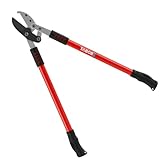
Fiskars PowerGear2 32 in…
- 2 inch cut capacity
- PowerGear2 gear leverage
- Low-friction hardened blade

All 10 Picks at a Glance in 2026
| Product | Specs | Action |
|---|---|---|
| Fiskars PowerGear2 32 in Bypass |
|
Check Latest Price |
| TABOR TOOLS GG12A Anvil |
|
Check Latest Price |
| Spear and Jackson 8290RS Ratchet |
|
Check Latest Price |
 GARTOL Extendable Anvil GARTOL Extendable Anvil |
|
Check Latest Price |
 Corona FL 3420 Compound Anvil Corona FL 3420 Compound Anvil |
|
Check Latest Price |
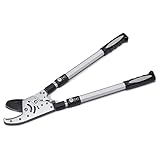 Kings County Extendable Anvil Kings County Extendable Anvil |
|
Check Latest Price |
 Corona DualLINK MAXFORGED Bypass Corona DualLINK MAXFORGED Bypass |
|
Check Latest Price |
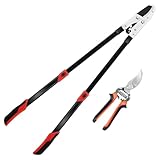 YRTSH Compound Action Anvil YRTSH Compound Action Anvil |
|
Check Latest Price |
 EZ Kut G2 Ratcheting Anvil EZ Kut G2 Ratcheting Anvil |
|
Check Latest Price |
 TABOR TOOLS GG22A Extendable TABOR TOOLS GG22A Extendable |
|
Check Latest Price |
Two numbers in that table deserve a caveat before you shop. The Corona FL 3420 is rated at 1.5 inches, which is lower than most rivals here, and the EZ Kut G2 carries a much larger jaw figure than its rated 1.5 inch cutting capacity. Ratings and jaw openings are not the same measurement, and the reviews below spell out which is which for every model.
1. Fiskars PowerGear2 32 in Bypass Lopper – Best Overall, Cuts 2 Inch Branches
Fiskars 32” PowerGear2 Garden Bypass Loppers, 2″ Cut Capacity Tree Trimmer
Cuts up to 2 inch
PowerGear2 gear and cam leverage
Hardened alloy steel blade
32 inch aluminium handles
3.9 pounds
Pros
- Cuts 1.5 to 2 inch live branches with little effort
- PowerGear2 mechanism multiplies leverage where the branch is thickest
- Sturdy build owners expect to last for years
- Bypass blade suits living wood
- Quiet compared with a hand saw
Cons
- Heavier than the earlier PowerGear1 version
- Curved lower blade takes practice to feed a branch into
- Awkward to position when surrounded by branches
This is the tool we come back to. Owners consistently report it pruning 1.5 to 2 inch live branches with very little effort, and the removable blade can be resharpened or replaced rather than discarded. It carries a full lifetime warranty, which is unusual at this level of the category.
The mechanism is the reason it performs. The PowerGear2 gear and cam sits at the midpoint of the blade, so the force you build with your arms arrives at the cutting edge amplified, exactly where the branch is thickest. A fully hardened bypass blade with a low-friction coating resists gumming and rust, which matters more than it sounds if you cut pine or cherry.
The honest criticisms are weight and geometry. At 3.9 pounds it feels heavier than the earlier PowerGear1, and the curved lower blade creates a cavity that new users need a few cuts to learn. Long handles are also awkward when you are working in dense brush, because there is nowhere to swing them.
That learning curve is the thing to push through. Several reviews note it arrives without tags or care instructions, so it is worth knowing up front that the first few cuts feel clumsy by design rather than because something is wrong.
What owners say after months of use
With 6198 reviews behind it, this model has the deepest owner feedback in the group, and the pattern is consistent. Users describe it handling 1 inch plus branches and needing very little effort from the geared mechanism. On r/landscaping, Fiskars is recommended by name, with one user calling the brand excellent and saying they use them in professional work.
The same threads raise the same flaw: the handles open further apart than some users expect, which makes getting around a very thick branch awkward. That is a real mechanical limitation of the frame, and it is worth knowing before you buy rather than after.
When to pick something else
If your work is mostly dead, brittle wood, this is the wrong blade type. Bypass geometry deflects under load, and forum consensus is that forcing a bypass lopper through hardened deadwood is how blades get ruined. Pair it with an anvil model rather than working it past its design.
It is also not the lightest option, so if you have grip strength issues and long sessions ahead, look at the ratcheting models further down. And for anything approaching 2.5 inches, move up to a ratcheting anvil or reconsider the tool entirely.
2. TABOR TOOLS GG12A Compound Action Anvil Lopper – Cuts 2 Inch Dead Wood
TABOR TOOLS GG12A Anvil Lopper with Compound Action, 30 Inch Tree Trimmer & Branch Cutter, Heavy Duty Tree Pruner with 2 Inch Cut Capacity, Chops Thick Dry Branches with Ease
Cuts up to 2 inch
Compound action lever
Hardened carbon steel blade
30 inch handles
1.56 kg
Pros
- Compound action turns hard dry cuts into a short squeeze
- Hardened carbon steel blade holds its edge
- 30 inch length gives extra leverage and reach
- Rubberized handles stay comfortable over long sessions
- Reported to work well for arthritic wrists
Cons
- Anvil head can crush live green wood
- Replacement blades are a separate purchase
This lopper ties for the highest average rating in the group, with 87% of reviews at five stars. Buyers credit the compound lever for turning hard, dry, woody cuts into a short squeeze rather than an all-out effort.
It works because the compound action lever multiplies cutting power through more than one pivot point, so the blade meets the branch with several times the force your arms produce. The hardened carbon steel blade carries a low-friction non-stick coating, and the anvil head is shaped specifically for dry and dead growth.
At 30 inches long, the handles give you both leverage and reach into higher limbs without climbing. The rubberized grips are a genuine asset on this model, and reviewers with limited hand strength report that it needs far less force than a plain pivot lopper of the same length.
Replacement cutting blades are available, which is the longevity detail that separates a tool you keep for a decade from one you replace. The manufacturer lists a customer satisfaction guarantee on top of that.
What owners say about the effort saved
The recurring owner comment is surprise: people expect a hard two-handed struggle and get a short squeeze instead. Reviews also praise the handle length for reaching into higher limbs, and several users note the grips stay comfortable through long sessions without slipping.
The limitation is consistent across the feedback. The anvil head is built for dead wood, and on live green growth it crushes rather than shears. Owners treat it as a complement to a bypass lopper rather than a replacement for one.
Who should buy this one
Buy it if your thick-branch work is deadwood, storm debris, kindling or winter pruning, where the wood is dry and hard. The compound lever gives you a mechanical advantage you can feel, and the 30 inch reach handles the branches just out of comfortable standing reach.
Skip it if you prune fruit trees through the growing season, where clean healing cuts matter more than raw force. For that, the bypass models in this list are the correct pairing, and most owners end up owning one of each.
3. Spear and Jackson 8290RS Telescopic Ratchet Anvil Loppers – Extends to 40.5 Inches
Spear & Jackson 8290RS Razorsharp Heavy Duty Telescopic Ratchet Anvil Loppers, Extendable 40 1/2″ Handles, Ideal for Cutting Thick Hard To Reach Branches, Powerful Ratcheting Mechanism
Cuts up to 2 inch
Ratchet step action
SK5 carbon steel blade with PTFE coating
Extends 28 to 40.5 inch
4.2 pounds
Pros
- Ratchet delivers very high force in small increments
- Cuts an unusually wide range of branch diameters
- SK5 blade rarely dulls
- Enclosed side plates do not snag in brush
- Telescoping handles lock securely
Cons
- Ratchet is poor for thin twigs that need several cranks
- Handles must be fully opened so overhead reach is limited
- Heavy for smaller users
- A few reports of blade snapping and loose plastic parts
This is a long-standing favourite among owners who simply want maximum force available. Property owners and professionals say it cuts anything that fits the jaws, holds its edge without sharpening, and has replaced the chainsaw for yard-edge brush work in a lot of cases.
The ratchet action advances the blade in short steps, so each squeeze adds force rather than requiring one heroic effort. The SK5 carbon steel upper blade carries a PTFE coating for rust resistance, and the enclosed side plates keep the mechanism from catching on brambles when you are working in a brush pile.
Tubular aluminium handles extend from 28 to 40.5 inches, with a locking catch for storage and non-slip soft feel grips. A ten-year guarantee against manufacturing faults backs the whole thing, which is the strongest warranty in this group.
There is a learning curve built into the design. The ratchet is deliberately inefficient on small branches, and the handles need to be opened fully for the mechanism to engage, which limits how far you can reach overhead. At 4.2 pounds it is also one of the heavier models here.
Why owners keep recommending it
The praise is consistent across thousands of reviews: it cuts anything the jaws accept, and the blade rarely dulls. People report the telescoping handles lock reliably and add real reach, and the enclosed mechanism survives being used in tangled brush where an exposed ratchet would jam.
A small number of reviews report blade snapping and loose plastic handle components. That is worth weighing, though at 4.6 average across 5228 reviews the failures are clearly the exception rather than the pattern.
Where it falls short
If you prune a lot of thin twigs and small shoots, this is the wrong tool. Every small cut takes several cranks, and the fully-open handle requirement makes precise work in a dense shrub frustrating rather than satisfying.
It is also a poor choice for smaller users or anyone with limited upper body strength, since the weight is felt most when the handles are extended. For those situations, the lighter ratcheting and extendable models further down do the same job with less load on the hands.
4. GARTOL Heavy-Duty Extendable Loppers – Ratchets to 2.5 Inches, Reaches 41 Inches
GARTOL Heavy-Duty Extendable Loppers, 28″-41″ Telescopic Tree Trimmer, Double Ratcheting Branch Cutter, Anvil Lopper for Thick Branches, Cuts 2″ Dry Wood
4-step ratchet to 2.5 inch
Extends 28 to 41 inch
High carbon steel blade with PTFE coating
Soft TPR grips
1.88 kg
Pros
- Ratchet plus aluminium handles give strong leverage on thick limbs
- Light enough to stay comfortable fully extended
- Telescoping handles reach high branches without a ladder
- Customer service resolved a blade failure with free replacement blades
Cons
- Several reports of the cutting blade fracturing
- Green plastic components show stress under sustained heavy use
- Bulky multi-piece packaging
- Only a 1-year warranty
This is the reach pick. The handles telescope from 28 to 41 inches, and at 1.88 kg it is one of the lighter tools here even when fully extended, which is unusual for a lopper that long.
Cutting comes from a four-step ratchet system described as handling branches up to 2.5 inches, though the listed cutting width is 2 inches. Treat the higher figure as the maximum the mechanism can take on. The blade is heat-treated high carbon steel with a PTFE coating, rated for hardwood and dense vegetation.
Soft TPR handles are designed to be slip resistant and to reduce hand strain over extended use, and owners with arthritis single this model out as workable. Several reviews mention that the combination of ratchet and light weight lets older users cut fairly large branches without excessive effort.
Durability is the drag on the rating, at 4.4 across 1860 reviews. A recurring set of reviews reports the high-carbon blade snapping, including on relatively soft wood, and green plastic components showing stress under sustained heavy use.
What owners report after a season of work
The praise centres on reach combined with weight. Buyers like that the handles get into high branches without a ladder and that the tool stays comfortable at full extension, which is exactly the combination that makes long pruning days bearable.
The durability complaints are softened by the after-sales response. The same reviewers who report a broken blade say GARTOL customer service sent replacement blades or issued refunds, which turns a serious negative into a manageable one. The one-year warranty is the shortest here, so that support matters.
Who this suits and who it does not
Pick it if reach without a ladder is your priority and you want to stay clear of the weight of a full-length professional lopper. It is a good match for older users or anyone who finds extended aluminium arms tiring, and the four-step ratchet reduces the force needed on each cut.
Look elsewhere if you cut very hard heartwood daily. The blade fracture reports are concentrated in heavy use, and a one-year warranty gives less protection than the ten-year guarantee on the Spear and Jackson or the lifetime warranty on the Fiskars. For heavy, repetitive cutting, a forged-blade professional frame is the safer bet.
5. Corona 32 in Compound Action Anvil Lopper – Professional Frame, 1.5 Inch Rating
Corona Tools Compound Action Anvil Lopper – 32-Inch Heavy-Duty Branch Cutter for Tree Trimming & Pruning, Garden Loppers for Thick Branches
Rated 1.5 inch
Compound action leverage
Serrated alloy steel anvil
32 inch fibreglass and steel handles
2.7 pounds
Pros
- Compound gearing gives strong power with less muscle input
- Blades resist twisting when the lopper is not perfectly aligned
- Fat grip is comfortable for seniors
- Professional grade construction held consistent over decades
- Replacement anvils available separately
Cons
- Rated at 1.5 inch capacity
- lower than several rivals
- Anvil surface grooves over time and tightens handle spread
- Anvil bolts can loosen without thread lock
- Bulkier tubing than some lighter models
This is the professional anvil frame, and the reviews show a large base of repeat owners, including a citrus grower with 800 plus trees. At 4.7 across 1389 reviews, it is one of the strongest-rated tools in the group.
Compound leverage multiplies cutting force for thick, tough branches, and the anvil head is suited to dry, dead and hard wood. At 32 inches the handles are fixed rather than telescoping, made from fibreglass and steel, at 2.7 pounds.
Two practical strengths stand out in owner feedback. The blades resist twisting even when the lopper is not perfectly aligned, and the tool can cut branches flush against a trunk, which anvil designs handle better than bypass. The fat grip is repeatedly praised as comfortable for older users.
Reviewers also note that owners buy this sold by the piece at a value price rather than hunting for replacement blades to fit an old frame, which is a real consideration when you already own a Corona.
What decades of ownership reveal
Owners report consistent quality over long ownership periods, with several mentioning tools passed down or still in service. The non-twisting cut quality comes up again and again, and so does the flush-against-the-trunk capability that suits orchard and citrus work.
There are real maintenance notes buried in the feedback. The anvil surface grooves over time, which tightens the handle spread until the knuckles can collide, and the anvil bolts can loosen enough to affect the cut. Applying thread lock is the simple fix owners use.
Where the 1.5 inch rating bites
This is the lowest rated capacity among the heavy models here, which is the main reason it is not the overall winner. If your thickest branches run to 2 inches, you will be working at or past the limit rather than comfortably inside it.
It is also the bulkiest of the fixed-length tools, with heavier tubing than some older lighter models. For repeated professional cutting on branches you can size correctly, that build quality is the point. For a homeowner with mixed branch sizes, a 2 inch rated model is the safer purchase.
6. Kings County Tools Extendable Anvil Loppers – 26 to 40 Inches, Rated 2 to 2.5 Inches
Kings County Tools Tree Trimmer Loppers with Extendable 26″ – 40″ Handles
Rated 2 to 2.5 inch for dry wood
Double ratcheting mechanism
Extends 26 to 40 inch
Six pin-locked positions
4.4 pounds
Pros
- Double ratcheting mechanism makes large cuts feel effortless
- Extendable handles reach high branches without a ladder
- Clean cuts through both dead and live branches
- Covers limb sizes between hand pruners and a chainsaw
- Manufacturer replaced a broken unit quickly
Cons
- Learning curve on how far to open handles to engage the ratchet
- Ratchet is overkill and slow for small twigs
- Reports of blade chipping or ratchet seizing after limited use
Users with arthritis or large acreage single this model out as a muscle saver. The double ratcheting mechanism plus 40 inches of reach takes the strain out of cutting 1 to 2 inch limbs, and reviews describe it as strong enough to handle the sizes that sit between hand pruners and a chainsaw.
The mechanism is the point. A double ratchet produces very high cutting force in discrete stages, so the branch is squeezed progressively rather than all at once. Telescoping handles run from 26 to 40 inches with six pin-locked position stops and rubber grips.
Owners report clean cuts through both dead and live branches, which is worth noting because anvil designs usually get criticised for tearing live tissue. The listed weight is 4.4 pounds, so it is not a light tool, but the ratchet does the heavy lifting rather than your arms.
Durability is the point of caution. Several reviews describe a blade chipping or the ratchet seizing after limited use, though the manufacturer is credited with replacing the tool when that happened. Handle extension pins can creep after years of use.
What owners highlight for weaker hands
The dominant owner theme is effort. People who struggle with hand strength describe the double ratchet as turning a two-handed, both-arms, sometimes-body-weight job into a series of short squeezes. Several reviews specifically mention larger acreage as the reason they bought it.
The extendable reach is praised as a second benefit, since you can take a 2 inch branch overhead without a ladder or shoulder strain. Owners also report that the manufacturer replaced a broken unit quickly, which softens the durability complaints considerably.
Where it does not fit
The ratchet makes it a poor tool for twigs and small shoots, which take several cranks to cut. If your pruning is mostly fine work on a shrub border, you will resent the mechanism within a week.
It is also worth checking the pin-locked stops carefully now and then, because reviews mention the handle extensions loosening over time. For heavy daily professional use, a fixed-length professional frame with replaceable anvils is a more predictable long-term choice.
7. Corona DualLINK MAXFORGED 33 in Bypass Loppers – Best Bypass for Live Wood to 2 Inches
Corona Tools 33″ Bypass Loppers – Heavy-Duty Branch Cutter with DualLINK MAXFORGED Cutting Strength for Branches up to 2 Inches
Cuts up to 2 inch
DualLINK MAXFORGED linkage
Precision-ground forged steel blades
33 inch length
4.3 pounds
Pros
- DualLINK MAXFORGED linkage multiplies leverage for tough woody growth
- Forged steel blades deliver clean cuts that promote healthy growth
- 33 inch length adds reach and leverage for higher branches
- Cushioned non-slip grips with impact-reducing bumpers
Cons
- Bypass action is less suited to very dry hard dead wood
- Heaviest handled option here at 4.3 pounds
- Less owner feedback volume than the top ranked models
This is the bypass partner to the anvil models in this roundup. It makes clean, non-crushing cuts on live green growth up to 2 inches, which is precisely what an anvil blade does poorly. That complement is why serious pruners tend to own one of each.
The DualLINK MAXFORGED linkage multiplies cutting force for heavy limbs, and the precision-ground, fully forged steel blades are designed to resist bending and stay sharp longer than a stamped blade of the same size. At 33 inches, this frame offers the longest reach among the non-extendable models here.
Cushioned non-slip ergonomic grips and impact-reducing bumpers take some of the shock out of each stroke, which matters on a tool this size. Owners report the forged blades producing clean cuts that promote healthy plant growth, the reason bypass geometry exists.
At 4.3 pounds it is the heaviest handled option in the group, and the review volume is lower at 668 than the leaders. Both are the trade-off for a forged-blade build in a professional-length frame.
Why Corona and Fiskars answer to different needs
If you are choosing between the two dominant bypass brands, the split is straightforward. Corona’s forged blades and MAXFORGED linkage favour edge retention and daily professional use, while the Fiskars geared frame wins on leverage per unit of effort and carries more owner history behind it.
Neither suits thick dead wood particularly well, because bypass geometry deflects under that load. Forum owners steer that work towards ratcheting anvil models instead, and that is the honest limitation of this pick.
Who this suits
Buy it if you prune living trees and shrubs and the quality of the wound matters. Fruit trees, hydrangeas, roses and any soft green growth all benefit from a scissor action that leaves a flat, sealable cut rather than a crushed one.
Pair it with an anvil lopper if you also clear deadwood, which is the combination most experienced pruners settle on. Avoid it if you need to cut very hard, very dry branches, and think about grip strength if 4.3 pounds feels heavy for long sessions.
8. YRTSH Compound Action Anvil Lopper – Best Budget Extendable Setup
YRTSH Loppers Branch Cutter Heavy Duty Tree Trimmer with Compound Action
Rated 2 inch
Compound action technology
Extends 28 to 41 inch in 6 steps
Teflon coated alloy steel blade
Soft rubber grips
Pros
- Compound action gearing reduces fatigue on long pruning days
- Extendable aluminium handles add reach and leverage
- Teflon coated alloy steel blade holds sharpness
- Soft rubber grips stay comfortable over a full day
- Two-count pack gives a spare for a second user or property
Cons
- Anvil head is intended for hard growth so live green wood is not its strength
- Aluminium handle flex can be felt at maximum leverage
- Less established brand with a smaller review history
This is the budget route to a compound action mechanism with extendable reach, and it holds a 4.7 average with 81% five-star ratings across 547 reviews. It ranks well inside the Hand Loppers category despite a smaller brand footprint.
Compound action technology multiplies cutting power at multiple pivot points, so the blade meets the branch with more force than your arms generate. The aluminium handles extend across six steps from 28 to 41 inches, and the Teflon-coated alloy steel blade is built to stay sharp through tough jobs.
Soft rubber non-slip handles are reported to stay comfortable over a full working day, and the compound gearing is credited with reducing fatigue on long pruning days. It ships as a two-count pack, which gives you a spare for a second user or a second property.
There are trade-offs to weigh. The anvil head is intended for hard growth, so live green wood is not its strength. Owners also note that aluminium handle flex can be felt at maximum leverage, and the review history is smaller than the established brands.
What the two-count pack actually gets you
Owners who bought the pack tend to describe the second tool as a genuine second property or shared-household tool rather than an afterthought. It also functions as a spare, which matters for anyone pruning a large holding where a broken blade mid-season is a real problem.
On cutting performance the feedback is favourable: the compound lever reduces fatigue, the extendable handles handle high limbs, and the coated blade stays sharp longer than an uncoated alloy blade would. The handle flex is the complaint that appears most often.
Who should buy this
Pick it if you want extendable reach and a compound mechanism without stepping up to a professional frame, particularly for deadwood, kindling and storm debris work across more than one property. The two-count pack is the reason this model makes sense at this level.
Pass on it if pruning living fruit trees is your main task, since the anvil head will crush green growth. And if you cut very hard heartwood in volume, a forged-blade professional frame holds its edge better under sustained load than a coated alloy blade in this price bracket.
9. EZ Kut G2 Ratcheting Branch Cutter – 6-Stage Ratchet, Locks at 42 Inches
EZ Kut G2 Tree Trimmer Ratcheting Branch Cutter. Heavy Duty Branch Cutter. 42 inch Extendable Anvil Hand Loppers. Tree Pruner Trusted Since 1988. Chops Thick Branches with Ease.
Rated 1.5 inch cut capacity
6-stage ratcheting mechanism
SK5 hardened carbon steel blade
Locks at 42 inch
3.5 pounds
Pros
- Ratchet makes 1.5 inch cuts on the first or second squeeze
- Shock absorbing pads absorb the wave that travels up the arms
- Wide serrated anvil jaw grips branches near a trunk
- Handles extend smoothly and lock more securely than twist locks
- Light and well balanced for its reach
Cons
- Highest priced option in the group by a wide margin
- Ratchet can unlatch on its own and must be re-engaged by hand
- Safety latch can fail after moderate use and is not repairable
- Red anvil paint rubs off on first use
This is the premium end of the group and the lowest rated, at 4.2 with 10% one-star reviews. Those negatives come from hardware failures rather than cutting performance, and the distinction matters when you are deciding whether the price is justified.
When it works as designed, it works well. The six-stage ratcheting mechanism makes 1.5 inch cuts on the first or second squeeze, and the shock-absorbing pads absorb the force wave that normally travels up the arms and into the shoulders. It is marketed specifically for seniors and arthritis sufferers, and the reviews reflect that intent.
The cast aluminium frame has telescoping handles that lock at 42 inches, and owners report the extension locking more securely than a twist lock. At 3.5 pounds it is well balanced for a tool with that much reach, and a lifetime guarantee is included with the seller.
The wide anvil jaw has a serrated raised section that grips branches close to a trunk, which is the hardest cutting position on any tree. That is a real design feature rather than a marketing line, and it is why pro-grade anvil loppers tend to handle flush cuts better than bypass designs.
What owners report when it works as intended
Owners who use it correctly praise the ratchet force multiplication, the shock-absorbing handles and the 42 inch reach. The balance point comes up repeatedly, because a lopper that long would normally feel unwieldy and this one does not.
The counterpoint is hardware reliability. Reviews report the ratchet unlatching on its own mid-use and needing to be re-engaged by hand, and the safety latch failing after moderate use with no repair option. Paint rubbing off the red anvil teeth on first use is a cosmetic complaint by comparison.
Is the premium worth it
For someone cutting thick branches daily where grip strength is the limiting factor, the saved effort and the lifetime guarantee can justify the price over a few months. For occasional seasonal pruning, a well-reviewed model lower down this list delivers most of the capability for far less.
The 1.5 inch rated capacity is the other consideration, despite a much larger jaw figure in the listing. If your thick branches reliably exceed that, the 42 inch reach is wasted on wood the tool cannot finish cleanly.
10. TABOR TOOLS GG22A Extendable Anvil Lopper – 27 to 40 Inches, Compound Action
TABOR TOOLS GG22A Extendable Anvil Lopper with Compound Action, 27-40 Inch Telescopic Tree Trimmer & Branch Cutter, Long Reach Tree Pruner with 1 3/4 Inch Cut Capacity, Chops Thick Dry Branches w Ease
Rated 1-3/4 inch
Compound action with multiple pivots
Extends 27 to 40 inch
High carbon steel non-stick blade
Anti-shock grips
Pros
- Compound action makes clean cuts through 2 inch limbs with minimal effort
- Six stop points let handles lock at the length the job needs
- Two tools in one for high limbs or ground level weedy work
- Stays sharp and strong well into a third season
- Manageable weight even when fully extended
Cons
- Extension locking points can slip and shorten the handles mid-cut
- Anvil action best suited to dead wood rather than live green branches
- Rated capacity of 1-3/4 inch is below the larger anvil models
This is the highest-rated option in the roundup, holding a 4.8 average with 85% five-star ratings and no one-star reviews at all. That last detail is unusual enough to mention on its own, because in this category most tools accumulate a long tail of one-star complaints.
Owners describe it as two tools in one. The compound action lever system uses multiple pivots to triple cutting force, and the handles lock at six lengths between 27 and 40 inches, so you can use it overhead on high limbs or collapse it for ground-level weedy work.
The high carbon steel blade carries a low-friction non-stick coating, and anti-shock rubberized grips sit on ergonomic handles. Owners report cutting 2 inch-plus dead branches with minimal effort, and several mention it staying sharp and strong well into a third season of use.
Weight is another point in its favour. Reviews describe it as manageable even at full extension, which is not something you can say about every 40 inch lopper on the market.
Why the absence of one-star reviews matters
In a category where telescoping locks slip, ratchets unlatch and blades chip, a tool with zero one-star reviews is worth a second look. The consistent feedback is that owners get the rated job done, the blade holds its edge, and the frame stays solid season after season.
The two-tool framing is what owners return to most. Locking short gives you a compact tool for tangled ground-level growth, and extending gives you reach, without owning two separate loppers.
Where the limits are
The rated capacity is 1-3/4 inches, below the larger anvil models, though owners regularly report cutting larger. The repeated flaw is extension lock creep under downward pressure, which can shorten the handles mid-cut, so check the stop pin before you start a big job.
It is also an anvil, so it belongs on dead and dry branches. For live green growth, keep a bypass lopper alongside it, which is the pairing nearly every experienced pruner in the forums describes.
How to Choose Heavy Duty Loppers: 8 Decision Points
Most buyers choose on brand or on the capacity printed on the box. Neither is the right starting point. Here is the sequence we use.
Start with real branch diameter, not jaw opening. Measure a few of the branches you actually need to cut, at their thickest point. Buy for the thickest one you will meet regularly, not the thickest one you will meet once.
Match the blade type to the wood. Bypass for live green growth, anvil for dead and hard wood. If you do both, plan on owning both.
Choose the mechanism by the wood condition. A ratchet or compound lever multiplies force at the cut and is worth the premium for hard, dense limbs. A geared mechanism such as the Fiskars system delivers comparable power with less complexity.
Pay attention to how you pay for the extra leverage. Traditional pivot designs put the burden on handle length. A geared bypass offers a different balance and a different feel under load.
Decide on handle length before you decide on anything else. Around 30 inches suits standing ground-level work. Extendable handles are for overhead reach without a ladder, and they add weight and a lock mechanism that can fail.
Weigh the tool in your hand, extended. Reviews repeatedly flag fatigue and balance as injury risks, and the heaviest models here sit at 4.3 pounds. If you have limited grip strength, prioritise weight over reach.
Check the blade material and coating. High carbon, SK5 and fully forged steel hold an edge longer than stamped or plain alloy steel. A low-friction or PTFE coating resists sap build-up on pine, cherry and maple.
Confirm replacement parts exist. Fiskars, Corona and TABOR TOOLS all offer replacement blades or anvils. On a tool with no parts channel, a nicked blade ends the tool’s life.
Two smaller details are worth a final mention. A shock-absorbing bumper prevents the handles from pinching your hands when a cut releases suddenly, and it matters more on a heavy ratcheting tool than a light one. And a locking catch for storage stops a ratcheting lopper from creeping open in a shed, which is a small mercy most owners only appreciate later.
When a Lopper Is the Wrong Tool
Owners on the gardening forums are unusually honest about one thing: the most common lopper complaint is a branch that was never a lopper job. The tool gets blamed for a mismatch between the wood and the mechanism.
Up to 0.75 inch: hand pruners are faster, lighter and give you more control than a two-handed tool.
0.75 to 2 inch: lopper territory. This is where every model in this roundup works.
2 to 4 inch: a pruning saw. Long sharp cuts with minimal squeeze force, and far cleaner than fighting a lopper.
4 inch and up: a pole saw or mini chainsaw. This is the size where safety demands a different class of tool entirely.
For overhead work, a pole saw keeps you off a ladder, which is a far better safety trade than stretching a 40 inch lopper above shoulder height on a branch that will drop unpredictably. For a very large reduction cut through thick limbs, landscaping forum regulars consistently reach for a light chainsaw rather than any hand tool.
Electric and battery loppers deserve their own mention because no editorial competitor covers them. Users describe corded models with genuine enthusiasm for thick branches, and the appeal is obvious: a powered jaw applies far more force than any ratchet and removes the arm fatigue entirely. The trade-offs are cord management, battery weight and a motor that is harder to service. For a homeowner cutting a handful of storm limbs once a year, a manual lopper with a proper maintenance habit is usually the better answer.
How to Make the Cut Without Ruining Your Lopper
Almost every damaged lopper we saw referenced in reviews shares one cause: the user twisted the tool mid-cut. It is a reflex, and it bends the blade.
Close the handles in a single steady stroke and let the mechanism do the work. On a ratcheting lopper that means squeezing through each increment without applying sideways force. If the blade will not complete the cut, the branch is past the tool’s rating, and the correct response is to change tools rather than to add leverage at an angle.
Position matters as much as force. Set the branch just outside the branch collar rather than flush against the trunk, which leaves the tree a wound it can seal, and support the branch weight with your free hand so the lopper is not carrying the entire load. Flush cuts against a trunk are the one case an anvil lopper genuinely handles better, but on a tree you intend to keep, the collar cut is the right choice.
Finally, clean the blade. Sap and resin from pine, cherry and maple build up fast, dull the edge and attract rust, and owners who skip it report blades that lose their edge in a fraction of the time. Wipe the blade after every session, sharpen when it stops producing a clean cut rather than when it looks blunt, and treat the moving pivot joints lightly. A few minutes of maintenance is the difference between a tool that lasts and one that ends up in a skip.
Frequently Asked Questions
How thick can loppers cut?
Standard loppers handle branches up to about 2 inches in diameter, and that figure is usually the maximum jaw opening rather than a guaranteed clean cut. Ratcheting and compound action models reach 2 to 2.5 inches. Hand pruners cover everything under 0.75 inch, and a pruning saw takes over from 2 to 4 inch. Above 4 inch you need a pole saw or mini chainsaw.
Which are best, anvil or bypass loppers?
Bypass loppers are best for live green wood because the scissor action leaves a flat wound that seals quickly. Anvil loppers are best for dead, dry or hard wood because they crush rather than shear, which suits brittle limbs and deadwood. Most experienced pruners own one of each, because they are complementary rather than competing.
What type of lopper is best for cutting thick branches?
A ratcheting anvil or a compound action lopper, because both multiply force on the exact stroke where the branch is thickest. A geared bypass such as the Fiskars PowerGear2 performs equally well on live green wood. Match the blade type to whether the wood is alive or dead, and the mechanism will handle the rest.
What are the best heavy duty loppers?
For heavy deadwood and kindling, the TABOR TOOLS GG12A compound action anvil and the Spear and Jackson 8290RS ratcheting anvil are the strongest options here, both rated to 2 inches. For heavy work on live wood, the Fiskars PowerGear2 geared bypass leads. For professional repeat use, the Corona 32 inch compound anvil frame is built for the volume.
Which loppers are better, Corona or Fiskars?
Fiskars wins on raw leverage through the PowerGear system and offers a better ratio of cutting power to effort, with far more owner history behind it. Corona wins on forged blade edge retention and build quality for daily professional use. Neither handles very dry deadwood as cleanly as a ratcheting anvil lopper.
Will loppers cut tree branches?
Yes, but only up to a limit. Standard loppers top out around 1.5 to 2 inches, and ratcheting or compound action models reach 2 to 2.5 inches. Beyond that, a pruning saw, pole saw or chainsaw cuts faster and leaves a cleaner wound than forcing a lopper through wood past its rating.
Are Felco loppers worth it?
For someone cutting thick branches daily, the effort saved and the replaceable blade design can justify the premium over a few months. For occasional seasonal pruning, a Fiskars or Corona model handles 1 to 2 inch branches with plenty of capacity and far less commitment. The deciding factor is how many hours a year you spend cutting.
How do I keep lopper blades sharp?
Wipe sap and resin off the blade after every session, especially after cutting pine, cherry or maple. Sharpen when the tool stops producing a clean cut rather than waiting for visible dullness, and treat the pivot joints lightly. A low-friction or PTFE coating slows build-up but does not eliminate it.
Final Verdict: The Best Loppers for Thick Branches in 2026
The Fiskars PowerGear2 32-inch takes our top spot for the best loppers for thick branches, and the reason is simple: it is the only tool in this group with the deepest owner history, a 2 inch rating, and a mechanism that makes that rating achievable on live green wood rather than only in theory.
Match it with the TABOR TOOLS GG12A if your thick work is deadwood, or the Spear and Jackson 8290RS if you want maximum reach and the highest force available in a hand tool. If grip strength is your constraint, the ratcheting extendable models lower down do the same work with far less squeeze.
Measure your thickest branch first, buy for that, and keep the blade clean. Those two habits do more for a lopper than any feature on the box.