

A pipe inspection camera is a waterproof camera head on the end of a flexible push cable that you feed through a cleanout or drain line to film the inside of the pipe. Plumbers call it a sewer camera, a drain camera or a plumbing camera, and the picture it produces is the difference between guessing where a problem is and knowing. It finds blockages, cracks, root intrusion, offset joints and grease buildup without anyone digging up a lawn.
If you are searching for the best pipe inspection cameras for drains, you probably fall into one of three groups. A homeowner has a drain that keeps backing up and wants to know the cause before paying anyone to dig. A home inspector wants a sewer scope add-on they can put in a report. A working plumber needs to locate faults fast, show the client evidence, and win the job that needs proof rather than a hunch. The right camera for those three jobs looks very different, and the same is true for a contractor running a van every day.
We compared twelve units across the full range, from inexpensive handheld borescopes to locator-equipped professional systems, and read every review set we could find on each one. Some of what follows is spec verification, some is hands-on style judgement, and we say which is which in every product entry. Where a unit has too few reviews to judge long-term field durability, we tell you instead of pretending otherwise. All ratings and review counts shown here come straight from the customer review data on the product listings.
Our picks, the closest thing to an all-round answer, sit in the middle of that range: a DVR-equipped camera with a marked 100 ft cable and a head that will not embarrass you on a real job. The budget end is for checking a trap or a short branch line, not for a 4-inch lateral. The professional end buys you a 512Hz locator, which is the feature that actually changes how you quote a repair.
Table of Contents
- Top 3 Picks for Pipe Inspection Cameras in 2026
- Quick Overview: Every Pipe Inspection Camera We Compared in 2026
- 1. ChoosePRO 18mm 100ft Sewer Camera – the best all-round pick
- 2. COOVIE 49ft 1080P Endoscope – the cheapest way to look inside a drain
- 3. TGJOR 5 inch Dual-Lens Borescope – the best general-purpose tool
- 4. VEVOR 98ft with 512Hz Locator – the best way to know where the fault is
- 5. VEVOR 98ft 4.3 inch Drain Inspection Tool – the compact workhorse
- 6. SYOWNFS 100ft 12-Light Sewer Camera – best for smaller pipes
- 7. VISIOPROBE 100ft 23mm 1080P – the one that lasts a full day
- 8. ESANHAO 100ft 23mm DVR Camera – a straight 23mm starter kit
- 9. KCapyn 100ft 17mm Plumbing Snake – the smallest head with the most reach
- 10. ONDASHCAM 100ft Self-Leveling with 512Hz – built for large pipe
- 11. HBUDS 165ft Self-Leveling with 512Hz Locator – the longest run
- 12. anysun 165ft Self-Leveling with Meter Counter – the premium pick
- How to Choose a Pipe Inspection Camera That Fits the Job?
- Borescope or pipe inspection camera: which one you actually need
- Cable length: what your laterals really run
- Cable diameter: 5mm, 7mm and 9mm
- Self-leveling heads and the 512Hz locator
- Resolution, lighting, screen and recording
- Where the trusted brands sit and where the value brands sit
- Rent or buy: the break-even thinking
- Cleaning, storage and cable care
- Frequently Asked Questions
- What camera is used to inspect pipes?
- What is the difference between a borescope and an inspection camera?
- Which sewer inspection camera brand is the best?
- What cameras do plumbers use?
- What are the common problems found during a sewer drain camera inspection?
- What is the difference between 5mm and 7mm sewer camera cables?
- What is a self-leveling sewer camera?
- How much does it cost to run a camera through a sewer line?
- Is a sewer camera inspection worth it?
- How do I clean and maintain a sewer camera?
- What should I do if the camera gets stuck in a pipe?
- Do I need special training to use a sewer camera?
- Conclusion: Our Pipe Inspection Camera Picks by Scenario
Top 3 Picks for Pipe Inspection Cameras in 2026

ChoosePRO 18mm 100ft Sewer…
- 7 inch 1080P screen
- DVR with 32GB card
- 18mm IP68 head
- 5000mAh battery

TGJOR 5 inch Dual-Lens…
- 5 inch HD screen
- Dual front and side lens
- 16.4 ft semi-rigid cord
- IP67 waterproof

COOVIE 49ft 1080P Endoscope
- 49.2 ft semi-rigid cord
- 170 degree viewing angle
- 8 adjustable LEDs
- IP67 probe
Quick Overview: Every Pipe Inspection Camera We Compared in 2026
| Product | Specs | Action |
|---|---|---|
| ChoosePRO 18mm 100ft Sewer Camera |
|
Check Latest Price |
| COOVIE 49ft 1080P Endoscope |
|
Check Latest Price |
| TGJOR 5 inch Dual-Lens Borescope |
|
Check Latest Price |
 VEVOR 98ft Self-Leveling with 512Hz Locator VEVOR 98ft Self-Leveling with 512Hz Locator |
|
Check Latest Price |
 VEVOR 98ft 4.3 inch Drain Inspection Tool VEVOR 98ft 4.3 inch Drain Inspection Tool |
|
Check Latest Price |
 SYOWNFS 100ft 12-Light Sewer Camera SYOWNFS 100ft 12-Light Sewer Camera |
|
Check Latest Price |
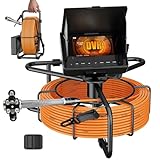 VISIOPROBE 100ft 23mm 1080P Sewer Camera VISIOPROBE 100ft 23mm 1080P Sewer Camera |
|
Check Latest Price |
 ESANHAO 100ft 23mm DVR Camera ESANHAO 100ft 23mm DVR Camera |
|
Check Latest Price |
 KCapyn 100ft 17mm Plumbing Snake KCapyn 100ft 17mm Plumbing Snake |
|
Check Latest Price |
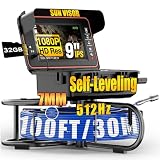 ONDASHCAM 100ft Self-Leveling with 512Hz ONDASHCAM 100ft Self-Leveling with 512Hz |
|
Check Latest Price |
 HBUDS 165ft Self-Leveling with Locator HBUDS 165ft Self-Leveling with Locator |
|
Check Latest Price |
 anysun 165ft Self-Leveling with Meter Counter anysun 165ft Self-Leveling with Meter Counter |
|
Check Latest Price |
1. ChoosePRO 18mm 100ft Sewer Camera – the best all-round pick
[ChoosePRO®] HD1080P&0.71in Sewer Camera 7” w/1s Twist-Unlock System, DVR-32GB, 0.64” Thicker Reel, 5000mAh 100FT Marked Cable, Plumbing Pipe Inspection Camera for Drain & Sewer Inspection
7 inch 1080P IPS
18mm IP68 head with sleeves
100ft marked cable
5000mAh, 8 hours
Pros
- Crisp 7 inch 1080P screen that makes roots and offsets easy to read
- Thick stiff 100 ft push rod that still handles turns
- One-second twist-unlock reel feels solid
- 32GB card with DVR documents findings
- Foot-marked cable gives exact depth
Cons
- Some monitors arrived dead on arrival
- Occasional blurry image reports
- No articulating head so view depends on pushing
This is the one I would put in the van if I only had room for a single camera. The 7-inch 1080P display is the biggest screen in the mid-range group, and that matters more than it sounds: you are looking at a dark, wet, curving surface while holding a reel with one hand, and a small screen turns every inspection into a squint.
The push rod is thick, which is unusual at this level and is the main reason it reaches the far end of a lateral without buckling. Reviewers consistently single out the one-second twist-unlock reel and the foot-marked cable, and the ability to read the depth of a problem off the cable markings is what turns a guess into a quote.
The DVR with the included 32GB card is the other reason this one edges ahead. If you are showing a homeowner why their line keeps backing up, a recording you can replay on the monitor is worth more than a better sensor you never capture.
It ships with a flexible stainless steel spring tip, 360-degree aluminum mount with clamps, and both 25mm and 84mm camera sleeves, so you can centre the head in a larger line or pull it down to a tighter one. Battery life is quoted at 8 hours on the 5000mAh pack, which comfortably covers a working day of short inspections.
Who it suits
A working plumber doing residential laterals, and a serious homeowner who wants to document a recurring problem. If your jobs run 50 to 100 feet and you need to show clients footage, this is the balance point of the whole list.
It also works for anyone who needs a second head option, because the two included sleeves cover both a 2-inch branch line and a larger main.
Where it falls short
Quality control is the honest weakness. A small number of owners report a monitor that powered on at nothing, and some report blurry out-of-the-box image quality. That is a small slice of the reviews rather than a pattern, but it is the thing to watch if you buy one.
There is no 512Hz sonde, so you cannot trace the camera’s position from above ground, and there is no on-screen distance counter. You read depth off the cable markings by eye. If you excavate, that is a real limitation.
2. COOVIE 49ft 1080P Endoscope – the cheapest way to look inside a drain
49.2 Feet Inspection Endoscope Camera with Light, 1080P HD Borescope Camera with Light, 4.3″ IPS Screen, IP67 Waterproof Sewer Borescope, 49.2Ft Semi-Rigid Cord Drain Pipe Endoscope Cool Gadgets Tool
49.2 ft semi-rigid cord
4.3 inch IPS screen
1080P at 170 degrees
8 adjustable LEDs
Pros
- Very bright LEDs light up dark drain lines
- 170 degree view is wide for a tool this small
- Semi-rigid cable holds shape through turns
- Hook and magnet attachments add real utility
- Sharp image for the money
Cons
- Cable too soft for heavy plumbing runs at 49 ft
- View only with no photo capture
- A small tail of dead-on-arrival probes
- One report of missing handle screws
I keep one of these in the house rather than the van. It is a true borescope, not a sewer camera, and understanding that distinction is the whole trick: this is for looking down a branch line, into a trap, at a wall penetration, or into HVAC ducting from a few feet away.
At 49.2 feet the cord reaches further than most people expect for something this light at 0.39 kg, and the eight LEDs with adjustable brightness are bright enough to light a genuinely dark pipe. The 170-degree viewing angle is genuinely wide, so you see the pipe wall rather than a tunnel with a light in the middle of it.
The macro focus range of 2 to 10 cm is tuned for close wall inspection, which is exactly what a homeowner checking a slow drain actually needs. The side mirror, hook and magnet are the sort of small touches that make a general inspection tool feel considered.
What it does not do is push. Reviewers are blunt that the semi-rigid cord is not stiff enough for heavy drain work, particularly on the longer 49-foot version, and that the focus is fixed with nothing to adjust on screen.
Who it suits
Homeowners and anyone in facilities, HVAC or automotive work who wants a capable, cheap look inside something. For diagnosing a slow bathroom drain, a cracked vent or a blocked appliance line, it is more than enough.
It is also the lowest-risk place to start if you have never used an inspection camera, because there is no reel technique to learn and nothing to kink.
Where it falls short
It is view only. There is no photo capture, so if you find something you cannot photograph it, which limits its usefulness for documentation or for an insurance conversation.
The IP67 rating is one step below the IP68 heads on the sewer cameras here, and the softer cord is the binding limit. Trying to force a 49-foot soft cable down a 3-inch line is where the frustration starts.
3. TGJOR 5 inch Dual-Lens Borescope – the best general-purpose tool
Endoscope Camera with Light: 5″ 1080P HD Dual-Lens Inspection Borescope Camera for Sewer – 16.4ft Waterproof Industrial Endoscope – Flexible Snake BoreScope for Plumbing Automotive – Gift Tool for Men
5 inch HD display
Dual front and side lenses
16.4 ft semi-rigid probe
8 adjustable LEDs
Pros
- Big clear 5 inch screen for the size
- Switching between front and side views mid-inspection
- 16.4 ft cord reaches most household spots
- Hook and magnet included
- Holds up to rough handling
Cons
- No zoom and no adjustable focus
- View only with no recording
- Image can soften on some surfaces
- Cord is rigid in tight awkward spaces
With more than 1200 reviews on record, this is the most thoroughly tried tool in the group, and the review pattern is unusually consistent. People buy it for household and automotive poking around, and they rate it as a capable stand-in for a far more expensive name-brand unit rather than a compromise.
The dual-lens design is the reason to pick it over a single-lens borescope. Being able to flip between a forward view and a side view without pulling the probe out is what lets you actually see around a bend in a branch line, and it is the most-cited reason mid-tier tools beat cheaper ones in buyer discussions.
The 5-inch HD display with a 170-degree view is the largest screen you will find in this price bracket, and the 1.2 to 4 inch macro focus is good for close-ups of a wall or a pipe joint. Eight adjustable LEDs and a screen that stays readable in a dark space round out a genuinely capable package.
Battery life is the honest limitation at 2000mAh for 3 to 4 hours, and there is no recording at all, so it is a tool for looking rather than a tool for documenting.
Who it suits
Anyone who wants one tool for the whole house: plumbing checks, HVAC ducting, engine bays, appliances, behind-wall voids. It is also the tool most people end up owning even when they think they want a sewer camera, because it costs little and disappoints rarely.
Plumbers doing occasional residential call-outs will find it genuinely useful for branch lines and fixture-level problems where a full sewer camera is overkill.
Where it falls short
It cannot record or capture stills, so there is nothing to show a client or put in an insurance file. The 16.4-foot cord and rigid handling also mean it is a tool for short distances, not for feeding down a lateral.
Focus is fixed and there is no zoom, so the on-screen picture quality is what it is. Some owners report the image softening on particular surfaces.
4. VEVOR 98ft with 512Hz Locator – the best way to know where the fault is
VEVOR Sewer Camera with 512Hz Locator, 98 ft/30 m, 9″ Drain Inspection Camera with Self-Leveling, 36X Zoom, Plumbing Camera with Lights-12 LED, 32GB Card, IP68 Waterproof Snake Camera for Duct Pipe
9 inch 1080P display
Built-in 512Hz transmitter
0.9 inch self-leveling head
36x zoom
Pros
- Locator pinpoints position through concrete and soil
- Large 9 inch screen readable in sunlight with sunshade
- Self-leveling head plus 36x zoom capture fine detail
- Cable marked every 3 ft
- 4500mAh battery for 6 to 8 hours
Cons
- Thin cable kinks in 3 to 4 inch lines
- Included SD card had to be swapped
- Manual is poorly written and menus take time
- Locator battery not included
- One warranty case involved poor soldering
This is the first camera on the list that can tell you where it is while it is underground, and that changes how you work. The built-in 512Hz transmitter sends a signal to the locator receiver in the box, and buyers who use it report it holds accuracy through rebar, concrete and soil.
The 9-inch 1080P display with the included sunshade is the other standout. It is the difference between reading a joint clearly on a bright day and guessing, and the 36x digital zoom with a 145-degree view on a self-leveling head means the image stays upright and centred as the probe rotates.
Manufacturer compatibility figures are worth repeating here because they are the numbers that decide a purchase: this one runs in straight pipe from about 0.99 to 5.9 inches, and in right-angle pipe from about 1.97 to 5.9 inches. The 4500mAh battery gives 6 to 8 hours, which covers most working days.
At 14.1 pounds with an aluminum case, it is a genuine piece of equipment rather than a toy, and the review set includes contractors who bought it to replace repeat call-outs.
Who it suits
A drain contractor who needs to tell a client exactly where to dig, or to find a blockage before anyone breaks a slab. If excavation is on the table, the locator is the feature that pays for the camera.
It is also strong for post-repair verification, where you want footage of the line after clearing rather than a verbal assurance.
Where it falls short
The cable is the weak point. It is thin and reviewers report it kinks, which limits how far it will push in 3-inch and 4-inch lines. If your work is mostly small-diameter residential laterals, look at a thicker rod.
Setup friction is real: the included SD card reportedly would not format until swapped, the manual is hard to follow, and the locator needs its own battery that is not included. There is also a documented warranty case involving internal wiring disconnected by poor soldering.
5. VEVOR 98ft 4.3 inch Drain Inspection Tool – the compact workhorse
VEVOR Sewer Camera, 98 ft/30m, 4.3″ Drain Inspection Tool, IP68 Waterproof Snake Plumbing Camera with Lights – 6 Adjustable LEDs, 4500mAh Battery & 16GB Card for Sewer Line Duct Pipes
98 ft fiberglass cable
4.3 inch full-colour screen
6 LEDs at 3 levels
4500mAh for 5 hours
Pros
- Clear picture and lighting for the money
- Good rigidity for main line work
- Compact and easy to carry between jobs
- Open reel design is easy to rinse off
- Recording is enough to show customers findings
Cons
- Monitor bracket is cheap and breaks
- Cable very stiff in the first 12 inches
- Recording stops unexpectedly
- Reports of a faulty battery and a dead light
This is the same VEVOR idea as the locator model, stripped back to the essentials and made considerably easier to carry at 7.5 pounds. For main line work where you simply need to see what is blocking the pipe, the locator and the big screen are features you may never touch.
The 98-foot fiberglass cable has distance markings and enough rigidity to push straight runs properly. Compatibility is straight pipe from about 1.18 to 3.93 inches and right-angle pipe from about 1.97 to 3.93 inches, which covers most residential branch and main work.
Several owners describe buying it as a money-making interim tool, with one reviewer saying the footage they captured sold enough extra work to justify a name-brand camera later. That is the honest value story here: it pays for itself if you use it to diagnose and document rather than to build a brand.
The open metal reel design is worth noting for a practical reason. You can wash the whole thing off after a job instead of trying to keep sludge out of a closed housing.
Who it suits
A contractor who wants a simple, cheap, tough camera for main lines and branch lines, and who will keep it in a washable case in the van. It is also a sensible second camera for a growing business.
Anyone who is not excavating and does not need audio narration will find the feature set more than sufficient.
Where it falls short
Mechanical durability is the issue, not optics. The monitor mounting bracket is described as cheap and breakable, and the cable is reported as very stiff in the first 12 inches where it meets the head, which hurts in tight bends.
Recording stopping unexpectedly is a recurring complaint, so do not rely on a single take for documentation. The 720p sensor on a 4.3-inch screen is also the smallest picture here, and some reviews report a faulty battery or a light that would not switch on.
6. SYOWNFS 100ft 12-Light Sewer Camera – best for smaller pipes
Sewer Camera 100ft/30m,Drain Camera with 12pcs Light, 4.3″ Screen,DVR 32GB,IP68 Waterproof Endoscope,5600mAh,Plumbing Pipe Inspection Camera for Drain & Sewer Inspection
1000TVL colour image
4.9mm fiberglass push cable
12 LEDs at 5 levels
5600mAh for 4 to 6 hours
Pros
- Image quality some users rate above their plumber's own camera
- LEDs light dark pipes effectively
- 100 ft cable reaches deep lines
- Small cable diameter fits where larger heads cannot
- Easy out-of-the-box setup
Cons
- System smaller than the 100 ft label suggests
- Plastic screws on the wheeled head loosen in the line
- Wheeled head will not fit a toilet floor opening
- Toolbox will not hold the large pipe adapter
- One report of a light failing on first use
This is the thin-cable specialist. At 4.9mm the fiberglass rod is the finest in the whole group, and that is the entire point: it will go into pipe and around fittings that a thicker rod will not, which makes it the right choice for 2-inch and 3-inch lines and older, tighter installations.
The #304 stainless steel housing is IP68 rated, and the 12 LEDs with five brightness levels give genuinely controllable illumination in a wet pipe. Several owners rate the picture above what their own plumber produced, which is a useful signal that this class of camera no longer needs a name brand to look credible.
Two camera protection rings are included at 38mm and 99mm, and the 5600mAh battery with a capacity indicator gives 4 to 6 hours of work. The 4.3-inch colour IPS monitor has a sun visor for outdoor inspections, and the DVR records to the included 32GB card with transfer over SD or USB-C.
Be realistic about the distance. Reviewers note the thin rod often stops around 60 feet in a 4-inch line rather than the full 100 feet advertised, which is normal behaviour for a cable this fine.
Who it suits
Homeowners and plumbers dealing with small-diameter lines, older homes, narrow branches and tight cleanouts. If you have ever had a camera stop because the head was too big, this is the answer.
It is also good for the specific job of confirming a blockage is downstream rather than in the fixture.
Where it falls short
The plastic retention screws on the wheeled attachment are the most-cited fixable flaw, and several owners tape or replace them after they loosen in the line. The wheeled head will not pass a toilet floor opening, and the case does not fit the large adapter.
At 3.74 kg the whole package is smaller than the 100-foot label suggests, and the fine cable simply will not push as far as a 7mm rod on a straight run.
7. VISIOPROBE 100ft 23mm 1080P – the one that lasts a full day
Sewer Camera 100ft w/ 23mm 1080P Probe, 8500mAh, 32GB Audio & Video Record
23mm AHD 1080P probe
8500mAh for up to 10 hours
Video photo and audio DVR
30m marked fiberglass cable
Pros
- Bright 1080P view with 12 LEDs in dark pipes
- 100 ft cable is rigid enough to push hard
- Records video photos and audio to show clients
- Compact and easy to handle
- Two wheeled heads for different pipe sizes
- Handles pressure cleaning and wet conditions
Cons
- Difficult past a sharp 90 degree bend with the wheeled head
- Push rod becomes hard to advance past roughly 60 feet
- Cannot navigate a toilet trap bend
- Fixed focus with nothing to adjust on screen
Audio recording is the feature that separates this from most cameras at the level. Owners mention plumbers, septic contractors and homeowners all using it, and being able to narrate an inspection as you push changes how you present the result to a client.
The 8500mAh battery is quoted at up to 10 hours of continuous work, which is the longest runtime anywhere in this group and means you can finish a long day without swapping packs. The 23mm AHD 1080P probe has a 145-degree wide-angle lens and 12 adjustable LEDs, and the stainless steel body is IP68 rated.
Two wheeled protective heads are included so you can adapt the camera to different pipe diameters, and the 30 metre fiberglass cable carries Arabic numeral depth markers you can actually read in the dark. The 4.3-inch IPS monitor has a built-in sun visor.
At 7.81 pounds this is a compact package that one person can carry and set up alone, which matters more than it sounds when you are doing cleanout work in a yard or a crawlspace.
Who it suits
Plumbers and septic contractors who work long days and want to narrate findings as they go. It is also the right choice for anyone who has to show a client the cause of a problem rather than just describe it.
Buyers describe it as professional-feeling at a fraction of commercial pricing, and several report it withstood pressure cleaning and wet conditions.
Where it falls short
The 23mm head is a size compromise. It will not go down a 2-inch line, and reviewers report difficulty getting past a sharp 90-degree bend, especially with the wheeled head fitted. It also cannot navigate a toilet trap bend at all.
The push rod becomes difficult to advance at around 60 feet, and focus is fixed with nothing to adjust on screen. If your work is mostly small lines, look at a thinner cable instead.
8. ESANHAO 100ft 23mm DVR Camera – a straight 23mm starter kit
Sewer Camera 100FT Pipe Inspection 4.3″ DVR Borescopes Camera with Light
23mm AHD 1080P head
32GB SD card included
8500mAh for 6 to 8 hours
Meter-marked 5mm cable
Pros
- 23mm 1080P stainless head gives a clear view in dark pipes
- One-button DVR recording on a 4.3 inch IPS screen
- Meter markings on the cable for position
- 8500mAh battery for 6 to 8 hours
- Adjustable monitor bracket included
- Playback on the unit or transfer to a PC
Cons
- Low review volume means limited long-term reliability data
- Newer listing with little durability feedback yet
This is the same basic 23mm platform as the VISIOPROBE with a slightly different cable and battery claim, and it is worth including because the feature set is complete: DVR recording, a 32GB card in the box, an adjustable monitor bracket, and playback either on the unit or transferred to a computer.
The 23mm AHD 1080P camera sits in a #304 stainless steel housing with a 145-degree viewing angle and 12 adjustable LEDs, which is a spec sheet that reads like a professional tool. The 8500mAh rechargeable lithium battery is quoted at roughly 6 to 8 hours of continuous use.
The 5mm fibre tube cable is marked every metre, so you get real position reference rather than an estimate. At 7.87 pounds with dimensions that fit a normal tool bag, it is a sensible thing to own rather than a toy.
What you should weigh carefully is the review volume. With 43 reviews on record, nobody left a 1-star rating, but the sample is small enough that the 4.4 average is promising rather than proven.
Who it suits
A new buyer who wants a proper 23mm head, DVR documentation and a long battery without paying for a locator. It suits straight runs in 3-inch and 4-inch lines and post-repair verification.
If you already know a 23mm head is the right size for your pipes, this is a straightforward, well-equipped package.
Where it falls short
The honest limitation is the evidence, not the product. There is not enough long-term owner feedback to tell you how the cable and head hold up after a year of work, so treat the rating as lightly sampled.
Like the other 23mm kits, it is a head-size compromise: fine for mains and mid-size lines, too large for 2-inch branches and too stiff for very tight bends.
9. KCapyn 100ft 17mm Plumbing Snake – the smallest head with the most reach
Kcapyn Sewer Camera 100FT/30M Pipe Inspection Borescope Endoscope Camera with Light 6 LEDs 5″ IPS Screen 17MM Plumbing Snake 5000 Mah Battery,1080P High-Definition Industrial Sewer Camera
17mm camera head
30m marked semi-rigid cable
5 inch DVR with 32GB
IP68 dustproof housing
Pros
- Small 17mm head works well in tighter pipes
- Good picture with easy SD card recording
- Sturdy cable material that pushes well
- Wheeled adapter centres the head in larger pipes
- Integrated toolbox keeps everything organised
- Manufacturer replaced a faulty display promptly
Cons
- Screen does not tilt
- Head does not self-level or rotate
- Struggles with roughly 90 degree turns
- Cable depth markings are small and hard to read
- Only a 6 month warranty
The 17mm head is the second smallest here, and it is the reason to consider this one if your lines are tight. It will pass fittings that stop a 23mm head, which is the single most common reason an inspection stops early.
Plumbers and DIYers like the small head, the firm cable and the all-in-one toolbox, and several owners describe using the same unit across multiple properties. The 5-inch DVR display has a built-in 32GB card for one-touch photo and video capture, and the 30 metre high-toughness semi-rigid cable carries distance scale markings.
The wheel adapter helps centre the head in larger pipes, so the small diameter does not become a liability the moment you are in a 4-inch line. Six LEDs light the pipe and the housing is IP68 rated and dustproof for damp, greasy lines.
The integrated toolbox design is a genuinely nice touch for anyone carrying equipment around a property, because the monitor doubles as storage for the accessories.
Who it suits
Plumbers and homeowners working older homes with narrow laterals, and anyone who has repeatedly had a bigger head stop. It is also a good multi-property tool because everything stores in one case.
If you need to document findings, the DVR and 32GB card cover that without extra equipment.
Where it falls short
Ergonomics. The screen does not tilt, the 5-inch viewing camera does not rotate on its base, and the head does not self-level, so the image rolls as the probe turns. On a long run in a sloped line that is genuinely tiring to watch.
It also struggles with roughly 90-degree turns in tight lines, the depth markings are printed small in silver ink and are hard to read, and the 6-month warranty is the shortest of any camera on this list.
10. ONDASHCAM 100ft Self-Leveling with 512Hz – built for large pipe
Sewer Camera, 100FT Self-Leveling Drain Camera with 512Hz Transmitter
9 inch 1080P IPS display
0.9 inch self-leveling head
512Hz sonde
7mm 100ft cable
Pros
- Self-leveling head keeps image upright with good depth of field
- 512Hz transmitter works with multiple locators
- 7mm push rod handles 90 degree sweep turns
- 9 inch 1080P screen readable in direct sunlight
- 5100mAh battery for up to 10 hours
- Recording and playback for sharing footage
Cons
- Locator receiver is not included
- Nylon screws on the attachments can loosen
- One owner had a screen fail within two months
- No on-device distance readout
- Cable too stiff for 1-1/2 inch pipe
This one is specified for pipe diameters from about 1 inch up to 12 inches, with bends over 90 degrees required in 1 to 4 inch lines. That range is wider than anything else on the list and it is the reason to look here if you inspect commercial drains, mains or larger service lines.
The 7mm push cable is the thickest in the group, and owners report it pushing 75 feet quickly while handling multiple 90-degree sweep turns. The 0.9 inch self-leveling head with an IP68 sapphire lens keeps the picture upright, which is what makes the footage usable as evidence rather than something you have to mentally rotate.
The 9-inch 1080P IPS display is readable in direct sunlight, the 12 LEDs dim steplessly, and the 12V 5100mAh battery is quoted at up to 10 hours with a power indicator. Recordings go to the included 32GB micro SD card, expandable to 128GB, with 5x enlargement for review.
Several tradespeople bought a second unit after seeing the first work, and the comments describe genuinely professional capability at a small fraction of Milwaukee or RIDGID pricing.
Who it suits
Commercial and residential contractors who inspect larger pipe, push through sweeping bends, and need the camera to stay level in a sloped line. The 10-hour battery suits full days without charging.
It is also a good fit for anyone who already owns a 512Hz locator, since the sonde works with any compatible receiver.
Where it falls short
The locator receiver is not in the box. You need a separate 512Hz receiver for the sonde to do anything, and the transmission distance is quoted at up to 23 feet, which is fine for shallow laterals and not much else.
The nylon screws holding the camera attachments are not trusted by owners and can loosen in a line, there is no on-device distance counter, and one owner had a screen fail within about two months. The O-rings for waterproofing are supplied but not mentioned in the instructions.
11. HBUDS 165ft Self-Leveling with 512Hz Locator – the longest run
Self Leveling Sewer Inspection Camera with Locator 165ft, 9″ Color Monitor Drain Pipe Cameras with 512Hz Sonde and Receiver, 12V 4500mAh Rechargeable Battery Plumbing Camera Snake with DVR 16GB
165ft fiberglass cable
512Hz transmitter in tip
Self-leveling head
9 inch color monitor
Pros
- Distance markers proved instrumental for pinpointing work location
- Sharp video with a useful LED light and wide-angle lens
- Lets you show clients the actual cause on screen
- Well-made machine used on every job by contractors
- Self-leveling image stays upright at any angle
- 9 inch monitor with sun visor works outdoors
Cons
- Locator takes practice before it feels natural
- One master plumber rated the build cheap and the locator weak
- Reel does not spin freely so one-handed operation is hard
- One cable snapped in half after about four uses
- Camera head durability questioned
At 165 feet this is the longest push cable in the group, and if your laterals run deep or you work on rural and commercial lines, that reach is the whole argument. The semi-rigid fiberglass cable carries clear Arabic numeral distance markings that owners repeatedly single out as instrumental for pinpointing the work location.
The self-leveling gravity sensor in the head keeps the image upright at any tilt angle, and the 9-inch colour TFT monitor with a sun visor is genuinely usable outdoors. Pipe compatibility is straight from 25mm, 45-degree bends from 45mm, and near-90-degree bends from 150mm, with 12 adjustable white LEDs on the IP68 probe.
Contractors like that it lets them show clients the actual cause of a sewer backup on screen, which is how an inspection turns into booked work. The DVR records video and photos to an included 16GB card, and the 4500mAh battery gives about 6 hours.
At 23.8 pounds this is the heaviest item we tested, and that weight is the first thing reviewers mention when describing one-handed operation.
Who it suits
Contractors running long laterals, septic systems and commercial lines where 100 feet is not enough. The distance markings and self-leveling image suit anyone producing written reports or evidence for a client or an insurer.
If you regularly hit 90-degree bends in 6-inch and larger pipe, the near-90-degree capability here is worth the extra length.
Where it falls short
Build quality is the split point. An experienced master plumber rates it as a cheap camera with a weak locator that gives no depth reading, and criticises the reel for not spinning freely inside the case, which makes one-handed work hard.
There is also a documented report of a cable snapping in half after about four uses, and questions about camera head durability with replacement heads sold separately. If your business depends on the tool, factor that in.
12. anysun 165ft Self-Leveling with Meter Counter – the premium pick
Anysun Sewer Camera Self Leveling with Locator, Meter Counter, 7MM/MIC/9”
512Hz locator with antenna array
Footage counter on screen
7mm push rod
9 inch 1080P IPS
Pros
- Locator with a strong signal finds the camera position quickly
- On-screen distance counter gives an exact number not a guesswork estimate
- Self-leveling head stays upright for consistent images
- 12 adjustable LEDs and 5x digital zoom
- Built-in microphone narrates inspections onto the recording
- 9 inch IPS screen holds brightness at any viewing angle
Cons
- Shortest warranty among the locator-equipped units here
- Highest price point in this group so the case rests on build quality
The on-screen positionable footage counter is what separates this from every other locator-equipped camera here. Every other unit makes you read a number off the cable; this one shows the distance on the monitor, so the figure you quote to a client comes from the instrument rather than from your memory of the markings.
The 512Hz sonde is paired with a total field antenna array, and owners report a strong signal that finds the underground position quickly. Combine that with the self-leveling IP68 stainless head, 12 adjustable LEDs and 5x digital zoom, and you have the most complete measurement setup in this roundup.
The built-in microphone is the sleeper feature. Recording narrated video to an included 32GB TF card, expandable to 128GB, means a homeowner hears the diagnosis in your words rather than reading a one-line summary on a work order.
The 7mm industrial-standard fiberglass push rod runs 165 feet, the 9-inch 1080P IPS monitor keeps brightness and colour consistent from any viewing angle, and the rechargeable battery gives up to 8 hours. An out-of-the-box cable reel is included and the manufacturer advises rinsing and drying the head after corrosive work.
Who it suits
Contractors who plan excavations, quote accurately and hand over evidence. If your work involves digging, the locator plus the on-screen counter is the combination that removes guesswork from the whole job.
It also suits anyone doing home inspections or pre-purchase sewer scoping where narration and a defensible distance reading matter.
Where it falls short
It carries the shortest warranty of the locator-equipped cameras here at 1 year, and review volume is modest for a tool at this level. The value case rests on build quality and the measurement features rather than on owner volume, so buy it for the counter and the sonde, not on reputation alone.
It is also the heaviest investment on the list, which is only sensible if you will use the locating and measurement features regularly.
How to Choose a Pipe Inspection Camera That Fits the Job?
Almost every bad purchase in this category comes from picking a camera for the price rather than for the pipe. The three decisions that matter, in order, are cable diameter, cable length and head size. Everything else, resolution, screen size and battery, is a preference on top of those.
Borescope or pipe inspection camera: which one you actually need
A borescope is a thin, soft, hand-held probe you steer by hand. A pipe inspection camera is a rigid or semi-rigid push cable wound on a reel, with a camera head sized to stay centred in a specific pipe diameter. They are different tools and the confusion between them is the most common buying mistake in the category.
If you are checking a trap, a branch line, a vent or an appliance, a borescope is the right and much cheaper answer. If you are inspecting a lateral from a cleanout, pushing 60 to 150 feet through a real line, you need a push camera with a head matched to the pipe.
Our borescope picks, the TGJOR and the COOVIE, both use semi-rigid cords that hold their shape. Reviewers note that a soft cord is the single biggest limitation of a cheap borescope, so if you want to reach down a drain line, the cord length and rigidity matter more than the screen.
Cable length: what your laterals really run
Most residential laterals are shorter than people assume, and 100 feet covers the overwhelming majority of homeowner work. Cable length beyond that is worth having if you do commercial, septic or rural work, or if your properties are on long runs to a septic tank.
The relationship between cable thickness and length is the thing to understand. A 5mm cable reaches the full quoted length in a straight line but may struggle past 60 feet in a 4-inch line. A 7mm or 9mm cable pushes further and holds direction better but wants more room at every bend and fitting.
Two of the cameras here, the ONDASHCAM and the anysun, run 7mm rods at 100 and 165 feet respectively, and both report pushing 75 feet quickly through sweeping 90-degree turns. That is the behaviour you want on a real job.
Cable diameter: 5mm, 7mm and 9mm
Thinner is not better. The 5mm category, which includes the SYOWNFS at 4.9mm and the ESANHAO at 5mm, is for small-diameter lines where head clearance is the constraint. The 7mm category is the pro default, and 9mm is for long straight runs where kinking is the fear.
Choose thin when your pipes are 2 or 3 inch, when you are going through tight cleanouts or old fittings, or when you need to negotiate a trap bend. Choose thick when you are pushing long distances, running into larger mains, or working where a kink would end the job.
Self-leveling heads and the 512Hz locator
A self-leveling sewer camera uses a gravity-weighted or sensor mechanism inside the head to keep the picture upright as the probe rotates. It matters for long runs, sloped lines and lateral inspection, because a rolling image is hard to assess and useless in a report. It does not matter much for a short look down a vertical branch.
The 512Hz locator is a transmitter built into the camera head that a receiver above ground picks up, letting you mark where the camera is under the lawn or slab. It is the feature that changes what you can quote, because it turns “somewhere past the cleanout” into a marked spot on a lawn.
Two cautions. The HBUDS and anysun include or use a 512Hz receiver with a quoted detection distance of up to 23 feet, and the ONDASHCAM ships the sonde but not the receiver. Also note the VEVOR locator model and ONDASHCAM do not give a depth reading, only a position, so the on-screen footage counter on the anysun is a genuine step up.
For residential laterals under about 100 feet you can often skip the locator. If excavation is on the table, do not.
Resolution, lighting, screen and recording
Most of the cameras here shoot 1080P or AHD 1080P on a CMOS sensor. Two sit below that: the VEVOR 4.3-inch model at 720p, and the SYOWNFS at 1000TVL, which is the older analogue-style measure. Both produce perfectly usable images, and both are cheaper for it.
Lighting matters more in a wet pipe than resolution does. Look for adjustable LEDs, and note how many brightness steps you get, because a pipe full of water reflects light very differently from a dry one. The units with 12 LEDs and multiple brightness levels give you real control.
Screen size decides whether you can work one-handed. The 9-inch displays are readable in direct sunlight with a sun visor, and the 4.3-inch screens are for indoor work or shaded cleanouts. Recording matters if you plan to show anyone: DVR with an included card is standard on the push cameras here, while both borescopes are view only.
If you film inspections for a living, it is worth thinking about your whole capture setup rather than just the probe, including how you transfer and store footage between jobs. Our guide to shotgun microphones for mirrorless cameras covers the other half of that job, capturing clear commentary on site.
Where the trusted brands sit and where the value brands sit
The names practitioners repeat in plumbing forums, RIDGID SeeSnake, Milwaukee M12, Spartan Tool and Vivax Metrotech, occupy the professional tier. A PlumbingZone contributor described using a RIDGID CS6PAK daily and praised the flexible 100-foot cable with the monitor mounted on top of the reel, and RIDGID’s reputation for flexible cable is a repeated preference rather than a marketing line.
The value tier here, VEVOR, SYOWNFS, VISIOPROBE, ESANHAO, KCapyn and ONDASHCAM, is where most of the capability in this roundup actually sits. Several of the strongest-value cameras carry self-leveling heads, 512Hz transmitters and 8500mAh batteries, specifications that belonged to professional machines not long ago.
The honest difference between the tiers is cable durability, repairability and support, not image quality. Where a name-brand push cable can be replaced separately, a budget cable often means replacing the whole unit, which changes the cost of ownership over five years far more than the purchase price does.
Rent or buy: the break-even thinking
Renting makes sense if you have occasional, one-off questions, or if you are a new plumber without an employer buying your equipment. A plumber in one discussion said his company would pay for an inspection camera because it was something he wanted in his kit eventually, and that reimbursement path is worth checking before you spend your own money.
Buying makes sense once a camera is going to earn its keep on repeat work, or if you are a homeowner who will scope multiple properties or a persistent problem. Break the maths on jobs saved rather than on what the camera does for you: every repeat call-out you avoid by diagnosing from a cleanout instead of snaking blind pays for the unit.
The one case where renting is clearly right is a crawler robot for large municipal or industrial pipe. Those machines are specialist equipment, and no homeowner or working plumber should be buying one. Push cameras are the sensible ceiling for almost everyone.
Cleaning, storage and cable care
Whatever you buy, rinse the head and push a full length of cable after every job, let both dry before coiling, and never store a cable wound tight. Kinking and corrosion, not the electronics, are what end the life of these tools.
Check the O-rings and the attachment screws before you go out, because nylon screws on a camera head can back out in the line and the O-rings on some kits are supplied without being mentioned in the instructions. Coiling the cable loose in the case and keeping the reel clean is most of the maintenance routine.
Recording and storage habits matter as much as cleaning. If you shoot inspections for clients, agree your file format and transfer route on day one rather than discovering mid-job that your card will not record.
Frequently Asked Questions
What camera is used to inspect pipes?
A pipe inspection camera, also called a sewer camera, drain camera or plumbing camera, is a waterproof camera head attached to a flexible push cable wound on a reel. You feed the cable through a cleanout or drain line and watch a live image on a monitor, recording as you go. The head lights the pipe with LEDs, a self-leveling gravity mechanism keeps the picture upright, a meter counter tracks distance, and an optional 512Hz sonde lets a receiver above ground locate the camera underground. It reveals blockages, cracks, root intrusion, offset joints and grease buildup without excavation.
What is the difference between a borescope and an inspection camera?
A borescope is a thin, soft, hand-steered probe used to look into short runs, traps, vents, ducts and appliance lines, usually for 5 to 50 feet. A pipe inspection camera is a semi-rigid or rigid push cable on a reel with a head sized to stay centred in a specific pipe diameter, built to run 60 to 165 feet down a drain lateral. A borescope is cheaper and easier to steer but cannot push far or through tight fittings. A push camera reaches a real lateral but costs more and needs reel technique.
Which sewer inspection camera brand is the best?
Practitioners most often name RIDGID SeeSnake, Milwaukee M12, Spartan Tool and Vivax Metrotech in the professional tier, and those brands are valued for flexible, replaceable cables and support rather than image quality. In the value tier, VEVOR, Sanyipace, Teslong, Klein Tools, Anysun and DEPSTECH style units now carry self-leveling heads, 512Hz sondes and 8500mAh batteries that used to be professional-only. Brand matters less for picture quality and more for cable durability and repairability over five years of work.
What cameras do plumbers use?
Working plumbers most commonly use RIDGID SeeSnake units, with the CS6PAK and its top-of-reel monitor cited repeatedly as a go-to, along with Milwaukee M12 kits, Spartan Tool and Vivax Metrotech. Home inspectors and septic contractors tend toward value-tier kits with a 23mm self-leveling head, 512Hz sonde and DVR recording. The features that show up in real job reports are self-leveling image, a 512Hz locator for marking position, a thick push rod that resists kinking, and the ability to record and show the client the footage.
What are the common problems found during a sewer drain camera inspection?
The most common findings are root intrusion, where tree roots enter through a joint and catch paper and grease; a bellied pipe, where the line sags and holds water; an offset joint, where two pipe sections misalign and snag wipes; grease and scale buildup narrowing the line; a cracked or collapsed lateral, especially in older clay or cast iron; and a stuck foreign object such as a wiped-out section of toilet paper or a wiped rag. A camera identifies the location and depth of each before anyone decides to excavate.
What is the difference between 5mm and 7mm sewer camera cables?
A 5mm cable, such as the 4.9mm rod on the SYOWNFS unit, is thin enough to pass tight fittings, small 2-inch and 3-inch lines and trap bends, but it reaches its quoted length only in a straight run and often stops around 60 feet in a 4-inch line. A 7mm rod, used on the ONDASHCAM and anysun units, pushes harder, holds direction through sweeping 90-degree bends and resists kinking, at the cost of needing more clearance at fittings. A 9mm rod suits long straight runs and maximum push strength.
What is a self-leveling sewer camera?
A self-leveling sewer camera uses a gravity-weighted or sensor mechanism inside the camera head to keep the image upright as the probe rotates and tilts. Without it, the picture rolls sideways whenever the cable turns, which makes a joint or crack hard to judge and unusable in a client report. It matters most on long runs, sloped laterals and commercial work. On a short vertical look down a branch line, a fixed head is perfectly workable, so it is not a feature you need to pay for on a short borescope.
How much does it cost to run a camera through a sewer line?
For a working plumber running a camera through a sewer line as part of a diagnostic call, the fee is usually bundled with the inspection rather than sold separately. If you rent rather than buy, the daily rate plus a deposit is far less than a private inspection, which is why rental is the default for one-off homeowner jobs. Professional sewer scoping sold as a standalone service for home buyers is priced differently and is best compared against the cost of the repair it may reveal, which is often larger than the inspection itself.
Is a sewer camera inspection worth it?
Usually, for anyone facing a recurring problem, a backup, a slow drain or a pre-purchase decision. A camera converts guesswork into evidence, which means an accurate quote, an excavation aimed at the right spot, and often a clearance on the same visit instead of a second trip. It is most valuable before you dig, because a camera shows exactly how deep the fault is. It is least valuable for a single one-time slow drain, where a basic borescope or a plumber with a snake will do.
How do I clean and maintain a sewer camera?
Rinse the camera head with fresh water after every job, run a full length of the cable through to flush the inside of it, and let both dry fully before you coil anything. Wipe the lens, check the O-rings for cracks and confirm the attachment screws are tight, since nylon screws can back out in the line. Never store the cable wound tight, and keep the reel clean of sludge. If you film for clients, format and clear the card between jobs and confirm recordings play back before you pack the case away.
What should I do if the camera gets stuck in a pipe?
Stop pushing immediately, because continuing is what causes a kink or a break. Rotate the probe gently to free it from whatever it is snagged on, then pull back slowly while keeping tension rather than yanking. Note the depth from the cable markings or your on-screen counter, because that is your starting point for the next attempt. Use a centering guide or the correct sleeve next time so the head stays in the middle of the pipe rather than catching a joint. If it will not free, call a professional rather than cutting the cable inside the line.
Do I need special training to use a sewer camera?
No formal training is required, and every model on this list is set up for first-time use with a quick read of the manual. The real skill is technique rather than certification: clearing the line first, using a centering guide so the head stays mid-pipe, feeding the cable steadily, and learning to read a self-leveling image. If you will be quoting repairs or excavating based on the footage, invest a few hours of practice before your first paying job, and always record the depth of anything you find.
Conclusion: Our Pipe Inspection Camera Picks by Scenario
For most people, the best pipe inspection cameras for drains come down to one question: how far down the pipe do you need to see, and how thick is that pipe. For a short household look, the TGJOR dual-lens borescope and the COOVIE endoscope cover the whole house at very little cost. For a real residential lateral, the ChoosePRO 18mm 100ft unit is our pick, with a DVR, a marked cable and a head that centres itself.
For a working plumber, the choice depends on the job. The VEVOR 98ft with the 512Hz locator is the practical way to know where the fault is. The SYOWNFS handles small lines where a thicker rod will not fit. The VISIOPROBE gives you audio recording and a 10-hour battery. If you excavate and quote, the anysun 165ft with the on-screen footage counter is the most complete measurement setup here, and the HBUDS covers the longest runs.
Whatever you choose, buy it for the cable diameter and head size that match your pipes, keep it clean after every job, and record the depth of anything you find. That last habit is what separates a guess from a quote. For our wider equipment guides, see our piece on shotgun microphones for mirrorless cameras.
1 thought on “12 Best Pipe Inspection Cameras for Drains (October 2026) Top Picks”