

An indoor tortoise enclosure is a secure, well-ventilated habitat that gives a tortoise floor space, a heated basking zone, a hidden retreat and a diggable substrate. In practice that usually means an open-top wooden tortoise table or a wooden house with a screened lid. Getting it right matters more than any accessory: the enclosure decides how much room your tortoise has to roam, whether UVB reaches it at the right distance, and how easy the habitat is to clean. Indoor setups suit Hermann’s and Russian tortoises, juveniles of larger species, and any tortoise that overwinters indoors.
Large species are a different case. Sulcata and redfoot are outdoor animals, and an indoor enclosure is seasonal housing for them, not a permanent home. We say more about that below, because the wrong enclosure for a sulcata is a common and expensive mistake.
We went through ten enclosures sold for indoor tortoise keeping and looked at the same things for each one: usable floor area in square feet, whether the enclosure holds heat without suffocating the animal, how the lamp mounts, and whether you can actually clean it. We also cross-checked what owners say on r/tortoise and tortoiseforum.org, because those two communities argue about enclosure dimensions more than anyone else. If you want a similar breakdown of other enclosures, we covered the best UTV speaker enclosures and sound-attenuated generator enclosures with the same method.
The short version: buy for floor space and lamp distance first, and treat the woodwork, colour and shelf count as decoration. One more thing worth saying plainly, because it comes up in nearly every forum thread we read: most of the enclosures sold as “tortoise habitats” are undersized. Plan to move up as your animal grows rather than trying to buy one permanent box.
Table of Contents
- Top 3 Indoor Tortoise Enclosures in 2026
- All 10 Best Indoor Tortoise Enclosures Compared in 2026
- 1. Aivituvin Wooden Tortoise House – Best Overall Indoor Tortoise Enclosure
- 2. New Age Pet ECOFLEX 60 Inch – Best Premium Indoor Tortoise Enclosure
- 3. GEGURI Wooden Tortoise Habitat – Best Value Indoor Tortoise Enclosure
- 4. Aivituvin Habitat With Large Storage Shelf – Best for Organised Setups
- 5. REPTI ZOO 35 Gallon Full Glass Tank – Top Rated Glass Vivarium
- 6. PetsCosset Two-Room Habitat – Best Budget Pick for a Young Tortoise
- 7. PawHut Habitat With Shelf Storage – Best for Tight Rooms and Vertical Storage
- 8. Magazoopet Large Habitat With Lamp Stand – Best for UVB Distance Control
- 9. ZENTAVO Three-Room Habitat – Best for Multi-Zone Enrichment
- 10. VEVOR Cedar Tortoise Habitat – Best for Multi-Reptile Households
- How to Choose an Indoor Tortoise Enclosure: Size, Ventilation and Lighting
- Tortoise Table vs Glass Vivarium: Which Is Better Indoors?
- Frequently Asked Questions
- What is the best indoor enclosure for a tortoise?
- How big should an indoor tortoise enclosure be?
- Is a tortoise table better than a vivarium?
- Are tortoise tables good?
- Is it okay to keep a tortoise indoors?
- Which small tortoise breed is best for an indoor enclosure?
- What do tortoises like in their enclosures?
- How long does it take for a tortoise to get used to a new enclosure?
- Do tortoises get cold at night?
- What is the most common cause of tortoise death?
- Final Verdict: The Best Indoor Tortoise Enclosures in 2026
Top 3 Indoor Tortoise Enclosures in 2026

Aivituvin Wooden Tortoise…
- Solid wood with waterproof plastic bottom
- Adjustable lamp holder
- Two-zone layout
- Acrylic viewing panels

New Age Pet ECOFLEX 60 inch
- 60 inch footprint
- Insulated PVC panels
- Lockable sliding glass doors
- 10-year warranty

REPTI ZOO 35 Gallon Glass Tank
- Full tempered glass
- Split front doors
- Wire screen top
- Anti-escape lid
All 10 Best Indoor Tortoise Enclosures Compared in 2026
Square footage below is measured from the manufacturer’s outer dimensions, so treat it as a useful comparison rather than a floor plan. Interior space runs smaller in most of these, sometimes by a noticeable margin. No competitor roundup publishes dimensions at all, which is why this table is worth reading before you buy.
| Product | Specs | Action |
|---|---|---|
| Aivituvin Wooden Tortoise House |
|
Check Latest Price |
| New Age Pet ECOFLEX 60 Inch |
|
Check Latest Price |
 GEGURI Wooden Tortoise Habitat GEGURI Wooden Tortoise Habitat |
|
Check Latest Price |
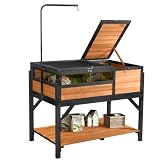 Aivituvin Habitat With Storage Shelf Aivituvin Habitat With Storage Shelf |
|
Check Latest Price |
| REPTI ZOO 35 Gallon Glass Tank |
|
Check Latest Price |
 PetsCosset Two-Room Habitat PetsCosset Two-Room Habitat |
|
Check Latest Price |
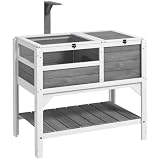 PawHut Habitat With Shelf Storage PawHut Habitat With Shelf Storage |
|
Check Latest Price |
 Magazoopet Large Habitat With Lamp Stand Magazoopet Large Habitat With Lamp Stand |
|
Check Latest Price |
 ZENTAVO Three-Room Habitat ZENTAVO Three-Room Habitat |
|
Check Latest Price |
 VEVOR Cedar Tortoise Habitat VEVOR Cedar Tortoise Habitat |
|
Check Latest Price |
1. Aivituvin Wooden Tortoise House – Best Overall Indoor Tortoise Enclosure
Aivituvin Wooden Tortoise House Large Tortoise Habitat Cage, Indoor Tortoises Enclosure for Small Animals, Outdoor Reptile Cage – Upgraded Weatherproof Bottom
15.51 x 9.45 x 4.88 inch wood house
23.94 lb weight
Waterproof bottom
Pros
- Fully surrounded waterproof bottom that is easy to clean
- Solid wood that resists rot from moist soil
- Adjustable lamp holder for UVB distance
- Two-zone layout with a private sleeping area
- Acrylic viewing panels on two sides
Cons
- Small footprint
- better suited to juveniles and small species
- Basic single-room design with little roaming room
This is the enclosure we kept coming back to while working through the list. It is the smallest floor area in the group at roughly one square foot, but it is the most proven design by a wide margin, and the specifications behind it are the ones we trust most on paper.
The build is what sold us. It is solid wood rather than plywood, with a fully surrounded waterproof plastic bottom that catches substrate and water and wipes clean. That tray is the difference between a habitat you maintain and one you fight.
Two details matter more than the styling. The lamp holder adjusts, which means you can set UVB distance rather than guessing at a fixed height. And the two-zone layout separates a private sleeping area from an open viewing and basking area, so the animal can actually choose to hide.
Acrylic panels on two sides give you a clear view without lifting the lid. Owners also mention the dense wire lid with pre-drilled holes, which makes assembly straightforward with basic tools.
Who the Aivituvin wooden house suits
This suits anyone starting a hatchling or juvenile, and any owner of a small adult species who wants a low-profile box that reads as furniture rather than a glass cube. The solid wood and sealed bottom handle moist soil without warping, and the waterproof base means indoor-outdoor moves are simple.
It also works as a hospital or quarantine box, where a wipeable floor matters more than floor space. With 4.5 stars across more than 2k reviews, it is the most proven design here.
Where the Aivituvin wooden house falls short
At 4.88 inches tall with a fixed wire lid, this is a low box, not a tall habitat. A growing tortoise will outgrow the footprint long before it outgrows the height, and the limited floor area means there is little room to build a proper temperature gradient once heating goes in.
There is no built-in storage, and the single main room leaves no separate wet and dry zones. For a first tortoise or a hatchling it is hard to argue with. For an adult needing to roam, plan your next purchase early.
2. New Age Pet ECOFLEX 60 Inch – Best Premium Indoor Tortoise Enclosure
New Age Pet® ECOFLEX® 60″ Mojave Reptile Enclosure, X-Large, Black
60 x 24 x 22.8 inch composite
54.2 lb weight
Insulated PVC panels
Pros
- Oversized footprint for large tortoises
- Insulated dual-layer PVC panels with air gaps
- Lockable sliding tempered glass doors
- 10-year warranty
- Assembles in 20 to 45 minutes
Cons
- Moisture resistant rather than waterproof
- Top does not open for deep cleaning
- Inner dimensions run about an inch under the listed outer size
This is the biggest enclosure we looked at, and the only one that gets close to a floor area an adult tortoise can genuinely use. Outer dimensions are 60 by 24 by 22.8 inches, so about 10 square feet, with interior space closer to 9 once you account for the panel thickness.
Where it differs from the wood houses is the construction. Dual-layered PVC panels with air gaps between them insulate well, and despite the size it stays under what most owners can manage to move around a room.
Vented side panels and a large mesh screen top give you airflow and a place to mount fixtures, which is exactly the combination smaller wooden houses struggle with. Cable pass-through knockouts in the rear panel are a small touch that saves you routing cords awkwardly.
The sliding tempered glass doors are lockable and wide enough to feed through or lift your tortoise out. Most owners report 20 to 45 minutes of assembly with basic tools, and the 10-year warranty is far longer than anything else in this roundup.
Who the ECOFLEX enclosure suits
This suits owners of larger tortoises, or anyone who wants one enclosure that will not need replacing within a couple of years. The insulated panels hold heat better than thin wood, which matters in a cold room in winter.
It is also the option for overwintering a sulcata or redfoot indoors, where you want as much floor area as a pre-built enclosure can give you. Expect to add your own basking fixture and substrate depth.
Where the ECOFLEX enclosure falls short
The material is moisture resistant, not waterproof. It suits low to moderate humidity setups, and it is not the habitat for a species that needs a consistently damp environment.
The top does not open, so deep cleaning means partial disassembly. Inner dimensions also run roughly an inch under the listed outer size, which matters if you are working to a tight floor plan. It is also the heaviest and priciest item here, and 60 inches is the largest size offered, with owners already asking for 6 to 8 foot models.
3. GEGURI Wooden Tortoise Habitat – Best Value Indoor Tortoise Enclosure
GEGURI Tortoise Habitat Indoor & Outdoor, Wooden Tortoise House with Detachable Legs, Reptile Cage for Small Animals
38 x 23 x 32 inch fir wood
17.86 lb weight
Two-room layout
Pull-out tray
Pros
- Two-room design with private sleeping area
- Detachable legs for table or floor placement
- Solid fir wood that resists warping
- Upgraded fully surrounded pull-out tray
- Three-sided observation window
Cons
- Wood does not hold humidity well
- No built-in lamp stand
- Lighter on floor space than some rivals
At 38 by 23 inches this is about 6 square feet of footprint, and at 17.86 pounds it is one of the lighter enclosures in the group. That combination is why it works in apartments where a 54-pound cabinet is not coming through the door.
The detachable legs are the feature we liked most. Take them off and it becomes a table-top unit; leave them on and it sits at tortoise height, which is better for your back and better for the animal.
The two-room layout splits a private sleeping area from an open viewing area, so you are not relying entirely on a separate hide you have to buy. The three-sided observation window makes checking on a buried animal much easier.
The upgraded pull-out tray has a fully surrounded bottom, so substrate stays contained and water spills can be lifted out rather than soaked up. Reviewers consistently rate the tray as an upgrade over earlier versions.
Who the GEGURI habitat suits
This suits first-time indoor keepers, apartment dwellers, and anyone who wants a two-room wooden layout without a heavy build. Fir wood resists warping better than cheaper softwood, and the detachable legs make it genuinely portable between rooms.
It also works as a general small-reptile home rather than a tortoise specialist enclosure, which broadens who will get value from it.
Where the GEGURI habitat falls short
There is no built-in lamp stand, so heating has to be added separately, and you need a fixture you can position at the right distance rather than one draped over the top.
Wood is a poor humidity retainer, so this is a weak choice for species needing elevated moisture. Floor space is also modest for the money, and a hatchling here will outgrow it faster than the taller models.
4. Aivituvin Habitat With Large Storage Shelf – Best for Organised Setups
Aivituvin Tortoise Habitat Turtle Enclosure, Wooden Tortoise House Reptile Cage for Small Animals, Reptile Tank with Large Storage Shelf
39.4 x 22.5 x 31.5 inch habitat
29.5 lb weight
Adjustable lamp stand
Pros
- Large built-in storage shelf underneath
- Adjustable lamp stand with 360-degree rotating holder
- Openable roof over the activity area
- Removable legs
- Two-bedroom layout
Cons
- Heavy at nearly 30 pounds
- Storage shelf adds bulk without adding animal space
Footprint here is 39.4 by 22.5 inches, roughly 6 square feet, with the shell standing 31.5 inches tall. The distinguishing feature is underneath: a large built-in storage shelf that keeps food, substrate and equipment off the floor.
In a small home that matters more than it sounds. Everything you need for a tortoise setup is bulky, and a shelf built into the enclosure solves a real storage problem without adding a separate piece of furniture.
The lamp stand is adjustable from about 11 to 31 inches and uses a 360-degree rotating holder, with hood width covering roughly 13 to 21.1 inches. That range is what lets you dial in UVB distance after the animal grows.
The roof over the activity area opens, so daily access does not mean dismantling anything. Legs are removable, and a two-bedroom layout with a weatherproof hiding area and an acrylic-viewed activity area keeps the animal’s options open.
Who this Aivituvin shelf model suits
This suits anyone who wants storage built in and who plans to run heating and lighting at several different heights. The rotating holder and wide hood range are closer to what a serious keeper would want than a fixed bracket.
The moisture-proof finish means it works indoors and out, so it can double as an outdoor pen during warm months. Reviewers rate the build and viewing access highly.
Where this Aivituvin shelf model falls short
At 29.5 pounds it is one of the heavier units here, and repositioning takes effort. In a tight apartment that is a real inconvenience when you need to move the enclosure for cleaning.
The storage shelf adds overall bulk without adding any space the tortoise can use, and the two rooms are smaller than the footprint suggests once the divider is in.
5. REPTI ZOO 35 Gallon Full Glass Tank – Top Rated Glass Vivarium
REPTI ZOO Full Glass 35 Gallon Reptile Tank, Front Opening Wide & Low Reptile Terrarium 36″ x 18″x 12″ for Lizard Gecko Tortoise Snake, Top Screen Ventilation & Anti Escape Lid
36 x 18 x 12 inch tempered glass
35 gallon
30 lb weight
Two hinged doors
Pros
- Full four-sided tempered glass with an all-angle view
- Two front doors that open independently
- Lockable lid buckle and door security lock
- Wire screen top lets UVB through
- Waterproof raised bottom frame
Cons
- Heavy at 30 pounds
- Single-piece top lid must be cleared for access
- Low profile suits ground dwelling species
This is a 35 gallon glass tank measuring 36 by 18 by 12 inches, so about 4.5 square feet of floor. That is a small footprint, and it is worth being direct: this is a display-and-hatchling enclosure rather than an adult habitat.
What it does well is visibility. Full four-sided tempered glass gives an unobstructed view from every angle, which makes it the easiest enclosure here to watch behaviour in, and the least effort to spot an animal that has burrowed or stopped eating.
The two front hinged doors open independently, so you can reach in without lifting the whole lid. A lockable lid buckle plus a door security lock reduce escape risk, and two keys ship in the box along with gloves. Assembly takes about five minutes.
The wire screen top is the key feature for a tortoise, because it lets UVB and infrared penetrate to a basking zone instead of blocking them. Six cable inlet holes on the lid keep cords tidy, and the waterproof raised bottom frame can take a substrate heater.
Who the REPTI ZOO tank suits
This suits owners who want to observe their tortoise closely, and anyone keeping a hatchling in a heated room where a solid-sided box would overheat. Glass holds and releases heat differently to wood, which some indoor rooms need.
It carries a 4.5 rating with a strong share of five-star reviews, and the tempered glass and split doors are what owners mention most. Glass also wipes down faster than any wooden option.
Where the REPTI ZOO tank falls short
At 30 pounds it is heavy and awkward to move when full, and glass has no insulation value. The single-piece top lid means you must clear everything off the top to get access.
The wide, low proportions suit low-profile species rather than climbers, and 4.5 square feet falls well short of what an adult Hermann’s or Russian needs. Treat it as a young-animal home.
6. PetsCosset Two-Room Habitat – Best Budget Pick for a Young Tortoise
PetsCosset Tortoise Habitat with Detachable Legs, Wooden Indoor & Outdoor Turtle Enclosure, Two-Room Reptile House, Large Observation Windows, Removable Pull-Out Tray, for Tortoises
37.2 x 22.8 x 32.3 inch habitat
Two-room design
Pull-out tray
Pros
- Entry-level two-room layout with a pull-out tray
- Detachable legs for floor or table placement
- Three acrylic windows for multi-angle viewing
- Light soft wood
- Assembles in about 30 minutes
Cons
- Panel joints and corners leave gaps
- Wire mesh top too thin to bear a heat lamp
- Acrylic windows do not reach the base
The base footprint is 37.2 by 22.8 inches, about 5.9 square feet, with the unit standing 32.3 inches tall. It is the most affordable way into a proper two-room wooden layout with a pull-out tray, and that is a real combination of features.
Detachable legs give you the same placement flexibility as taller units, and three transparent acrylic windows mean you can check on the animal from most sides of the room.
The removable plastic tray slides out for daily cleaning, and the whole thing uses light soft wood that most owners assemble solo in roughly 30 minutes with labelled panels. Three size options are offered, topping out at 40.4 inches long.
The listing names Russian, Hermann’s, Greek, Marginated, red-footed and sulcata tortoises as suitable, which tells you the intended market is broad rather than species-specific.
Who the PetsCosset habitat suits
This suits a young tortoise in a first indoor setup, and anyone who wants the two-room layout and pull-out tray without paying for a heavier build. For a hatchling being raised indoors before outdoor access, it does the job.
It is also a reasonable stopgap for a pet-sitter or a temporary hospital setup where the tray and the detachable legs are the features that matter.
Where the PetsCosset habitat falls short
Panel joints and corners can leave gaps that leak substrate and make humidity hard to hold, and the trays can sit loosely on their ledges. The wire mesh top is too thin to bear a heat lamp safely, so lighting has to be mounted separately.
Some pieces arrive uneven, which makes the enclosure harder to seal and less rigid. The acrylic windows also stop short of the base, so the animal cannot look out at ground level. A 4.0 rating reflects a build that needs some attention after assembly.
7. PawHut Habitat With Shelf Storage – Best for Tight Rooms and Vertical Storage
PawHut Tortoise Habitat with Shelf Storage, Tortoise Enclosure with Weather Protection, Reptile Gift Accessory, Reptile Enclosure with Tray, Light Support Frame, Light Gray
33 x 20 x 40.5 inch habitat
24.3 lb weight
Hide and basking area
Pros
- Integrated shelf beneath the cage for storage
- Tall 40.5 inch profile with wire screen top
- Built-in hide box and steel grating basking area
- Openable lid
- Side observation windows
Cons
- Smallest footprint here at 33 by 20 inches
- No integrated heating fixture
- Mesh top limits heat retention
Footprint is 33 by 20 inches, roughly 4.6 square feet, but the unit stands 40.5 inches tall. That vertical proportion is the point: in a room where floor space is the constraint, height is the dimension you actually have to spare.
Under the cage sits an integrated shelf measuring 32 by 19 inches. Owners consistently pick this model for the storage rather than the animal space, and in a small home that is a reasonable trade.
Above, the two-room layout pairs a built-in hide box with a steel grating basking area, and the openable lid gives quick access for feeding and handling. Side observation windows handle the rest of the viewing.
Because the enclosure is tall and narrow, a lamp can sit higher above the animal, which helps with UVB distance in a way a low box cannot manage. The light support frame is there, but no lamp is included.
Who the PawHut shelf habitat suits
This suits apartment keepers who have more vertical room than floor room, and anyone who wants a dedicated basking platform with a grating surface. The built-in hide box saves you from buying a separate hide.
It is also useful for a young tortoise that will spend much of its time on a raised basking area rather than roaming, which is typical of small species in cool rooms.
Where the PawHut shelf habitat falls short
The 33 by 20 inch floor is one of the smaller footprints here, and it is tight for anything past a juvenile. Buying this as an adult enclosure means buying again.
There is no integrated lamp or heating fixture, only a support frame, and the mesh wire top lets heat escape rather than holding it. In a cold room you will be compensating with heating all winter.
8. Magazoopet Large Habitat With Lamp Stand – Best for UVB Distance Control
Large Tortoise Enclosure with Lamp Stand, Wooden & Plastic Turtle Habitat
40.3 x 22.8 x 34.2 inch habitat
27.6 lb weight
Adjustable lamp holder
Pros
- Adjustable lamp holder with five levels of horizontal and height adjustment
- Dual-zone lounging and activity layout
- Clear acrylic viewing window
- Slide-out tray
- Largest footprint among the wooden houses
Cons
- Wood can crack and panels may not sit flush
- Some units arrive with an odour
- Vague assembly instructions
At 40.3 by 22.8 inches this is about 6.4 square feet of fir wood and plastic, standing 34.2 inches tall. The headroom is generous for a wooden house, and that height is what the lamp stand is built to use.
The lamp holder adjusts horizontally across five levels from 14.6 to 22.4 inches, and vertically from 30.5 to 38.4 inches. That combination is the most granular we found anywhere in this roundup.
UVB distance is the number owners obsess over, because getting it wrong means too little exposure or a lamp that is too close. Fine adjustment lets you set it once and nudge it as the animal grows, instead of re-hanging fixtures.
The dual-zone layout gives separate lounging and activity areas, a clear acrylic window gives you a view, and a slide-out tray makes cleaning quick. Two size options are offered, and owners report moving the unit between a camper and a patio.
Who the Magazoopet habitat suits
This suits anyone who runs a UVB lamp and cares about holding it at a correct distance, and owners rate the rating-to-value ratio highly for a house this size. With two zones and a tray, it covers the basics properly.
It also suits a keeper who wants to move the enclosure between indoor and outdoor settings as the seasons allow, since the build is described as portable between those setups.
Where the Magazoopet habitat falls short
Wood can crack and panels may not sit flush, so some owners seal gaps with aquarium-safe silicone after assembly. Certain units also arrive with an odour that takes days to dissipate, which matters indoors.
Assembly instructions are vague and lean on the product photos, and painted assembly numbers stay visible on the wood. The lamp is not included, and the structure is not especially sturdy outdoors.
9. ZENTAVO Three-Room Habitat – Best for Multi-Zone Enrichment
3-Room Large Tortoise Habitat with Pull-Out Tray, Wooden Tortoise Enclosure Indoor & Outdoor with Ramp, Grass Mat, Openable Roof, Luxurious Reptile Enclosure for Small Animals, Yellow
44 x 25.6 x 24 inch fir wood
32 lb weight
Three-room two-level layout
Pros
- Three-room two-level layout with balcony
- 44 by 25.6 inch footprint for generous floor space
- Metal mesh balcony for airflow and sunlight
- Water-resistant fir wood and outdoor paint
- Pull-out tray
- Pre-drilled holes and clear instructions
Cons
- Low 24 inch height limits climbing space
- Heaviest build in the group at 32 pounds
- Only offered in yellow
The footprint is 44 by 25.6 inches, about 7.8 square feet, which makes this one of the more generous wooden layouts we measured. Height is 24 inches, so it is long and wide rather than tall.
What separates it from a standard two-room house is the upper balcony and the three-zone split: a sleeping area, a balcony, and a large lower activity level. Owners report tortoises using all three, which is the enrichment point.
Metal mesh on the upper balcony allows airflow and lets sunlight through, so the raised area functions as a genuine basking spot rather than decoration. The tight-grain fir and water-resistant paint are specified for outdoor durability.
The high-quality plastic pull-out tray simplifies cleaning, and pre-drilled holes plus detailed instructions make this one of the easier assemblies here. It is rated for indoor and outdoor use.
Who the ZENTAVO three-room habitat suits
This suits owners who want more structure than a plain box, and anyone who has watched a tortoise ignore every hide you bought. Multiple levels and zones give a young animal routes to explore rather than one open floor.
For an adult small species needing more room than a two-room house gives, the 7.8 square feet of floor is the strongest wooden figure in this group.
Where the ZENTAVO three-room habitat falls short
At 24 inches tall it offers little vertical climbing space, so the enrichment is horizontal rather than vertical. If you want a tall habitat you will need one of the 32-inch-plus models instead.
It is also the heaviest build here at 32 pounds, and the colour choice is limited to yellow. Buying for a small species you will outgrow in a year or two wastes most of the floor area.
10. VEVOR Cedar Tortoise Habitat – Best for Multi-Reptile Households
VEVOR Tortoise Habitat, Cedar Wooden Tortoise House Indoor & Outdoor, Tortoise Enclosure with Light Stand, Reptile Enclosure Small Animal Cage with Stand Legs for Gecko, Lizard, Snake
33 x 19.7 x 32.5 inch cedar
26.46 lb weight
Shelf leg frame option
Pros
- Two-room layout with solid-top sleeping zone
- Leg frame includes a heavy-duty storage shelf
- Caster-wheel leg variant available
- Assembles in about 40 minutes
- Works for reptiles beyond tortoises
Cons
- Cedar is aromatic and can irritate tortoises
- Wood can split at pre-drilled holes
- Bottom tray bows under substrate weight
- Instructions are printed in reverse
Footprint is 33 by 19.7 inches, about 4.5 square feet, with a 32.5 inch tall frame on legs. There is a caster-wheel version of the leg set, and that is the detail that makes this one movable around a room.
The two-room layout separates a solid-top sleeping zone from a mesh-window activity area, so the sleeping side stays dark and the active side stays ventilated and lit.
The leg frame incorporates a heavy-duty storage shelf sized for food and supplies, which again solves the bulk-storage problem without a separate unit. The cedar scent is pleasant, and assembly is around 40 minutes for one person.
Reviewers also note it works for geckos, lizards and small snakes, so if your household keeps more than tortoises the value calculation changes.
Who the VEVOR cedar habitat suits
This suits a multi-reptile household where one enclosure type has to cover several species, and anyone who wants wheels so they can move the habitat for cleaning. The shelf and the casters together are the practical wins.
It is also a reasonable outdoor-rated unit for a tortoise that does not need the humidity an indoor setup might.
Where the VEVOR cedar habitat falls short
The material is the problem. Cedar is aromatic, and several tortoise owners in the reviews warn that the scent can cause respiratory irritation, which makes this a poor fit for a sensitive animal kept indoors year round.
Wood can split at the pre-drilled holes during assembly, the bottom tray lacks support and bows under the weight of substrate, the instructions are printed in reverse, and reviewers single out the light stand as the weakest part of the build.
How to Choose an Indoor Tortoise Enclosure: Size, Ventilation and Lighting
Buy the enclosure by measuring the animal, not by the enclosure. Floor space, lamp mounting distance and cleaning access decide whether a habitat works, and everything else is finish. We scored all ten on those three plus ventilation, build durability and value.
Footprint: the number every owner argues about
Footprint is the one measurement where being vague is genuinely unhelpful. Measure the outer length and width, multiply them, divide by 144, and you have square feet. On that basis the enclosures here run from about 1 square foot up to about 10, and interior space is always a little less.
Forum consensus on r/tortoise is to go bigger than feels reasonable, and adult Hermann’s and Russian tortoises are commonly described as needing roughly 35 square feet. No enclosure in this roundup reaches that, which is why a pre-built box is usually a juvenile or transitional home and outdoor space is the adult answer. For indoor overwintering, big is still better and heating cost is the trade you accept. If you want the same measurement discipline applied to other gear, our guide to speakers and enclosures for DCC sound decoders measures the same way rather than repeating listing claims.
Ventilation: mesh top versus solid panels
The tension every owner runs into is that solid sides retain heat while blocking airflow, and mesh ventilates while letting heat and humidity escape. The wire-top models here, like the REPTI ZOO tank and the PawHut habitat, breathe well but need stronger heating.
Stale, humid air in a closed box is the common cause of the respiratory complaints people report indoors, especially in heated rooms in winter. A screened top plus a room that is not bone dry is a better balance than a sealed wooden shell.
Lamp and UVB mounting distance
UVB only works at a measured distance from the shell, and a fixed-height bracket is the reason many owners end up moving their lamp between an overhead perch and a floor mount. If you will use a UVB lamp, treat an adjustable holder as close to mandatory.
The Magazoopet habitat adjusts in five horizontal levels and across a height range, and the Aivituvin shelf model has a 360-degree rotating holder. Models with a light support frame but no height adjustment, like the PawHut, leave you improvising.
Cleaning access and the pull-out tray
A tortoise enclosure gets dirty daily. Substrate gets tracked, water spills and droppings end up where they land, so a full-width tray that slides out or lifts away is the single most useful feature for long-term indoor use.
Enclosures with a fully surrounded waterproof bottom, such as the Aivituvin wooden house, handle this better than a tray that sits on an open frame. Where reviewers report loose trays or unsupported bottoms, that is the flaw to watch for, not the flooring material.
Materials: why cedar and pine are deal-breakers
Aromatic softwoods give off resins that tortoises cannot tolerate, which is why we put the cedar habitat at the bottom of the list despite its practical design. Forum advice is consistent on this point: avoid cedar and pine entirely, and use a solid non-aromatic wood or a sealed composite instead.
On substrate, keep to coconut coir and organic soil, and avoid sand and gravel. Cedar and pine are also the materials to reject in bedded areas even if the outside looks fine.
Small apartments, hatchlings and when to upgrade
For a small apartment, footprint beats everything else. The GEGURI and PetsCosset habitats have detachable legs so they can sit on a table, and both weigh well under 20 pounds in the GEGURI’s case, which matters when the only access is through a narrow hallway.
Plan the upgrade path rather than pretending a hatchling box is permanent. A useful pattern from r/tortoise is to start small and reinvest the money as the animal grows, and another is to buy the large enclosure once if you have the floor space. The bookcase conversion, laying a bookcase flat and lining it, is the DIY route owners use when no pre-built size fits.
Whatever route you take, measure the floor space first. An enclosure nobody can move is a problem when it needs deep cleaning, and the heaviest units here run past 30 pounds.
Tortoise Table vs Glass Vivarium: Which Is Better Indoors?
A tortoise table is open at the top, and a glass vivarium is a closed box with a screened lid. The table circulates room air and sheds heat; the vivarium traps it. For most indoor tortoise keepers that difference decides everything.
For heating, a table wins on gradient. You can hang a basking lamp at a measured height and let the rest of the floor stay cool, which is what tortoises need to thermoregulate. A glass vivarium heats more evenly, which is useful in a cold room and unhelpful if you want a gradient.
For ventilation, the table also wins in most cases, because it shares air with the room. A glass vivarium only ventilates through its screen top, and airflow improves when doors open or fixtures move warm air. Forum complaints about indoor setups are usually ventilation complaints.
For UVB mounting, a table with an adjustable holder is easier to set correctly than a vivarium with a fixed top, and the wider spread between a raised perch and a floor mount matters as the animal grows.
For cleaning, glass wipes down faster and a tray still slides out of either design. Where a table is harder to clean is the floor area around the base, since spilled substrate escapes.
For weight, glass wins badly. A 35 gallon glass tank is around 30 pounds empty, which is a serious consideration in a flat. Wooden tables are lighter and easier to reposition for cleaning.
Are tortoise tables good? Yes, for the species that suit indoor keeping, and they are the format most experienced keepers use. The weakness is that an open table loses heat quickly, so in a cold room you are running heat more continuously and monitoring it more carefully. If you live somewhere with mild indoor temperatures, a table with a screened top is the better tortoise enclosure. If your room runs cold in winter, a glass vivarium holds heat more efficiently.
One last point: neither format replaces outdoor space for a large species. Indoor housing is a supplement for sulcata and redfoot, a seasonal arrangement for many others, and a legitimate full-time setup mainly for small juveniles and species such as Hermann’s and Russian tortoises.
Frequently Asked Questions
What is the best indoor enclosure for a tortoise?
The best indoor enclosure is a well-ventilated wooden tortoise table or wooden house with a screened top, a measured floor area, an adjustable lamp holder and a full-width pull-out tray. Our top pick is the Aivituvin wooden house for solid wood construction and a waterproof bottom, with the GEGURI two-room habitat as a lighter, cheaper alternative for apartments.
How big should an indoor tortoise enclosure be?
Measure outer length by width, divide by 144 and you have square feet. Hatchlings do well in 3 to 6 square feet, and adult Hermann’s and Russian tortoises are commonly described as needing roughly 35 square feet, which no pre-built indoor enclosure reaches. Buy a large juvenile enclosure and plan outdoor space for an adult.
Is a tortoise table better than a vivarium?
A table is better for most indoor keepers because open airflow and a hung basking lamp give a clear temperature gradient. A glass vivarium holds heat better in a cold room but ventilates less and weighs far more. Choose a table for gradient and ventilation, a vivarium for a consistently cold room or for close observation.
Are tortoise tables good?
Yes, for tortoises that suit indoor keeping. Tables shed heat, so in a cold room you run heating more continuously and monitor it closely. For a large species such as a sulcata or redfoot, indoor housing of any kind remains seasonal or temporary rather than a permanent home.
Is it okay to keep a tortoise indoors?
It suits small and medium species such as Hermann’s and Russian tortoises, and juveniles of larger species. Large species are outdoor animals, and indoor housing is best treated as seasonal or winter housing. Talk through temperatures, UVB and species fit with a reptile vet before you set up.
Which small tortoise breed is best for an indoor enclosure?
Hermann’s and Russian tortoises are the two most frequently recommended species for indoor keeping, and both reach adult size without needing outdoor space. A hatchling of a larger species can be raised indoors while small, then moved outside as it grows.
What do tortoises like in their enclosures?
Floor space to roam, deep diggable substrate such as coconut coir or organic soil, at least one hide, a warm basking area, a shallow water dish, and objects to climb and push against such as logs, rocks and branches. More hides and more clutter are the most common free enrichment advice from owners.
How long does it take for a tortoise to get used to a new enclosure?
Most tortoises settle within a few days to a couple of weeks, though some hide more than usual at first while they learn the layout. Keep the new enclosure quiet, do not handle, and maintain the same lighting schedule and hiding places the animal already knows.
Do tortoises get cold at night?
A mild overnight drop is normal and is part of the natural cycle. Sustained cold, combined with damp air in a poorly ventilated enclosure, is what causes respiratory problems. Provide a warm basking zone in the day, avoid cold drafts, and check temperatures with a digital thermometer rather than a dial gauge.
What is the most common cause of tortoise death?
Enclosure-related causes dominate, particularly overheating from an unmeasured lamp, poor ventilation leading to respiratory illness, and a floor area too small to support normal activity. Using a thermostat, a digital thermometer and an enclosure that meets adult footprint needs addresses most of the risk.
Final Verdict: The Best Indoor Tortoise Enclosures in 2026
The Aivituvin wooden tortoise house is our pick for the best indoor tortoise enclosures in 2026. Solid wood, a fully surrounded waterproof bottom, an adjustable lamp holder and the most proven spec sheet of the group, all backed by more than 2k reviews. It is the one we would put in a first-time keeper’s home.
Move up from there. The GEGURI two-room habitat is the lighter, cheaper route for an apartment, and the ZENTAVO three-room model gives an adult small species the most floor area in a wooden build. The New Age Pet ECOFLEX is the answer when you want one enclosure that will not need replacing, and the REPTI ZOO glass tank is the observation option for a hatchling in a warm room.
Whatever you choose, measure the footprint, mount the lamp so you can adjust it, and plan the next size up before you need it. Most tortoise keepers buy twice, and buying twice on purpose is far cheaper than buying something wrong once.