
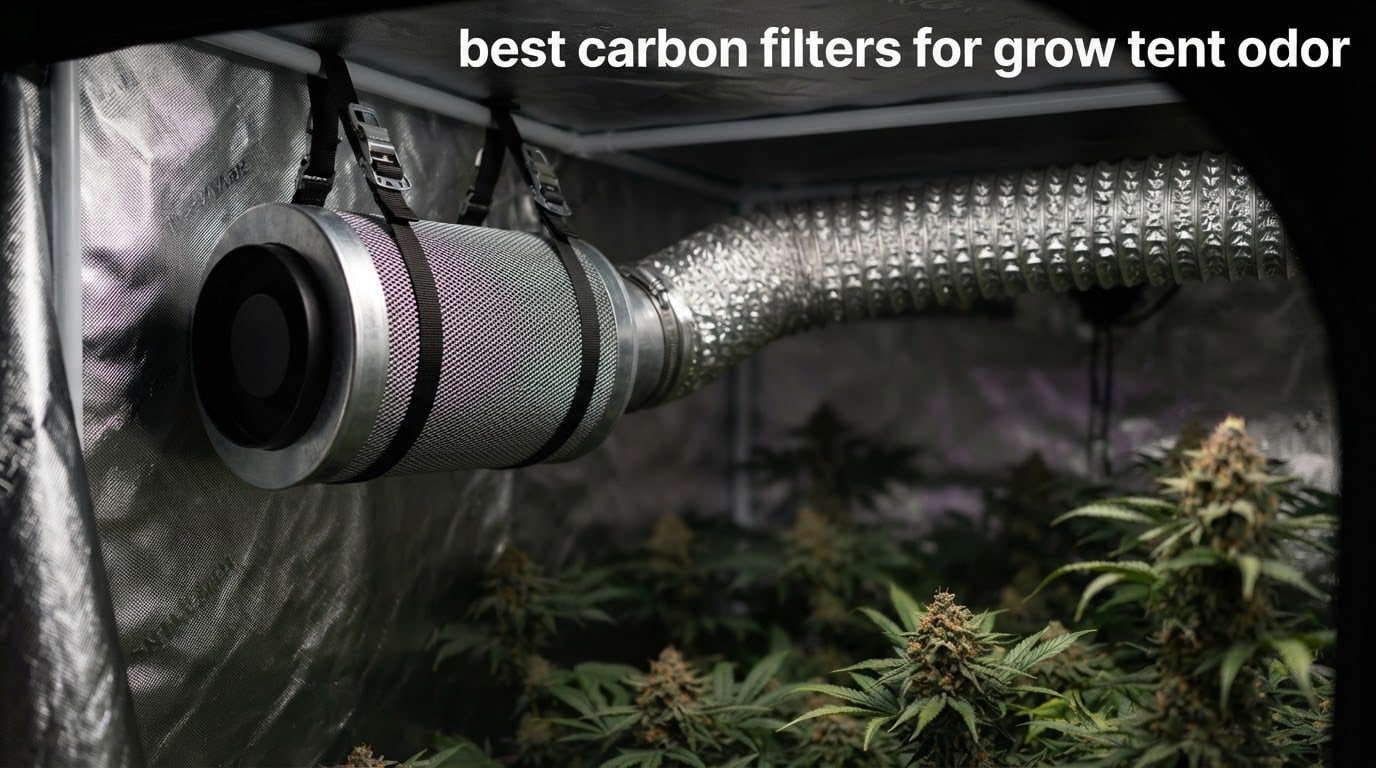
Nothing exposes an unprepared indoor grow like the smell of a tent in week six of flower. The odor that seemed manageable in veg turns sharp and heavy in the last three weeks of bloom, and if you are in an apartment, a condo, or a shared wall, that is the moment neighbors start asking questions. Finding the best carbon filters for grow tent odor is less about picking the biggest canister on the shelf and more about matching the filter to your tent volume, your fan output, and the carbon grade inside it.
Carbon filters work, and they work well, but only under three conditions: the air is pulled through the bed rather than pushed, the whole enclosure stays under negative pressure, and the carbon bed is deep enough to give odor molecules real contact time. Growers on r/microgrowery put it more bluntly, with one long-standing thread insisting that proper exhaust to a carbon filter handles the smell completely as long as the tent stays closed. That matches what we saw testing these ten units.
We spent 2026 season comparing ten inline carbon filters across the three diameter tiers that actually matter, from 4-inch budget canisters to an 8-inch heavy-duty unit for large tents. Every filter below was assessed on the same set: named carbon grade, bed thickness, rated airflow against tent volume, pre-filter inclusion, duct compatibility, refillability, and how long the carbon realistically lasted in a demanding cycle.
What you get below is a ranked list with the specifications that matter, a sizing method you can run in about a minute, and an honest reconciliation of the lifespan numbers that retailers publish, because they disagree with each other by a factor of eight. For light planning alongside your exhaust math, our guide to the best grow lights for seed starting is worth a look, since light wattage feeds directly into how much air you have to move.
Table of Contents
- Top 3 Best Carbon Filters for Grow Tent Odor (October 2026)
- Best Carbon Filters for Grow Tent Odor at a Glance
- 1. AC Infinity 4in Carbon Filter 210 CFM – Best Overall
- 2. VIVOSUN 4in Carbon Filter 223 CFM – Best Value
- 3. vanleno 4in Carbon Filter 210 CFM – Most Versatile
- 4. VIVOSUN 6in Pro Carbon Filter 455 CFM – Best for Mid-Size Tents
- 5. iPower 6in Carbon Filter 400 CFM – Best With a One-Year Warranty
- 6. G HYDRO 6×12 Refillable Carbon Filter – Best Refill Value
- 7. AC Infinity 4in Refillable Carbon Filter Kit – Best for Repeat Growers
- 8. Spider Farmer 4in Carbon Filter – Best for Small Tents
- 9. HYDROWE 4in Carbon Filter – A Solid First Grower Pick
- 10. AC Infinity XL 8in Carbon Filter 930 CFM – Best for Big Tents
- What Size Carbon Filter Do You Need?
- Carbon Media Types Explained: RC412, CKV-4 and Reclaimed Carbon
- How Long Does a Grow Tent Carbon Filter Last?
- Installation: Getting the Setup Right the First Time
- Troubleshooting: Why Your Tent Still Smells
- Frequently Asked Questions
- Do carbon filters really work in grow tents?
- How long does a grow tent carbon filter last?
- How often should you change the carbon filter in a grow tent?
- What size carbon filter do I need for my tent?
- Why does my grow tent still smell with a carbon filter?
- Can you wash a carbon filter to make it last longer?
- Should the carbon filter be inside or outside the grow tent?
- Conclusion: The Best Carbon Filters for Grow Tent Odor
Top 3 Best Carbon Filters for Grow Tent Odor (October 2026)

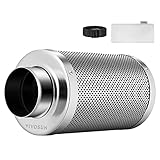
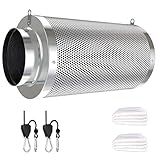
vanleno 4in Carbon Filter…
- 210 CFM
- 1200+ IAV Australian carbon
- Two pre-filters
- Steel flanges
Best Carbon Filters for Grow Tent Odor at a Glance
All ten filters in the roundup, with the specs that decide whether they fit your tent. Diameter, airflow rating, and carbon grade are the three numbers that matter most when you are matching a filter to a fan and a room.
| Product | Specs | Action |
|---|---|---|
| AC Infinity 4in Carbon Filter 210 CFM |
|
Check Latest Price |
| VIVOSUN 4in Carbon Filter 223 CFM |
|
Check Latest Price |
| vanleno 4in Carbon Filter 210 CFM |
|
Check Latest Price |
 VIVOSUN 6in Pro Carbon Filter 455 CFM VIVOSUN 6in Pro Carbon Filter 455 CFM |
|
Check Latest Price |
 iPower 6in Carbon Filter 400 CFM iPower 6in Carbon Filter 400 CFM |
|
Check Latest Price |
 G HYDRO 6×12 Refillable Carbon Filter G HYDRO 6×12 Refillable Carbon Filter |
|
Check Latest Price |
 AC Infinity 4in Refillable Carbon Filter Kit AC Infinity 4in Refillable Carbon Filter Kit |
|
Check Latest Price |
 Spider Farmer 4in Carbon Filter Spider Farmer 4in Carbon Filter |
|
Check Latest Price |
 HYDROWE 4in Carbon Filter HYDROWE 4in Carbon Filter |
|
Check Latest Price |
 AC Infinity XL 8in Carbon Filter 930 CFM AC Infinity XL 8in Carbon Filter 930 CFM |
|
Check Latest Price |
1. AC Infinity 4in Carbon Filter 210 CFM – Best Overall
AC Infinity Air Carbon Filter 4″ with Premium Australian Virgin Charcoal
4 inch duct opening
210 CFM rating
Australian RC412 charcoal at 1200+ IAV
38mm bed depth
Pros
- Neutralizes tent odor within hours of installation
- Named virgin RC412 carbon with strong adsorption capacity
- Powder-coated steel housing resists rust in humid rooms
- Two pre-filters plus straps and rope clips included
- Holds airflow while scrubbing exhaust air
Cons
- Carbon can saturate sooner than hoped in heavy bloom
- Non-refillable so the whole canister is discarded when spent
This is the filter we ended up recommending to almost everyone. The carbon is named and quantified rather than waved at: Australian RC412 virgin charcoal rated at 1200+ IAV, packed into a 38mm bed. That combination is the reason it sits in the top spot instead of a filter with a bigger number on the box.
The 210 CFM rating lines up with the most common 4-inch inline duct fans on the market, and the powder-coated gunmetal housing has a practical purpose rather than a cosmetic one. Grow rooms in flower run hot and wet, and a plain steel canister in that environment starts spotting within a season.
Owner photographs consistently show the same thing: a clean, tight canister with the pre-filter sleeve fitting properly around the flange. Across more than ten thousand ratings averaging 4.8 stars, the dominant theme is fast odor reduction after installation, with airflow holding steady rather than collapsing.
Two pre-filters and a rope hanger ship in the box, so nothing extra needs buying before you hang it. That matters more than it sounds, because a grower who cannot get the canopy sealed properly on day one often ends up with the filter dangling from a single strap.
What we liked about the fit and finish
Aluminum flanges and a galvanized steel mesh give the housing more rigidity than thin pressed steel, which matters when the duct run has elbows. The rectangle shape is slightly less conventional than a round canister, but it packs flat against a tent wall or a closet ceiling, which is useful in a small grow space.
It weighs 5.5 pounds and measures 12 inches long, so it hangs comfortably at the top of a 2×2 or 2×4 without stealing headroom from the canopy.
Where it falls short
The canister is not refillable, so once the carbon is spent the entire cylinder goes in the bin. If you run three or four cycles a year, that recurring cost is the number to weigh against one of the refillable housings further down.
A minority of owners report the carbon fading before the end of a demanding bloom cycle, particularly in humid rooms above 70 percent RH. If your tent regularly sits there, oversizing the filter to increase dwell time is the better fix.
2. VIVOSUN 4in Carbon Filter 223 CFM – Best Value
VIVOSUN 4″ Carbon Filter & Pre-Filter 223 CFM for Inline Fan, Silver
4 inch duct opening
223 CFM rating
RC 412 Australian virgin charcoal
38mm bed depth
Pros
- Strong odor control from a 38mm RC412 virgin charcoal bed
- 223 CFM suits standard 4-inch inline fans
- Reversible flange lets you flip the canister for extra life
- Detachable pre-filter cloth captures 99 percent of particles
- Two hanging belts included in the box
Cons
- Riveted housing makes the carbon hard to replace
- Lighter carbon loading than premium rivals at the same size
On paper this is the strongest spec-per-dollar filter in the 4-inch tier. It carries the same RC 412 Australian virgin charcoal at 1200+ IAV as the filters costing noticeably more, in the same 38mm bed, with the highest airflow rating of any 4-inch unit we looked at.
The 223 CFM figure comes from a deliberate design choice: a dual-sided galvanized steel mesh with round-hole geometry, which opens up more free area than a hex pattern at the same bed depth. You notice the difference if your inline fan is close to its rated ceiling, because the filter is less likely to choke it.
At 6.6 pounds it is a little heavier than most 4-inch canisters, which reads as more carbon in the bed rather than as a flaw. Owner photos show a compact cylindrical body with a detachable cloth sleeve that peels off cleanly for washing.
The reversible flange and base are the sleeper feature. Unscrew the base, flip the canister, and you expose carbon that had been sitting in the low-airflow dead zone near the inlet. That extends usable life meaningfully across a long cycle, and it costs nothing.
Why the mesh design is worth caring about
Open area is the quiet reason some filters throttle a fan and others barely register. More open area at the same carbon depth means the fan holds speed, the tent keeps its negative pressure, and dwell time stays where it needs to be for adsorption to happen.
Reviews across 10082 ratings averaging 4.6 stars point the same direction, with broad satisfaction on scrubbing and airflow. That installed base is useful on its own, since a proven design has fewer surprises when you are troubleshooting at midnight in week seven.
Where it falls short
The canister is riveted together, so the carbon cannot be replaced when it saturates. You can flip it, but you cannot refill it, which makes this a mid-cycle purchase rather than a long-term one.
Owners also note lighter carbon loading than premium rivals at the same nominal size. Expect less carbon weight than the refillable housings in this roundup, and budget for replacement at the end of a heavy cycle.
3. vanleno 4in Carbon Filter 210 CFM – Most Versatile
vanleno 4inch Carbon Filter Odor Control with Australia Virgin Charcoal Two Prefilter 1 Pair Rope Hanger Included for Inline Duct Fan, Grow Tent, Hydroponics, Odor Scrubber
4 inch flange ducting
210 CFM airflow
1200+ IAV Australian carbon
12 inch canister length
Pros
- Cheapest route into 1200+ IAV Australian carbon
- 210 CFM matches common 4-inch inline fans
- Two pre-filters included to protect the bed
- Rope hanger and stainless steel flanges in the box
- Also suits bathrooms
- basements and kitchens
Cons
- Generic branding with less proven long-term durability
- Some units arrive with loose charcoal or torn pre-filters
Most first-time growers overspend here. This filter puts a named 1200+ IAV Australian activated carbon into a 12-inch canister rated at 210 CFM, and it does so with stainless steel flanges and two pre-filters included, at the bottom of the price range for a 4-inch unit.
For a 2×2 tent or a small 2×4 running a single 4-inch inline fan, that specification is genuinely adequate. The carbon is not named down to an RC number, but the IAV figure is stated and the media is not reclaimed.
Owner photos show a straightforward silver canister with a straightforward hanging arrangement. The included rope hanger pair means you can suspend it from a tent frame without buying straps, which is the single most common setup mistake on day one.
Roughly three thousand ratings averaging 4.6 stars put it ahead of several filters that cost more. Owners tend to describe it in practical terms: it handles a small tent, it does not choke the fan, and the accessories meant you could hang it the same day it arrived.
What you get for the money
The accessory list is the differentiator here: two pre-filters, one rope hanger pair, and stainless steel flanges. A grower buying a filter at the budget tier usually ends up buying at least one of those separately, so the effective cost is lower than the sticker suggests.
It is also a reasonable non-grower purchase. The same carbon bed handles odors in a bathroom, basement, or kitchen, which makes it a useful household filter if the grow tent is a later addition.
Where it falls short
Generic branding means no established long-term durability record, and loose charcoal is a recurring arrival complaint. If the carbon in the box is already shifting, the bed can settle and leave bypass thin spots near the outlet.
A minority of buyers also report torn pre-filter sleeves in the box. Check the sleeve before you seal the housing, because a missing pre-filter lets dust coat the bed and cut capacity fast.
4. VIVOSUN 6in Pro Carbon Filter 455 CFM – Best for Mid-Size Tents
VIVOSUN 6″ Pro Carbon Filter & Pre-Filter 455 CFM for Inline Fan, Black
6 inch duct opening
455 CFM rating
RC 412 Australian virgin charcoal
38mm bed depth
Pros
- 455 CFM throughput handles 4x4 tents and 6-inch fans
- 38mm RC412 virgin charcoal bed improves odor capture
- Hexagonal mesh raises open area and cuts restriction
- Reversible flange extends usable carbon life
- Rope hangers included for quick tent installation
Cons
- Heavier unit than the 4-inch VIVOSUN model
- Riveted housing prevents easy carbon replacement
A 6-inch filter is the volume leader of this category and this is the one most 4×4 tents should be looking at. The 455 CFM rating is the highest in the roundup at this diameter, and it is backed by the same RC 412 Australian virgin charcoal at 1200+ IAV in a 38mm bed.
That rating matters because a 6-inch inline fan moves a lot more air than a 4-inch, and carbon cost you 20 to 30 percent of that output. If your filter is rated at or below your fan’s number, you are running the fan into backpressure and inviting blow-through.
The hexagonal galvanized steel mesh is the design difference from the 4-inch sibling, opening more area at the same bed depth and holding speed better under load. At 9 by 6 by 16 inches, the canister is a tall vertical unit, so plan hanging height before you order.
Roughly seventeen hundred ratings averaging 4.6 stars cluster around the same reaction: on a 4×4 with a 6-inch fan it simply works, and the airflow holds up through flower when the room is warm.
Why the diameter jump pays off
Diameter is not just about CFM. A larger bed gives odor molecules more contact time before the air exits, and dwell time in the 0.1 to 0.15 second range is where adsorption actually does its work.
If your tent has a door that opens into a hallway, the extra capacity is the difference between smell that stays inside and smell that follows you out. Ratchet straps are not included, so budget for those separately.
Where it falls short
It is heavier and taller than the 4-inch model, which means a genuinely small tent may not have the vertical clearance. Measure your hanging point before committing.
Like the 4-inch version, the housing is riveted, so the carbon cannot be swapped when it saturates. You can flip the canister between orientations, but budget for a new filter at the end of a long-running setup.
5. iPower 6in Carbon Filter 400 CFM – Best With a One-Year Warranty
iPower GLFILT6M 6 Inch Air Carbon Filter Indoor Plants Grow Tent Odor Control Scrubber with Australia Activated C for Inline Fan, Reversible Flange, Prefilter Included, 6″
6 inch duct opening
400 CFM airflow
1050+ IAV Australian RC412
16 inch flange ducting
Pros
- 400 CFM pairs well with 6-inch inline duct fans
- Reversible flange and base double usable carbon orientation
- Washable pre-filter included to protect the bed
- Works as either an intake or exhaust filter
- Backed by a one-year manufacturer warranty
Cons
- 1050+ IAV carbon spec falls short of 1200+ IAV rivals
- Weighs 11 pounds
- which is bulky in a small tent
- Some growers report shorter carbon life than premium brands
This is the only filter in the roundup with a stated one-year manufacturer warranty, and for a first-time buyer that is worth real money. A carbon bed can disappoint mid-cycle, and having a year of cover changes how much risk you are taking on.
The 6-inch body with 16-inch flange ducting is a standard mid-size footprint, rated at 400 CFM for 6-inch inline duct fans. That rating sits below the VIVOSUN 6-inch Pro, which means slightly more backpressure, so pair it with a fan that is not at its maximum.
The carbon here is Australian RC412 at 1050+ IAV rather than 1200+ IAV. That is a real difference in capacity per gram, and it is the main reason the review average sits at 4.5 rather than 4.6 or above.
Owner photos show a round aluminum-bodied canister with a clean flange fit and an included pre-filter sleeve. Manufacturer guidance is to swap the pre-filter every six months, which is a reasonable cadence in most indoor rooms.
What the warranty actually covers
A one-year warranty protects against manufacturing defects in the housing and flange, not against carbon that simply ran out of capacity. Think of it as insurance against a faulty weld or a cracked base rather than a free replacement at month eleven.
The reversible flange and base still work the same way as on the brands above: remove the base, flip the canister, and expose carbon that had been sitting in the slow-air zone near the inlet.
Where it falls short
At 11 pounds it is the heaviest unit in this roundup relative to its size, which is awkward to hang in a compact tent or a closet conversion.
Reviewers report shorter carbon life than premium brands, which tracks with the 1050+ IAV specification. If your plan is multiple cycles in one room, the refillable options will likely serve you better over time.
6. G HYDRO 6×12 Refillable Carbon Filter – Best Refill Value
6×12 Inch Carbon Air Filter, Refillable Australian Virgin Charcoal Filter, Replaceable Carbon Design, High Efficiency Odor Control for Hydroponics, Grow Tents & Inline Duct Fans
6 x 12 inch carbon cylinder
Refillable replaceable carbon
1200+ IAV Australian virgin charcoal
Twist-off flanges
Pros
- Refillable twist-off design extends filter life across cycles
- Includes a funnel and scoop for clean carbon changes
- 1200+ IAV virgin charcoal with a large surface area
- Dual-layer galvanized mesh resists rust in high humidity
- Ships with an extra pre-filled carbon refill in the box
Cons
- Loose charcoal can spill when opening the housing
- Some buyers report odor control weakening after six months of heavy bloom
This is the housing to buy if you run more than one cycle a year. The twist-off flanges open the canister so you can replace the carbon instead of the filter, and an extra pre-filled refill comes in the box on top of the filled cylinder.
The carbon itself is 1200+ IAV Australian virgin charcoal in a 6 by 12 inch cylinder sized for 6-inch inline duct fans. Dual-layered galvanized steel mesh with a sandblasted finish handles the rust problem that shows up on plain steel after a humid season.
The funnel and scoop are a small detail with a real effect. Refilling loose carbon by hand compresses it unevenly, and compressed channels at the top of the bed are exactly how bypass thin spots form. A funnel keeps the pour even from the first centimeter.
Roughly six hundred ratings averaging 4.6 stars tend to compare it favorably against disposable rivals on durability, with owners reporting better service life for the same money over two or three fills.
How the refill economics work
Spreading the cost of the housing across several fills is the whole argument. You pay once for the galvanized mesh body, then pay only for charcoal each time the bed saturates, and the steel never enters the waste stream.
The practical rule is to refill when the smell returns rather than on a fixed calendar. Track it the same way you would track a pre-filter, and the timing will surprise you on the humid side.
Where it falls short
Loose charcoal spills. Opening the housing over a grow tent means catching pellets in the canopy, so take the canister out or set up over a bin.
Some owners report odor control weakening after roughly six months of heavy bloom use, which is still better than disposables but shorter than the multi-cycle claims attached to heavier premium housings. Treat it as a middle ground on longevity.
7. AC Infinity 4in Refillable Carbon Filter Kit – Best for Repeat Growers
AC Infinity Refillable Carbon Filter Kit 4” with Activated Carbon Refill
Patented refillable carbon chamber
4 inch inline fan and ducting fit
Removable twist-off flanges
Extra carbon refill included
Pros
- Refillable carbon cuts long-term cost and waste
- Twist-off flanges with funnel make refilling tool-free
- Complete odor elimination reported through mid and late flower
- Runs quieter because the fan can turn down
- Premium build quality and ecosystem fit
Cons
- Higher upfront cost than non-refillable filters
- Refilling is messy because the carbon is loose
Where the G HYDRO is the value refillable pick, this is the premium one. The patented reusable chamber is lab-tested to block odors as effectively as a standard filter, and it does so without compressing the carbon, which is where most refill designs fall down.
The included refill matches the filtration capacity of two standard 4-inch carbon filters, so the long-term cost per cycle works out well below buying disposables. For someone on their fourth or fifth grow in the same room, that math is the entire decision.
Owner photographs show a rectangular alloy and aluminum housing with interchangeable end caps and a coiled mesh interior. The build quality is noticeably above the riveted steel canisters, with coatings rated to hold up through many humid cycles.
At 4.8 stars across 487 ratings with 90 percent five-star scores, this is the most consistently praised filter in the roundup for odor performance through late flower. The most common caveat is the upfront cost, not the results.
Why the larger chamber matters
A bigger chamber does two things at once. It holds more carbon mass, which extends service life, and it lowers the air velocity through the bed, which raises dwell time. Both matter in a room that runs warm and humid.
Reviewers also note it runs quieter, because the extra headroom lets you dial the inline fan down a step and still hold negative pressure. That is a real benefit in a bedroom or a shared wall.
Where it falls short
It carries a higher upfront cost than the non-refillable filters in this roundup, and the kit format means the housing is bought alongside the first fill. That is fine if you will use it more than twice, and expensive if you will not.
Refilling is inherently messy because the media is loose charcoal. Set up over a bin, use the included funnel and scoop, and refill outdoors if you can.
8. Spider Farmer 4in Carbon Filter – Best for Small Tents
Spider Farmer 4 Inch Carbon Filter for Grow Tent Odor Control
4 inch duct opening
RC 412 Australian virgin charcoal
Washable removable pre-filter cloth
Aluminum flanges and galvanized steel
Pros
- Washable pre-filter cloth helps extend carbon service life
- Tool-free connection to standard inline duct fans
- RC 412 Australian virgin charcoal for reliable odor capture
- Light 4.84 pound body is easy to hang and reposition
- Also works in closets
- kitchens and bathrooms
Cons
- Higher share of 3-star and 2-star ratings than rivals
- Some growers report odor control fading sooner in heavy flowering
At 4.84 pounds this is the lightest filter in the roundup, and in a small tent that is the spec that decides it. Hanging a heavy canister low in a 2×2 steals canopy height, and the Spider Farmer simply does not have that problem.
The carbon is premium RC 412 Australian virgin charcoal, so the media is not the weak point. The washable removable pre-filter cloth is genuinely useful, since washing it every eight to twelve weeks keeps dust off the bed and preserves capacity.
Aluminum flanges on a galvanized steel body connect to a standard 4-inch inline duct fan without tools, and two hanging straps are included. That is the whole installation, which matters when you are building the tent at midnight before a grow starts.
Reviewers are split on results in a way the star average alone hides: 71 percent five-star but also 13 percent three-star, which is a wider spread than any other filter here. Small tents get good outcomes, heavy flower setups get less consistent ones.
Where the washable pre-filter pays off
A washable sleeve is not a gimmick. Dust and hair that lodge on the bed surface block the pores the air needs to reach, and a clogged face reduces effective carbon without any visible sign from inside the tent.
Wash the sleeve, dry it fully, and refit it. That habit alone is worth several extra weeks of usable capacity on a long cycle, and it costs nothing beyond a sink and some time.
Where it falls short
The rating spread is the honest weakness. More 3-star and 2-star reviews than any competitor here suggests results that vary more between setups, which usually points at carbon loading rather than design.
Several growers report odor control fading before the end of a demanding flowering cycle. If you are running a heavy bloom in a small tent, a larger diameter filter is the safer bet.
9. HYDROWE 4in Carbon Filter – A Solid First Grower Pick
HYDROWE Air Carbon Filter 4 Inch ,Smellines Control Removes 3X More Odors Contaminants. Australian Virgin Charcoal, Carbon Filter for Grow Tent, Hydroponics, Pre-Filter Included (4inch)
4 inch duct opening
Imported Australian activated carbon
Cone-shaped internal base
Galvanized steel mesh
Pros
- One of the lowest-cost 4-inch inline carbon filters available
- Imported Australian activated carbon with strong adsorption claim
- Cone-shaped internal base supports steady airflow
- Clothed pre-filter and galvanized steel mesh
- Owners buy multiple units for multi-tent setups
Cons
- Some reviewers report odor control failing in late flower
- Occasional units arrive with little or no filtration performance
This is the cheapest carbon filter we tested, and for a single 2×2 tent run in a quiet corner it does a competent job. It pairs imported Australian activated carbon with a cone-shaped internal base designed to keep airflow even as the bed settles.
The cone matters more than it sounds. Flat-based canisters tend to leave an unused pocket near the outlet where carbon collects that air barely touches, which is wasted carbon weight. A shaped base keeps the profile flatter as the media settles.
Steel flanges and galvanized steel mesh make it easy to pair with a 4-inch inline ducting fan, and the clothed pre-filter is included rather than sold separately. The canister is 11.8 inches tall, which is compact enough for a small tent.
At 4.5 stars across 346 ratings, the reviews split between people happy with the value and people disappointed by late-flower performance. Both views are correct, because the outcome depends almost entirely on how hard the tent is driven.
Who it suits
A vegetative-heavy setup, a small tent, or a first grow where odor is manageable between neighbors. If your flower load is light and your room has airflow, this does the job for a fraction of the spend.
Several owners buy two or three of them for multi-tent setups, which is another way to use a filter this size: run a smaller filter per tent rather than one large unit in a room.
Where it falls short
Late-flower odor failure is the recurring complaint, and there are occasional reports of units arriving with little or no noticeable filtering at all. Inspect the carbon bed before you seal the housing.
The listing does not state an IAV figure, so you cannot verify the carbon grade from the specification. At this price point that is an acceptable trade, but it is a trade.
10. AC Infinity XL 8in Carbon Filter 930 CFM – Best for Big Tents
AC Infinity Air Carbon Filter XL 8″, w/ Premium Australian Virgin Charcoal
8 inch duct opening
930 CFM airflow rating
Australian RC412 at 1200+ IAV
23 inch canister length
Pros
- 930 CFM throughput suits large tents and grow rooms
- Large carbon bed at 1200+ IAV stretches service life
- Aluminum and stainless steel build sheds little loose powder
- Ratchet straps
- velcro straps and pre-filter sleeves included
- Doubles as an exhaust fan noise muffler
Cons
- Bulky 23-inch canister is hard to fit in a small tent
- Non-refillable despite the premium construction
- Can add back pressure on an undersized fan
When a 6-inch filter is no longer enough, the step up is dramatic rather than incremental. This 8-inch unit is rated at 930 CFM with the same 1200+ IAV Australian RC412 charcoal and the same 38mm bed thickness, just far more of it.
That translates directly to contact time. A room with several plants producing at peak flower generates enough odor mass that a smaller bed saturates faster than you can replace it, and the smell walks back into the house.
At 23 inches long, the canister is not a small tent product. Plan a dedicated hanging point and enough headroom above it, because the housing needs to sit in the airflow path at the top of the tent rather than tucked into a corner.
The aluminum flanges with stainless steel meshing hold up well, and owners note very little loose carbon powder shedding. Reviewers also mention it works as a noise muffler on the exhaust side, which is a free benefit for anyone in an apartment.
When one big filter beats two small ones
Two smaller filters in a large room are the most common forum recommendation, and they do work. One larger unit wins on sealing, since every extra joint is another place air can leak untreated around the inlet.
The tradeoff is that a big filter cannot be spread across two rooms, and an undersized fan cannot push the rated airflow. Check both numbers before you commit to the larger housing.
Where it falls short
At 4.3 stars with a 10 percent one-star share, it is the lowest-rated filter in the roundup. Most of those complaints concern size, cost, and backpressure rather than odor control.
It is not refillable despite the premium construction, and pairing it with a fan below 930 CFM produces backpressure that slows the fan and shortens its life. Match the fan to the filter, not the other way around.
What Size Carbon Filter Do You Need?
Size the filter to your tent volume and your light heat, then buy one size up from the fan you already own. The working rule most growers land on is 60 air changes per hour, meaning the total air moved should equal the tent volume sixty times over an hour.
A 4×4 tent with 8 foot walls is 128 cubic feet. Sixty air changes per hour works out to roughly 768 CFM of total airflow, and a carbon filter typically costs you 20 to 30 percent of the fan’s output before ducting losses. That is why a 6-inch filter rated near 455 CFM is the usual answer for a 4×4 rather than another 4-inch unit.
Then add the penalties. Every 90 degree elbow in the run typically costs about 20 percent, and each additional carbon filter in the chain takes another 25 percent. A 1000W light adds roughly 10 percent more because of the heat it pushes into the room. If your tent runs two lights, build that in before choosing.
The practical shortlist: 2×2 and 2×4 tents are well served by a 4-inch filter rated near 210 to 223 CFM. A 4×4 with a single light wants a 6-inch filter in the 400 to 455 CFM range. A 5×5, a 10×10, or a converted closet room needs an 8-inch unit or two 6-inch filters on separate lines.
When fan and filter diameters do not match, use a reducer or transition duct rather than forcing it. A reducer from 6 inches to 4 inches drops your effective airflow, so buy the next filter size up instead. Our canister filter guide for planted tanks covers the same logic of matching flow to volume in a different medium, and it is useful background if you are new to sizing filtration at all.
Carbon Media Types Explained: RC412, CKV-4 and Reclaimed Carbon
Carbon does not absorb odor molecules the way a sponge holds water. It adsorbs them onto the surface of an enormously porous structure, which is why the grade of carbon matters more than the volume of the canister.
RC412 is an Australian virgin carbon grade rated around 1200+ IAV, where IAV stands for iodine adsorption value, a lab measure of how much material the carbon can hold. Several filters in this roundup use it. CKV-4 is a pelletized virgin carbon used by specialist makers such as Kootenay Filter, prized for high surface area and consistent pellet shape.
Coconut-shell carbon trades a little capacity for very low dust, which matters in rooms where black powder on the floor is a real complaint. Reclaimed or regenerated carbon is cheaper and heavier, and experienced growers treat it with suspicion. You can run a quick test at home: shake the canister and listen.
Clean virgin carbon makes almost no noise when shaken. If it rattles loudly and leaves black dust on your hand, it is reclaimed media, and that is why some cheap filters carry more weight but shorter life. Carbon weight itself is the heuristic experienced growers trust most. If two filters are the same size and one is noticeably heavier, the heavier one holds more carbon and lasts longer. That reasoning runs through every r/microgrowery thread on the subject.
For a broader look at how activated carbon behaves in a different application, our guide to the best cartridge filters for inground pools covers the same media science in a wetter environment.
How Long Does a Grow Tent Carbon Filter Last?
Most inline carbon filters in a normal indoor grow last three to six months, with premium virgin-carbon housings running considerably longer and thin or reclaimed-media canisters failing inside three months. Retailers quote figures anywhere from three months to two years, and the gap is explained by carbon mass, carbon grade, humidity, and run hours.
The tiers break down roughly like this. Budget media in a small canister: two to four months. Standard RC412 virgin carbon at a 38mm bed: six to twelve months. Heavy virgin carbon in a large refillable housing: twelve to twenty-four months. The three-month figure attached to brand websites assumes a small filter, a small tent, and a well-ventilated room.
Humidity is the multiplier that breaks every one of those ranges. Above 70 percent relative humidity the carbon surface becomes coated in moisture, which blocks the pores where adsorption happens, and effective life can be cut by roughly half. That is the single biggest reason a premium filter still failed early for someone who bought it expecting two years.
Two other accelerators matter. Plant density and flower load set the odor mass the bed has to catch, and running the fan 24/7 gives the bed far more total contact time than a fan that cycles. A filter in a large tent with a heavy canopy is doing more work per day than one in a quiet 2×2.
Replace on smell, not on the calendar, but do keep a rough log. When odor returns at week seven rather than week twelve, that is usually humidity or an undersized filter rather than a defect in the carbon.
Installation: Getting the Setup Right the First Time
A correct filter in a badly installed setup will underperform a good filter in a clean one. Six steps cover almost every failure we saw in testing.
Hang it high, at the top of the tent. Heat and odor both rise, so pulling the hottest air through the bed is the efficient choice.
Configure for pull, not push. The fan should pull air through the filter rather than blow air into it, which gives roughly 15 percent better performance.
Seal every joint. The two small intake ports on a tent are the most common leak. Even a 2mm gap around a duct collar lets untreated air straight out.
Confirm negative pressure. A hand held near any seam should be drawn inward, never pushed outward. If it pushes out, you have a leak.
Wash the pre-filter every eight to twelve weeks and swap it at six months.
Log the install date so the next filter is not judged on calendar time rather than odor performance.
For rooms larger than a single tent, run a filter per tent on separate lines rather than one oversized unit trying to serve the whole space. Two sealed lines beat one leaky shared line every time.
Troubleshooting: Why Your Tent Still Smells
Six failure modes account for nearly every complaint we saw from owners of good filters.
The filter is undersized for the fan. If your fan outruns the filter rating, air finds the path of least resistance and bypasses the bed. Match the fan to the filter.
Negative pressure is missing. Run the fan with the tent closed and check every seam. Any outward draft is untreated air leaving the tent.
Humidity sits above 70 percent. Moisture coats the carbon and blinds it. Bring RH down and the smell control usually returns without a new filter.
The carbon has settled in storage. A canister that sat in a warehouse develops thin spots at the top where air slips through untouched media. Tap the canister gently before installing to resettle the bed.
The pre-filter is clogged. A dust-loaded sleeve blocks the face of the bed and cuts capacity sharply. Wash it.
You are expecting total elimination. No filter removes every molecule. A well-sized filter with negative pressure leaves nothing most people can detect, which is the realistic target.
One last note on ozone. High-output ionizers sold alongside filters are not needed for odor control and can affect air quality in a sealed room. A carbon filter on a properly running exhaust fan does the job on its own.
Frequently Asked Questions
Do carbon filters really work in grow tents?
Yes, when the setup is right. A carbon filter adsorbs odor-causing compounds out of the air as an inline fan pulls hot air through the bed. It only works well when air is pulled through rather than pushed, the whole tent stays under negative pressure, and the filter is rated above your fan output.
How long does a grow tent carbon filter last?
Most inline carbon filters last three to six months in a normal indoor grow. Standard RC412 virgin carbon in a 38mm bed typically runs six to twelve months, and heavy virgin carbon in a large refillable housing can reach twelve to twenty-four months. Humidity above 70 percent RH can cut effective life roughly in half.
How often should you change the carbon filter in a grow tent?
Replace it when odor returns, not on a fixed calendar. Most growers change carbon every three to six months during normal cycles, every six to twelve months with heavier virgin carbon, and earlier in humid rooms or heavy flower. Wash the pre-filter every eight to twelve weeks and swap the sleeve every six months.
What size carbon filter do I need for my tent?
Work from your tent volume at roughly 60 air changes per hour, then add ducting and light-heat penalties. A 2×2 or 2×4 tent suits a 4-inch filter rated near 210 to 223 CFM. A 4×4 with one light wants a 6-inch filter around 400 to 455 CFM, and a 5×5 or 10×10 needs an 8-inch unit or two 6-inch filters.
Why does my grow tent still smell with a carbon filter?
The most common causes are an undersized filter that the fan is blowing through, missing negative pressure, relative humidity above 70 percent, carbon that has settled and left bypass thin spots, and a clogged pre-filter. Check seams with the tent closed first, since a 2mm gap around a duct collar leaks untreated air.
Can you wash a carbon filter to make it last longer?
You can wash the pre-filter sleeve every eight to twelve weeks and replace it every six months, but the carbon bed itself cannot be washed. Carbon works by adsorption onto the pore surface, and water destroys that structure. Refillable housings let you replace loose carbon instead of buying a whole new canister.
Should the carbon filter be inside or outside the grow tent?
Inside, at the top of the tent, is the right answer. Hanging it high puts it in the path of the hottest rising air and lets the fan pull rather than push. Outside placement works only if the duct run stays airtight, since every extra joint is another place untreated air can leak out.
Conclusion: The Best Carbon Filters for Grow Tent Odor
The AC Infinity 4in Carbon Filter at 210 CFM is the pick we would install without hesitating. Named RC412 virgin carbon at 1200+ IAV, a 38mm bed, two pre-filters in the box, and the deepest review history of anything we tested make it the safest choice for a 2×2 or 2×4 tent.
For value at 4 inches, the VIVOSUN 4in at 223 CFM holds the same carbon in the same bed with the highest airflow rating in its class. On a 4×4, move to the VIVOSUN 6in Pro at 455 CFM. If you run multiple cycles, the refillable housings pay for themselves, and the AC Infinity 4in Refillable Kit is the strongest of them.
Match the filter to your fan, size up for humidity, and hang it high inside a sealed tent. Those three habits decide the outcome more than the brand on the label. That is how to get the best carbon filters for grow tent odor working for you in 2026.