

The short answer to what light to use for a bioactive terrarium: a full-spectrum LED grow light bar or bulb with 5000K to 6500K output, mounted above the enclosure on a timer. That light powers the live plants, and the plants are what feed the springtails and isopods that make the whole system work. Every one of the ten lights below meets that bar for at least some enclosure size.
When I started keeping planted enclosures, I treated the light as an afterthought and swapped the bulb once a year. The plants thinned out from the bottom up, the cleanup crew went with them, and the enclosure slowly turned back into a dirt box with animals in it. Fixing it took one good LED bar and a mechanical timer, and the change was obvious within six weeks.
That is the pattern across every bioactive forum I have read while putting this list together. People are not short of opinions, they are short of a framework: how much light does a 12x12x12 actually need, how much do you lose through a glass canopy, and does a grow light double as a UVB lamp. It does not. This guide answers those questions first and then puts each of the ten fixtures against them.
If you are still deciding on the rest of the hardware, our guide to LED shop lights for garages covers the same lumens and colour temperature logic in a much larger space, which is a useful way to sanity check the numbers a terrarium vendor quotes you.
Table of Contents
- Top 3 Best LED Lights for Bioactive Terrariums (October 2026)
- All 10 LED Lights Compared in 2026
- 1. Exo Terra Day and Night LED (PT2336) – The Most Proven All-Rounder
- 2. Pawfly 11W Terrarium Light – Dimmable With a Real Night Phase
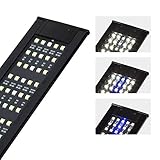
- 3. REPTI ZOO 15W Slim LED – Near Zero Heat for Hot Climates
- 4. Exo Terra Terrasky – Built for Planted Bioactive Enclosures
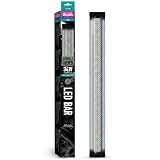
- 5. Arcadia Jungle Dawn 34W – Premium Coverage for Large Vivariums
- 6. AquaSprouts 24W Grow Bar – Strong Output for 24 Inch Mesh Tops
- 7. The Bio Dude Glow and Grow 6 Inch – Best Value Grow Bulb
- 8. Josh’s Frogs Green Gro 13W – Built for High Humidity
- 9. AREPK Glass Terrarium Lamp – Small Vases and Planted Jars
- 10. hygger 55W COB Light – Maximum Output From One Pendant
- How to Choose LED Lighting for a Bioactive Terrarium
- Frequently Asked Questions
- Conclusion
Top 3 Best LED Lights for Bioactive Terrariums (October 2026)

Exo Terra Day Night LED 24
- 24 LED diodes
- Day and night modes
- Self adhesive base
- No UVB needed

Pawfly 11W Terrarium Light
- 6500K full spectrum
- 6 intensity levels
- Sunrise and sunset modes
- Fits 12 to 18 inch tanks

Exo Terra Terrasky LED
- RGB plus 6500K white
- 11 weather effects
- IP54 rated
- Remote controlled
These three cover the widest range of keepers. The Exo Terra Day and Night fixture is the safest default for a first bioactive build, the Pawfly is the one I would pick if the enclosure houses an arboreal species and I want real control over the dusk phase, and the Terrasky is the fixture here marketed specifically for planted enclosures.
All 10 LED Lights Compared in 2026
| Product | Specs | Action |
|---|---|---|
| Exo Terra Day Night LED 24 |
|
Check Latest Price |
| Pawfly 11W Terrarium Light |
|
Check Latest Price |
 REPTI ZOO 15W Slim LED REPTI ZOO 15W Slim LED |
|
Check Latest Price |
| Exo Terra Terrasky LED |
|
Check Latest Price |
 Arcadia Jungle Dawn 34W Arcadia Jungle Dawn 34W |
|
Check Latest Price |
 AquaSprouts 24W Grow Bar AquaSprouts 24W Grow Bar |
|
Check Latest Price |
 The Bio Dude Glow and Grow 6 Inch The Bio Dude Glow and Grow 6 Inch |
|
Check Latest Price |
 Josh’s Frogs Green Gro 13W Josh’s Frogs Green Gro 13W |
|
Check Latest Price |
 AREPK Glass Terrarium Lamp AREPK Glass Terrarium Lamp |
|
Check Latest Price |
 hygger 55W COB Light hygger 55W COB Light |
|
Check Latest Price |
1. Exo Terra Day and Night LED (PT2336) – The Most Proven All-Rounder
Exo Terra PT2336 Day/Night LED Fixture, Large
24 LED diodes
Day and night lighting
No UVB required
Self adhesive support base
Pros
- Largest review base of any fixture in this group
- Energy efficient two stage lighting
- Allows a natural nighttime temperature drop
- Self adhesive base makes mounting simple
Cons
- No UVB output so it needs a separate UVB source
- 24 diodes limit output on larger enclosures
This is the fixture I keep coming back to as the default answer, and the reason is boring but reliable: 644 reviews across many years of ownership. Long-term reports matter more than any spec sheet in this hobby, and a bar that has been running in humid enclosures since the early 2010s has already survived everything you are about to put it through.
It does two things well. The daytime mode gives enough light for low-light planting like pothos, ferns and moss, and the night mode is genuinely dim rather than a second bright channel pretending to be moonlight. That dim phase is what lets nocturnal and crepuscular species settle down instead of pacing the glass.
Two specifications define what this is. It has 24 LED diodes in an 8 by 5 by 4 inch housing, which is plenty for a 12x12x12 or a 12x12x24 and starts to strain past 18 inches deep. It emits no UVB, and the listing is upfront about that, which tells you the manufacturer expects you to pair it with a UVB tube for species that need one.
The part I like most is the thermal behaviour. LEDs of this size barely move the ambient temperature in an enclosure, so your gradient stays where you set it. In a bioactive tank running 80 percent humidity, a fixture that adds no meaningful heat is worth more to me than extra lumens.
Who this light suits
This is the right first light for a beginner bioactive build in a 12x12x12 or 12x12x24, and it is the right light for anyone keeping crested geckos, leopard geckos, tarantulas or inverts where UVB is optional. If your animals already have a UVB tube, this fills the plant side of the system and nothing else is missing.
Who should skip it
Skip it if you are planting heavily and want fast growth, because 24 diodes will not push a dense canopy in a 24x18x24. Skip it if your species is diurnal and UVB-dependent, since the fixture makes no attempt at UVB. And skip it if you want one fixture to do everything, because no single light on this list does that.
2. Pawfly 11W Terrarium Light – Dimmable With a Real Night Phase
Pawfly 11 W Terrarium Light for 12″ to 18″ Terrarium Extendable Reptile Tank Light with Full Spectrum Brilliant White Blue Red Lights with Day & Night Modes and Adjustable Brightness
6500K white with blue and red diodes
PAR 40 and 2000 lux
6 intensity levels
Fits 12 to 18 inch
Pros
- Six intensity levels with separate blue and white control
- Sunrise and sunset simulation
- Silicone sealed board suits humid setups
- Runs cool
- Extends from 11.5 to 20 inch
Cons
- Modest output that is weak as a sole grow light
- Extendable bracket has no stop and can slide
- No UVB output
The Pawfly is the fixture I recommend when the animal matters more than the plant. The output is modest, listed at 2000 lux and PAR 40 at plant level, which will not grow a heavy canopy. What it does have is control: six intensity levels with the blue channel and the white channel adjustable independently, plus a sunrise and sunset simulation.
That control solves a real problem. Arboreal species such as crested geckos and frogs are comfortable in a bright enclosure during the day and actively unsettled by a bright enclosure at 2am. Being able to pull the daytime level down and shift to a warm dim phase without touching the fixture is something most of these fixtures cannot do.
The spectrum is a proper grow blend rather than a single channel: 6500K white with 450nm blue and 660nm red diodes, rated at CRI 90. The 11 watt draw, ETL certified adapter and silicone sealed board in an aluminum housing are the details that matter in a tank where condensation is constant.
The bracket extends from 11.5 to 20 inches, so one model covers most small and mid-size tanks. Reviewers do point out that the extension has no positive stop, so on a wide tank it is worth checking it is not creeping outward a few weeks after fitting.
Who this light suits
It suits anyone with an 18 inch long tank, an arboreal animal and a preference for a long dusk. Gecko, frog and small snake keepers who find a flat bright white bar unpleasant tend to like the way this one can be dialled back. It also works well as a supplemental light alongside a stronger grow bar in a taller setup.
Who should skip it
Skip it if plants are the priority, because PAR 40 is not enough to sustain dense growth on its own. Skip it for diurnal species that require UVB, since it produces none. And if your tank is 24 inches or longer, the bracket will not reach and you need a full bar instead.
3. REPTI ZOO 15W Slim LED – Near Zero Heat for Hot Climates
REPTI ZOO Reptile Aquarium Terrarium LED Light Ultra-thin Day and Night Light for Reptiles Aquarium Light, 3-Color Modes LED Light Hood 15W for 18 inch or Larger Terrariums for Reptile Plant Fish Tank
15 watts,15 LED sources
6500K white plus 465nm blue
Stepless touch dimming
17.72 by 3.86 by 2.76 inches
Pros
- Emits almost no heat which suits amphibians and chameleons
- Stepless dimming for evening viewing
- Three modes give distinct day and night light
- Lightweight metal build
Cons
- Not water resistant so humidifiers need care
- Some reports of a failed channel or yellowed white mode
- No timer function
Heat is the underrated issue in a bioactive enclosure. A planted tank with a glass front and a screen top traps warmth, and a fixture that adds to that pushes your gradient the wrong way and dries the substrate faster than your misting schedule can keep up. The REPTI ZOO is the coolest-running bar in this group, and that is the reason it earns a place here.
It is a 15 watt, 15 source fixture rated at 6500K, with a 465nm blue mode and a combined mode, all controlled by stepless touch dimming. Three colour modes plus continuous dimming means you can go from full daylight through evening to a low blue night reading without swapping anything. The listed LED lifetime is around 20000 hours.
The extended brackets fit 18 inch and larger mesh top terrariums, and the profile is genuinely thin at just under 2.8 inches tall, so it will not sag a screen lid. It is also the fixture most often recommended in the dart frog and arboreal communities precisely because it adds no measurable heat to a warm, wet enclosure.
Two caveats. It is not water resistant, so keep it clear of a humidifier outlet and consider a splash guard. And a small share of reviews describe a fixture arriving with a failed channel or a noticeably yellowed white mode, so check it in the first ten minutes after fitting.
Who this light suits
Dart frog, tree frog, chameleon and tropical arboreal keepers are the obvious audience, because they need strong light for the plants and low heat for the animal, and this is the rare bar that leans toward the second. It also suits anyone with an 18 inch or wider mesh top who wants dimming rather than an on and off switch.
Who should skip it
Skip it if your setup throws a lot of water at the enclosure, since it is not rated for water resistance and a humidifier spitting directly onto the panel is a real failure path. Skip it if you want to just plug it in and forget, because there is no built in timer and you will need an external one.
4. Exo Terra Terrasky – Built for Planted Bioactive Enclosures
Exo Terra TerraSky Planted and Reptile Terrarium LED Lighting
RGB plus 6500K white LEDs
11 preset weather effects
IP54 rated
120 degree dispersion
Pros
- Designed for planted and bioactive enclosures
- Range of presets from full sun to half moon night
- Runs cool and light enough for a screen lid
- IP54 rated for humid environments
- Adjustable mounting arms
Cons
- Remote reliability drops over time
- No on and off switch on the fixture itself
- 120 degree dispersion leaves deep tanks dark at the back
- No built in timer
Unlike the rest of this list, the Terrasky is specified from the outset as a planted terrarium light, and the manufacturer says so explicitly, with RGB plus 6500K white diodes across 120 degrees of dispersion and adjustable mounting arms.
Where it earns its place is the preset library. Eleven weather effects, including rainstorm and thunderstorm, sit alongside settings that run from full sun through cloud cover to a half moon night. For a keeper who enjoys watching the enclosure rather than just maintaining it, that is a real feature and not a gimmick, and it is the closest thing here to the programmable horticultural lights enthusiasts discuss.
Two details matter in a bioactive tank. It is IP54 rated, which is a meaningful mark in an environment running 80 percent humidity and above, and at 1.1 pounds with a 4.9 by 5 by 1.7 inch body it will not stress a screen lid.
Now the honest part. The remote is the weak link: owners report it becoming unreliable over time, needing repeated attempts to change a setting, and because there is no on and off switch on the body, losing the remote leaves you with no way to adjust output. That is a poor design decision, not a fatal one, as long as you keep the remote.
Who this light suits
It suits beginners who want a planted setup that looks good on day one and have no interest in dialling in a spectrum, and anyone who wants weather effects and colour control without a phone app. Small gecko and frog enclosures up to about 12 inches deep are its sweet spot, where the dispersion still reaches the back glass.
Who should skip it
Skip it for deep enclosures. The 120 degree dispersion leaves the back half of an 18 inch deep tank dark, and most owners end up running a second fixture. Skip it if you are not willing to keep the remote in a safe place, and skip it if you want to rely on a single dial for a high light planting.
5. Arcadia Jungle Dawn 34W – Premium Coverage for Large Vivariums
Arcadia Jungle Dawn LED Bars (34W) – 22.5″ Long
34 watt bar,22.5 inch long
6200K full spectrum
CRI 80
Linkable from one power source
Pros
- Crisp neutral white with no purple hue
- Even coverage across a wide enclosure
- Supports vigorous plant growth
- Linkable fixtures from a single outlet
- Pairs with Arcadia UVB systems
Cons
- Highest price point in this group
- Visible light only so a separate UVB source is required
The Arcadia is the name that comes up most often in enthusiast circles, and the reason is the output curve rather than the brand. This is a 34 watt bar, 22.5 inches long, running at 6200K with CRI 80, and owners of large planted vivariums consistently describe the coverage as even, with no dark zones and no purple cast to ruin the look of the enclosure.
It is the one on this list that the forum consensus treats as more than enough for a deep tank. In a 24x18x24 or a 36 inch paludarium where you are trying to grow anything beyond moss and a pothos, the gap between this and the alternatives is output measured in PAR rather than in brand recognition.
Two practical details. The included linkable cable means you can run several bars from a single power source, which matters when you are covering a wide paludarium and do not want a second outlet. And it is designed to mount above a mesh top or inside the vivarium, so you can drop it lower in a tall enclosure where a bar mounted externally would lose too much intensity to distance.
It is visible light only. Owners pair it with an Arcadia UVB fluorescent system for a complete setup, and for diurnal species like bearded dragons that pairing is not optional. The price is the highest in this group, and that is the whole trade: you are paying for output density and evenness rather than for features.
Who this light suits
It suits anyone with a large planted enclosure who is done buying twice, and high-light planting where you want more than moss. It also suits keepers running multiple enclosures who will use the linkable cable, and anyone who cares that the enclosure looks neutral rather than magenta when they look at it in the evening.
Who should skip it
Skip it for a 12 inch starter tank. A 22.5 inch, 34 watt bar over a 12x12x12 is more light than the space needs and more money than the space justifies. Skip it if UVB coverage is your only requirement, since it provides visible light alone.
6. AquaSprouts 24W Grow Bar – Strong Output for 24 Inch Mesh Tops
AquaSprouts 2ft Horticultural LED Grow Light Bar, 24W High Output White, Full Spectrum 6400K for Indoor Gardening, Bioactive Terrariums & Vivarium/Paludariums
24 watts,48 light sources
2640 lumens at 6400K
24 by 3 by 3 inches
2 year warranty
Pros
- Strong enough to drive real plant growth
- 6400K daylight white output
- Aluminium housing keeps heat down
- Linkable design scales to a larger area
- Two year warranty
Cons
- No built in timer
- Reviews report a share of fixtures failing to power on
- Customer support responsiveness questioned
The AquaSprouts is the horticultural bar in this group rather than a reptile fixture adapted for plants, and you can tell from the numbers. 2640 lumens of 6400K daylight white from 48 light sources at 24 watts, housed in a brushed black aluminium heatsink, is a plant grow light by design.
Owners running it over 24 inch mesh top terrariums report exactly what you would hope: fast, visible growth across the whole canopy rather than a bright strip in the middle. At 24 inches long and 3 by 3 inches, it covers a 24×18 footprint without the dark corners you get from a shorter bar stretched across the same space.
Two things make it practical at scale. The link connectors allow up to 8 fixtures to run from one power outlet, so expanding to a paludarium later does not mean new wiring. And the mounting hardware and chains are included, which removes the most common install complaint with horticultural bars sold for greenhouses.
The reliability picture is the reason its rating sits below the leaders. A meaningful share of reviews describe a bar arriving dead or refusing to power on, and several mention unanswered support emails. The 2 year warranty helps, but if you are buying this, test it the day it arrives rather than a week later.
Who this light suits
It suits owners of 24 inch mesh top enclosures and planted tanks who want a genuine horticultural output rather than a viewing light. It also suits anyone planning to expand into a larger paludarium, since the linkable design lets you add bars without adding outlets.
Who should skip it
Skip it if reliability under warranty friction matters more to you than output, because the failure rate in reviews is not negligible. Skip it if you want a dimming or scheduling feature built in, since the only control is a small switch on the housing, and skip it if you keep dart frogs and want a warm dim night phase.
7. The Bio Dude Glow and Grow 6 Inch – Best Value Grow Bulb
The Bio Dude 6″ Glow & Grow Best Plant Growth Reptile & Amphibian LED Bulb for terrariums
9 watt full spectrum
6000K with red and blue diodes
E27 socket
180 degree rotation
Pros
- Dramatic plant growth reported by bioactive keepers
- Emits no heat at all
- Simple screw in installation with directional aiming
- Reported to last a year or more in most cases
Cons
- 9 watt output suits enclosures up to about 18 inches tall
- Some bulbs stopped working within a few weeks
- No UVB output
- Needs an E27 socket fixture
This is the bulb that shows up most often as a first attempt at planted lighting, and for a small enclosure that instinct is right. Nine watts of mixed red and blue diodes at 6000K, in a bulb that rotates through 180 degrees so you can aim it at the part of the enclosure that needs it, does a genuinely good job on moss and tropical foliage in a 12x12x12.
The no-heat claim is not marketing filler. Owners of dart frog and mantella setups consistently single this out as the reason it works for them, because it lets you push light levels up without fighting the enclosure temperature. The listing also states it grows mosses, tropical and desert plants, which tracks with what keepers report.
It is a 1 year warranty, weighs 6 ounces and is a simple E27 screw in. That simplicity is the appeal for a first build: no bracket to align, no dimmer to program, and a directional aim you can adjust by hand once the plants establish.
The real limitation is one the listing does not spell out clearly. Nine watts is only the right output for enclosures up to about 18 inches tall, and in a deeper tank the light simply will not reach the substrate at the back. A small number of reports describe bulbs that stopped working within a week or two, so keep the receipt.
Who this light suits
It suits first-time bioactive keepers working in a 12x12x12 or a 12x12x24 who want the cheapest route to seeing plants grow. It also suits anyone whose animals need a cool enclosure and cannot tolerate added heat, and keepers who want one bulb they can aim rather than a bar they have to position precisely.
Who should skip it
Skip it if your enclosure is deeper than 18 inches, because the output drops off a cliff and the listing does not warn you. Skip it if you do not already have an E27 socket fixture, since that is an extra purchase. And skip it for any species that needs UVB, as it produces none.
8. Josh’s Frogs Green Gro 13W – Built for High Humidity
Josh’s Frogs Green Gro LED Bulb (13 Watt)
13 watt LED
60 LEDs at 6500K
Vented moisture barrier
Rated for about 10 years
Pros
- Consistently strong plant growth reported
- Works well in dart frog and 18x18x24 setups
- Vented moisture barrier resists corrosion
- Low 13 watt draw
- Service replaced a non working bulb quickly
Cons
- One report of a bulb degrading after about two years
- Bulb style needs a compatible socket fixture
- Only one wattage option available
The Green Gro is a 13 watt bulb, roughly the output of a 60 watt incandescent, built from 60 LEDs at 6500K and rated for a lifespan of about 10 years. At that wattage it sits neatly between the 9 watt Bio Dude bulb and a full bar, which makes it the sleeper pick for an 18 inch deep enclosure.
The detail I care most about is the vented moisture barrier. In an enclosure sitting at high humidity year round, corrosion on a cheap bulb is the normal end of life, and this one is explicitly vented for humid vivarium and aquarium use. That is a construction difference you feel after a year, not on day one.
Owners of 18x18x24 enclosures and dart frog setups report begonias and other foliage responding quickly, and the smaller review base is unusually consistent in tone. There is a single long-term reliability report describing intermittent operation after about two years, which is worth weighing against a 10 year rating that no bulb truly delivers.
Who this light suits
It suits keepers in genuinely wet enclosures where corrosion is the main reason bulbs fail, and anyone whose tank is 18 inches deep who finds the 9 watt bulb stops short. It also suits dart frog and mantella keepers who want no heat and no UV from the plant light.
Who should skip it
Skip it if you want a dimmable or scheduled fixture, because there is no control beyond the socket switch and the single 13 watt variant. Skip it if you need a wide, even spread across a 24 inch tank, since a single bulb cannot cover that footprint without a visible hotspot underneath it.
9. AREPK Glass Terrarium Lamp – Small Vases and Planted Jars
AREPK Glass Terrarium Plant Grow Light with Timer for Vases, 5.9-Inch Lamp
10 watt at 6000K
Patented rotating inner ring
Built in timer
Waterproof glass and aluminium
Pros
- Combines a grow lamp with a ventilated lid
- Built in timer is genuinely useful for planted jars
- Adjustable brightness with a spectrum that keeps plants growing
- Sturdy glass and metal build
- Fits vases up to 5.9 inches
Cons
- Timer reliability is inconsistent
- with some cutting out early
- Some lamps dim flicker or stop after a few months
- Supplied adapter reported as unreliable
This is the one fixture here that solves an airflow problem instead of creating one. When you cap a small planted jar with a light, you have added a lid to a sealed container, and humidity either climbs or the plant suffers. The patented rotating inner ring adjusts the opening and the airflow path so you can find the balance rather than guessing.
The light itself is a 10 watt, 6000K full spectrum LED in a waterproof glass and aluminium body measuring 5.9 inches across, with a built in timer. For vases, betta bowls, bonsai and small moss terrariums, having the timer in the lamp rather than in a wall plug is the difference between a system that runs itself and one you remember to switch off.
The adjustable brightness keeps it usable for low light plants rather than only for moss, and the finish looks like a product rather than a component. It is a 1 year warranty and ships with the lamp, a manual and a 5V 2A two pin adapter.
Timer reliability is the reason it is not higher on this list. Owners describe the timer cutting out after roughly 50 minutes, and others describe lamps that dim, flicker or shut themselves down after a few months and need the timer reset. The supplied adapter is also singled out as unreliable in several reviews, so budget for a replacement.
Who this light suits
It suits anyone planting in a vase, a jar or a very small terrarium, where airflow is as important as light. It also suits anyone who wants a scheduled light without buying a wall timer, and keepers building small moss displays that do not need a full spectrum bar.
Who should skip it
Skip it for a 12x12x12 or larger, because a 5.9 inch lamp cannot cover that footprint. Skip it if you need dependable long term scheduling, since the timer and the adapter are both the weak points in the reviews, and skip it if your enclosure is deep enough that you need real vertical coverage.
10. hygger 55W COB Light – Maximum Output From One Pendant
hygger 55W High PAR LED Aquarium Light, Full Spectrum Fish Tank Lighting for Aquascape Planted Tank Paludarium, Adjustable Brightness Aquarium Lamp & Stand Kit
55 watt COB LED
17500 lumens
PAR 530 at 7 inches
Five dimming levels from 20 to 100 percent
Pros
- Very high output from a single pendant
- Five dimming levels for tuning to plants and animals
- Adjustable stand for height and front to back position
- Cooling fan limits decay and extends lifespan
- Suitable for paludariums and planted tanks
Cons
- Cooling fan adds audible noise
- CRI of 68.8 makes colours look less vivid
- No built in timer so an external timer is required
- Potentially overpowered for a small terrarium
Everything else on this list is a bar, a hood or a bulb. This is a pendant with a stand, and it exists because a planted aquascape or a paludarium water section can absorb far more light than a 12 inch reptile enclosure ever will. The numbers justify the form factor: 55 watts of COB LED across 400nm to 700nm, 17500 lumens, and PAR 530 at 7 inches falling to 214 at 12 inches.
Those two PAR figures are the most useful thing on the spec sheet, because they let you size it yourself. Suspended 7 inches above the canopy you are in the high range; at 12 inches you are still in a range that will grow demanding plants. The stand adjusts from half an inch to 16.5 inches above the tank and moves front to back, so you can aim it rather than guess.
Five brightness levels from 20 to 100 percent give you the dimming that small enclosures need, and the built in cooling fan is a sensible inclusion on a COB array of this power because it slows the light decay that otherwise shows up as a fading canopy. A 2 year warranty is included, along with the stand, screws, allen wrench, power supply and manual.
Be clear-eyed about the trade-offs. The fan is audible in a quiet room, and the CRI of 68.8 means colours under the lamp look flatter than under a high-CRI bar, which matters if the view of the enclosure is part of why you keep it. It also has no timer, so it needs an external timer or smart plug.
Who this light suits
It suits paludarium and aquascape keepers who need far more light than a reptile bar can deliver, and anyone with a 36 inch planted display. It also suits high light planting where the 5 brightness levels let you drop to 20 percent for a delicate species in the same enclosure.
Who should skip it
Skip it for a small bioactive terrarium. It is grossly overpowered for a 12x12x12 and the dimming only goes down to 20 percent, which is still a lot of light for a frog. Skip it if you are sensitive to fan noise, and skip it if you want a good colour rendering index, because 68.8 is modest.
How to Choose LED Lighting for a Bioactive Terrarium
Use a full-spectrum LED grow light with 5000K to 6500K output, mounted above the enclosure and switched by a timer, and pair it with a separate UVB lamp if your animal needs one. That single sentence answers the question that appears most often in the forums, and the rest of this section is the detail behind it.
Do I need a grow light, a UVB lamp, or both?
Both, in most bioactive setups, and this is the single biggest source of confusion. A grow light powers the plants, which are the engine of the system: they feed the springtails and isopods that process waste, so when plant growth collapses the cleanup crew starves and the whole ecosystem degrades. A UVB lamp serves the animal, supporting calcium synthesis and normal behaviour in diurnal and UVB-dependent species.
None of the ten lights on this list produces meaningful UVB. They are grow and viewing lights, full stop. The way around it is simple: run both from the same mechanical timer, with the UVB on the outside of the enclosure and the grow light above it, so the light cycles together and the animal sees a coherent day and night.
How much output does your enclosure actually need?
Match bar length to tank length before you look at anything else, because a short bar stretched across a wide tank produces exactly the uneven canopy that makes a planted enclosure look neglected. A 12 inch tank wants a 12 to 18 inch fixture. An 18 to 24 inch tank wants a 24 inch bar or a pendant with a wide footprint. A 36 inch paludarium wants two bars or one high-output pendant.
Then set height rather than buying more power. Output falls with distance, which is why a pendant listed at PAR 530 at 7 inches reads 214 at 12 inches. Mounting a bar higher to get even coverage under it means compensating with more total output, so the cheaper path is usually to bring the light closer to the canopy and accept gentle gradients.
How much light do you lose through glass?
Expect to lose a meaningful share of your output before it reaches the plants, and this is the most common reason a light that performed well in an open-top test tank disappoints in a real bioactive enclosure. A glass canopy and a screen lid both filter, and the screen is usually the larger penalty because of its open area. Condensation on the glass adds a further haze.
The practical response is to size up, not to aim higher and hope. If a manufacturer quotes a figure, check whether it was measured at the fixture or at plant level, because those are very different numbers. Mount as close to the canopy as the fixture allows, keep the glass clean, and clean the screen when it starts to trap debris.
Choosing a colour temperature
Between 5000K and 6500K is the range most planted terrarium keepers land on, and the fixtures here cluster at 6000K to 6500K for good reason: that is where chlorophyll uses light most efficiently. Going colder pushes more blue and does not translate into more growth, while going warmer below about 3000K is where the trouble starts.
For amphibians the calculation changes. Dart frogs and tree frogs are kept under warmer, yellower light in many collections, and a plant-first 6500K bar in a small frog enclosure can look and feel harsh. If your animal is a frog or a nocturnal species, put the light on a dimmer and run the daytime level well below full.
One note for anyone calibrating by eye, because this comes up constantly: magenta and pink-looking fixtures are not stronger. They are emitting a different balance, and in most cases a neutral white bar will read brighter and grow more for the same wattage.
Do you need a dimmer, a timer, or both?
You need a timer. That is not negotiable for a planted enclosure, because a fixed photoperiod is what keeps plant growth steady and what lets the cleanup crew population find its rhythm. A simple mechanical day timer plugged into the same outlet as the UVB lamp is the accepted method in the community, and a smart plug is the upgrade.
A dimmer is a comfort feature that happens to matter for animals. It lets you drop to a low evening level, and for frogs and nocturnal species it is the difference between a settled animal and a stressed one. Note that not every fixture here dims: the Exo Terra Day and Night, the AquaSprouts, the Josh’s Frogs bulb and the hygger pendant all need an external timer, and the first three have no dimming at all.
Humidity, condensation and heat
Bioactive enclosures are wet, and that changes what you should buy. Look for an IP rating where one is given, as the Terrasky’s IP54 is the only explicit ingress rating in this group, or for a vented moisture barrier as the Josh’s Frogs bulb uses. Where nothing is rated, mount the fixture away from a humidifier outlet and add a splash guard.
Heat works the same way. A bioactive tank with a glass front traps warmth, and a fixture that adds to that shifts your gradient and dries the substrate. LEDs that produce no meaningful heat, like the Bio Dude and Josh’s Frogs bulbs and the Exo Terra Day and Night, are the reason those options stay popular with frog keepers. Conversely, the hygger pendant has a fan precisely because a COB array of that power runs warm.
How to sanity check a vendor’s claims
Lumen ratings are close to meaningless for plants, because lumens measure human-perceived brightness and plants do not perceive brightness. PAR is the better number, and PPFD is better still, but the figure only means something if you know the distance it was measured at. Check whether a claim is at the fixture or at the canopy.
You can calibrate your own setup in an afternoon. Put a phone light meter flat on the canopy, switch the fixture on, and write down the reading. Do it again a week later at the same height. If it drops noticeably, or if it drops sharply the first time condensation forms, you have learned more in two readings than most spec sheets will tell you. If you want a second opinion on colour temperature and brightness trade-offs, our LED feature roundup covers how lighting choices are judged for visual impact.
Frequently Asked Questions
What light to use for a bioactive terrarium?
A full-spectrum LED grow light with 5000K to 6500K output, mounted above the enclosure and switched by a timer. It needs to be as long as your tank is wide, with a wattage matched to the enclosure depth. Most keepers run it alongside a separate UVB lamp rather than instead of one.
What are the best LED lights for terrariums?
The Exo Terra Day and Night LED is the safest all-rounder, the Pawfly 11W is the most controllable for arboreal animals, and the Exo Terra Terrasky is the only one designed for planted enclosures. For large displays, the Arcadia Jungle Dawn 34W and the AquaSprouts 24W bar cover the canopy evenly.
Do terrariums need LED lights?
A planted or bioactive terrarium needs one, because the plants are what feed the cleanup crew. An animal-only enclosure does not, since UVB or heat lighting is the only requirement there. A household bulb or dome light is not a substitute for a full-spectrum grow light behind a glass canopy.
Is 5000K or 6500K better for plants?
For most planted terrarium foliage, 6500K is the better choice because it matches the wavelengths chlorophyll uses most efficiently. 5000K is a reasonable compromise and looks warmer, which some frog keepers prefer. Below about 3000K is where plant growth and colour rendering both fall away.
Do I need a separate UVB light if I have a grow light?
Yes, if your animal needs UVB. Grow lights in this group provide visible light only, and a full-spectrum grow light is not a UVB source. Run both from the same mechanical timer so the animal sees a coherent day and night cycle.
How much light is lost through a glass canopy?
A meaningful share, and a screen lid filters more than the glass does. That is why a light that performs well in an open-top tank disappoints in a real bioactive enclosure. Size up rather than aiming higher, mount the fixture close to the canopy, and keep the glass and screen clean.
Conclusion
There is no single best LED lighting answer for a bioactive terrarium, because the right pick depends on three things: how deep the enclosure is, which animal is inside it, and how much you want the plants to grow. Start with the Exo Terra Day and Night if you want the safest, most proven default, and add a UVB lamp alongside it if your species needs one.
Move up to the Pawfly when you want real control over the dusk phase, to the Terrasky when you want colour and weather presets out of the box, and to the Arcadia Jungle Dawn or the AquaSprouts 24W when you have a large planted display and the canopy is the point. Whatever you choose, put it on a timer, mount it close to the plants, and check the actual output at canopy level rather than trusting the number on the box.
We update this roundup through 2026, and the button on each review takes you straight to the current listing.