

A ceramic heat emitter is the only common reptile heat source that delivers real infrared heat without adding a single photon of visible light to your enclosure. That single fact decides most of the use cases in this roundup: overnight heating for a ball python, ambient warmth in a humid rainforest vivarium, or a thermostat-controlled heat source that sits alongside a daytime halogen basking lamp. We went through ten of the best ceramic heat emitters on the market, checking element construction, base type, rated life, humidity behaviour and what real owners report after months of running them.
Before we get into the list, the honest framing matters. A ceramic heat emitter is a tool with real drawbacks, and the roundups that pretend otherwise are not much use to you. It produces no basking hotspot you can point a surface thermometer at, it pulls humidity out of the enclosure faster than a heat mat does, and it will run far too hot to leave unguarded. It also needs a thermostat, every time, without exception. If your setup needs a warm surface the animal can flatten itself against, a deep heat projector or a halogen flood is the better tool and we say so in full further down.
What a ceramic heat emitter does exceptionally well is steady, invisible, thermostat-controlled heat. It is the first choice for nocturnal species, for any room that drops overnight, and for keepers who want a 24-hour heat source that does not interfere with a day and night cycle. Our picks below cover the full wattage range, from 60W for a small gecko tank to 250W for a large enclosure in a cold room, and we have flagged which ones hold up best in humid setups.
Table of Contents
- Top 3 Best Ceramic Heat Emitters for Reptiles in 2026
- 10 Best Ceramic Heat Emitters Side by Side in 2026
- 1. LUCKY HERP 100W Ceramic Heat Emitter 2-Pack for Fast, Reliable Overnight Heat
- 2. Simple Deluxe 100W Ceramic Heat Emitter 2-Pack for Strong Output and Long Service
- 3. HealSmart 100W Ceramic Heat Emitter 2-Pack for High-Humidity Terrariums
- 4. Zoo Med Repticare 100W Ceramic Heat Emitter for Set-and-Forget Durability
- 5. Fluker’s 100W Ceramic Heat Emitter for the Widest Heat Spread
- 6. REPTI ZOO 100W Ceramic Heat Emitter 2-Pack for Aquatic and Humid Setups
- 7. DOMICA 150W Ceramic Heat Emitter 2-Pack for Large Enclosures
- 8. Aiicioo 60W Ceramic Heat Emitter for Small Enclosures and Brooders
- 9. OMAYKEY 75W Ceramic Heat Emitter 2-Pack for Geckos and Juveniles
- 10. MIXJOY 250W Ceramic Heat Emitter 2-Pack for Cold Rooms and Large Tanks
- How to Choose the Right Ceramic Heat Emitter Wattage
- Ceramic Heat Emitter vs Deep Heat Projector vs Halogen vs Heat Mat
- Safety, Sockets, and Why CHE Bulbs Fail Early
- Frequently Asked Questions
- Our Verdict on the Best Ceramic Heat Emitters for Reptiles
Top 3 Best Ceramic Heat Emitters for Reptiles in 2026
These are the three we would actually buy first, based on the combination of rating, review volume, and how the units have held up in the reports we read.

LUCKY HERP 100W 2-Pack
- Reaches rated temperature in about 4 minutes
- Truly no light output
- Thick ceramic rated up to 10000 hours
- Standard E26 base

Simple Deluxe 100W 2-Pack
- Very hot dependable radiant heat
- No light for nocturnal species
- Black finish suits standard domes
- Two-pack with a spare

HealSmart 100W 2-Pack
- Crack and moisture resistant ceramic
- Zero visible light output
- Still heating after two winters for some owners
- Two-pack provides a backup
10 Best Ceramic Heat Emitters Side by Side in 2026
Every emitter below shares the same core job: infrared heat with no visible light. What separates them is wattage, element durability, and how they behave in a humid enclosure. Full reviews follow the table.
| Product | Specs | Action |
|---|---|---|
| LUCKY HERP 100W Ceramic Heat Emitter 2-Pack |
|
Check Latest Price |
| Simple Deluxe 100W Ceramic Heat Emitter 2-Pack |
|
Check Latest Price |
| HealSmart 100W Ceramic Heat Emitter 2-Pack |
|
Check Latest Price |
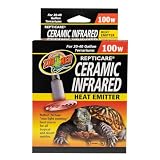 Zoo Med Repticare 100W Ceramic Infrared Heat Emitter Zoo Med Repticare 100W Ceramic Infrared Heat Emitter |
|
Check Latest Price |
 Fluker’s 100W Ceramic Heat Emitter Fluker’s 100W Ceramic Heat Emitter |
|
Check Latest Price |
 REPTI ZOO 100W Ceramic Heat Emitter 2-Pack REPTI ZOO 100W Ceramic Heat Emitter 2-Pack |
|
Check Latest Price |
 DOMICA 150W Ceramic Heat Emitter 2-Pack DOMICA 150W Ceramic Heat Emitter 2-Pack |
|
Check Latest Price |
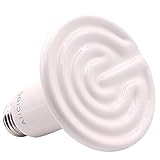 Aiicioo 60W Ceramic Heat Emitter Aiicioo 60W Ceramic Heat Emitter |
|
Check Latest Price |
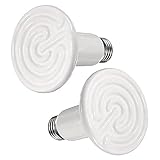 OMAYKEY 75W Ceramic Heat Emitter 2-Pack OMAYKEY 75W Ceramic Heat Emitter 2-Pack |
|
Check Latest Price |
 MIXJOY 250W Ceramic Heat Emitter 2-Pack MIXJOY 250W Ceramic Heat Emitter 2-Pack |
|
Check Latest Price |
1. LUCKY HERP 100W Ceramic Heat Emitter 2-Pack for Fast, Reliable Overnight Heat
LUCKY HERP 100W Ceramic Heat Emitter, Reptile Heat Bulbs, Ceramic Heat Lamp for Reptiles, Amphibian, Chicken, Dog, Cat (2-Pack)
100W
120V
E26 base
No light output
Rated up to 10000 hours
Pros
- Fast heat-up with rated temperature in about 4 minutes
- Truly no light output so sleep cycles are undisturbed
- Steady even radiant heat
- E26 base makes installation trivial
- Two-pack includes a spare
Cons
- Some bulbs stopped reaching full heat after about 5 months
- Needs a quality ceramic lamp holder and 30cm+ clearance
The LUCKY HERP is the emitter we would fit first in a standard 20 to 40 gallon setup, and it earned the top slot on the numbers rather than on branding. It sits at a 4.7 rating across 1,166 reviews, and the single most common theme in those reviews is heat that arrives almost immediately. Owners report noticeable warmth within about 10 seconds and full rated temperature in roughly 4 minutes, which matters when you are commissioning a new enclosure and want to see your gradient settle fast.
Everything about the physical design is unremarkable in the best way. It is a standard E26 screw base at 120V, a thick special ceramic shell, and it weighs 11.64 ounces. Installation is the same as changing a light bulb. The element is rated up to 10,000 hours, and a number of owners describe two or more years of continuous service on a single unit, which puts it among the longer-lived emitters in this group.
The failure reports are worth taking seriously rather than dismissing. Some bulbs stopped reaching full heat after only about 5 months of use, and a smaller number heated briefly and then cooled and stopped working entirely. That pattern usually points at the socket or the thermostat rather than the element itself, which is why the fixture advice later in this guide matters as much as the bulb choice.
Reviewers also flag two non-negotiable conditions: a quality ceramic lamp holder, and at least 30cm of clearance between the bulb and the animal. A CHE is genuinely hot to the touch and it puts out no visual warning that it is on. Treat that as a feature of the design rather than a fault in the product.
What you get for overnight heating in a mid-size enclosure
This is a 100W emitter, which is the sweet spot for the majority of setups: a leopard gecko in a 20 gallon, a juvenile ball python in a 4x2x2, a garter snake in a 40 gallon. One keeper on r/leopardgeckos described exactly this pairing, planning a 100W ceramic heat emitter in an 8.5 inch dome for a 36x18x18 Exo Terra, and that is the standard configuration most of these reviews describe.
Because it throws no light, you can run it on a proportional thermostat around the clock and the animal’s photoperiod stays under your control rather than the bulb’s. If your room cools at night, this is the emitter that solves the problem without also switching on a red bulb your snake can see.
Where the LUCKY HERP falls short
Two-pack packaging means you are holding a spare whether you need one or not, and the reviews that do mention disappointment are almost all about lifespan rather than output. If your setup is a very high humidity tropical vivarium, check that your fixture is rated for continuous damp use before this or any emitter goes in.
There is also no visible indicator when the unit is hot, so do not plan on touching the socket end during a routine clean. Let it cool fully first.
2. Simple Deluxe 100W Ceramic Heat Emitter 2-Pack for Strong Output and Long Service
Simple Deluxe 100W 2-Pack Ceramic Reptile Heat Lamp Heat Emitter Bulb No Light Emitting Brooder Coop Heater for Amphibian Pet & Incubating Chicken, Black
100W
AC 110-120V
E26 base
3.35 inch diameter
2-pack
1 year warranty
Pros
- Gets very hot with dependable radiant heat
- Truly no light for nocturnal species and 24/7 heating
- Black finish matches standard domes and hoods
- Repeat buyers report many months of service
- Two-pack means a spare is always on hand
Cons
- Surface runs very hot so a high-temperature dome is required
- Frequent cycling without a thermostat shortens lifespan
- Some bulbs may arrive damaged in transit
The Simple Deluxe has more reviews than any other 100W emitter in this roundup, at 1,770, and the volume is not accidental. Buyers keep coming back for the same reason: the heat output is strong and dependable, the light output is genuinely absent, and the black finish disappears into a standard dome or hood instead of glowing white in your enclosure.
Specification-wise it is a straightforward part. A 100W bulb on AC 110-120V with a 3.35 inch diameter, ceramic and metal construction, rated for about 10,000 hours, sold as a two-pack with a one year manufacturer warranty. That rating is short compared with the two year warranty on the Zoo Med later in this list, and it is one of the reasons the Zoo Med is worth the extra spend for a long-lived setup.
What owners like most is heat with total darkness. People run these for nocturnal reptiles, but also in poultry brooders, egg incubators and thermostatically controlled dog houses, which tells you how much headroom the output has above a normal terrarium. Repeat purchasing shows up constantly in the reviews, which is the clearest signal that these are working for people, so treat the two-pack as a spare you will eventually use rather than a discount.
The honest drawback is physical. The bulb surface runs very hot, and reviewers are consistent about needing a high-temperature-rated dome and a ceramic socket. A few bulbs in this pack also arrive damaged in transit, so open the box before you screw one in and check the element for hairline cracks.
Why the review count matters here
With nearly 1,800 reviews, the failure patterns are visible rather than anecdotal. The complaints cluster around handling and cycling, not around output. That tells us the element design is sound and that the weak link in the system is the fixture and the controller, exactly as we explain in the safety section below.
Having a spare on the shelf removes the gap where a failed bulb sits in an empty socket overnight.
Where the Simple Deluxe is the wrong choice
Do not run one of these on a cheap on/off timer or a plug-in dimmer with no probe. Frequent thermal cycling is the single most common cause of shortened element life in the reviews, and it is entirely avoidable with a proportional or dimming thermostat.
It is also a single-size choice. At 100W it is the right bulb for mid-size enclosures and too much or too little outside that band. Check the wattage table before you commit.
3. HealSmart 100W Ceramic Heat Emitter 2-Pack for High-Humidity Terrariums
HealSmart Reptile Heat Lamp 100W 2-Pack Ceramic Heat Emitter, No Light Emitting Heat Bulbs for Amphibian Pet Brooder Coop Incubating Chicken, Lizard Bearded Dragon Turtle Snake Terrarium Black
100W
110-120V
E26 base
No light
10,000 hour rated life
1 year warranty
Pros
- Zero visible light that owners say calmed animals stressed by red night bulbs
- Consistent measurable heat output
- Crack and moisture resistant for humid terrariums
- Still heating after two winters for some owners
- Two-pack provides a backup
Cons
- Heat output declines gradually over months
- Very high surface temperature
- Occasional reports of bulbs arriving broken
Humidity is where a lot of ceramic heat emitters quietly fail, and the HealSmart is the one in this group explicitly built for it. The element is high-purity pottery clay with a Ni-Cr-Alloy resistance wire, rated at 10,000 hours, and the listing describes it as crack-resistant and moisture-resistant for high-humidity terrariums. If you keep a crested gecko, a dart frog, or a rainforest snake, that specification is the deciding factor.
The shape is a BT37 measuring 85mm in diameter by 100mm in length, which fits standard E26 fixtures comfortably. It draws 100W on 110-120V and comes as a two-pack with a one year warranty. The review base is 1,037 at 4.7, and the number of owners reporting bulbs that were still heating after two full winters is genuinely useful when you are comparing against cheaper parts.
The behaviour owners describe most often is calm. Several keepers report that animals that had been stressed by red night bulbs settled once this emitter went in, and the reviews keep coming back to zero visible light as the reason. A second recurring theme is steady, measurable output that held its target alongside a hygrometer, which is exactly what a thermostat needs to do its job.
The gradual decline in output over months is the most common complaint, and it is a normal characteristic of ceramic elements rather than a defect. The practical fix is simple: as the emitter ages, lower it slightly or re-check your probe position, because the thermostat will push it harder to hold setpoint as the element becomes less efficient.
What you need to run it safely in a damp enclosure
Use a porcelain or ceramic socket, keep the fixture above splash height, and mount the lamp so the element cannot be touched by an animal. A CHE in a humid vivarium is only safe when the connections are genuinely sealed from condensation, and cheap plastic sockets are the first thing to go.
Because the emitter pulls moisture out of the air, budget for a humid hide, a deeper water feature, or a misting schedule. Cracking an element by misting it directly is a self-inflicted wound, so aim the spray away from the fixture.
Where the HealSmart is the wrong choice
If your enclosure is large and tall, a 100W bulb may not keep up. The element also runs at a very high surface temperature, so a bare dome without a guard rail is a poor match even with a small animal.
Check your box on arrival. A few reports describe bulbs arriving broken, and a cracked ceramic element will not heat properly and can be dangerous in a socket.
4. Zoo Med Repticare 100W Ceramic Heat Emitter for Set-and-Forget Durability
Zoo Med Repticare 100 Watt Ceramic Infrared Heat Emitter
100W
100-120V
E26 base
Porcelain
Flat face design
2 year warranty
Pros
- Long service life with a year or more of continuous use
- Flat face radiates heat efficiently in humid enclosures
- Adds 10-20F over room temperature
- Two-year manufacturer warranty
- Made in America
Cons
- Single bulb only so a spare must be bought separately
- A failed unit can crack or melt at the socket
- Higher cost per bulb than multi-packs
The Zoo Med Repticare is the one we would put in an enclosure we want to forget about for a year. It is a 100W porcelain-bodied emitter on an E26 base, made in America, and it carries a two year manufacturer warranty, the longest coverage in this roundup. Owners match that promise with the most consistently positive durability feedback of any product here.
What separates this design is the flat face. Zoo Med describes it as more efficient than conical designs, and the reviews back that up, particularly in humid enclosures where a broader emission pattern helps hold a stable ambient temperature. The spec sheet claims it can lift terrarium air temperature 10-20F above room temperature, which is the number to compare against your own room readings when you size the bulb.
At 4.6 across 844 reviews, the feedback is mature rather than enthusiastic. People describe continuous use of a year or more, which for a ceramic element is genuinely good service. The efficiency of the flat face also means you are not fighting a cold spot in the middle of the enclosure.
There is one failure mode that shows up in nearly every long-term review, and it matters for your setup planning: when a unit eventually fails, it can crack or melt at the socket and take the lamp housing with it. Ceramic on ceramic under high heat for years is a hard interface, and the socket is the weak point. Budget for a spare dome fixture if this is your main heat source.
When this is the right spend
Paying more for a ceramic heat emitter only helps in one situation: when you want the part to disappear. If your enclosure is a permanent adult setup, a two year warranty and reported multi-year service make the single-bulb purchase a reasonable trade against cheaper two-packs that fail on a shorter cycle.
It is also a strong pick for anyone with an established enclosure already at the right temperatures and no interest in re-tuning a gradient every season.
Where the Zoo Med is the wrong choice
It is a single unit, so you have no spare unless you buy one. For a first keeper building a kit on a tight budget, a two-pack covers the failure gap more cheaply. And if your socket is already showing corrosion, no brand of bulb fixes that.
It also cannot create a basking hotspot. If your species needs a warm surface to thermoregulate against, this is the wrong tool no matter how good it is.
5. Fluker’s 100W Ceramic Heat Emitter for the Widest Heat Spread
Fluker’s Ceramic Heat Emitter, Natural Infrared Heating Bulb for Reptiles, 100 Watt
100W
Non-light emitting
Large circular emitter
Designed for Repta-Clamp Lamp
Pros
- One owner reports the same unit still working after roughly eight years
- Large circular emitter face widens the basking area
- No visible light so reptiles settle down to sleep
- Designed for the Repta-Clamp Lamp
- Teflon-free ceramic construction
Cons
- Emits no light at all so it cannot replace a daytime basking lamp
- A failed emitter can crack or damage the socket
- Bulb surface is hot enough to need a towel to unscrew
The Fluker’s is an old product, listed since 2001, and that longevity shows in the ratings. It holds 4.6 across 915 reviews, and one owner reports the same unit still working after roughly eight years. If you want a ceramic heat emitter you install once and rarely think about again, this is the strongest example in the roundup.
The design point that matters is the large circular emitter face. Rather than throwing heat in a narrow cone, it widens the area the animal can move through to get warm, which is closer to what a broad radiant source should do. It is a 100W non-light-emitting element, and it is designed to pair with the Fluker’s Repta-Clamp Lamp with Switch, which makes height adjustment straightforward.
Reviews describe it as a set-and-forget heat source, and the use cases are broad: nocturnal reptiles, tortoises, leopard geckos, puppies and even birds. The Teflon-free ceramic construction gets called out by owners of sensitive species, which is a fair point since a degraded coating can be a concern in a shared-air room.
The real practical note is about handling. The bulb surface is hot enough that some owners reach for a towel to unscrew it, and it needs a full cooldown before you touch it. It also radiates enough heat that the surface is uncomfortable to approach closely, so plan your mount height accordingly.
Why a wider face helps in a long enclosure
A large circular emitter face spreads usable heat over a longer stretch of the enclosure, which reduces the need for very close positioning. That is valuable in a long snake enclosure where a narrow beam would leave most of the animal length cold.
It is also a better match for a clamp lamp with a shallow reflector, because the wide face couples to the reflector instead of pointing past it. A tortoise table or a puppy crate benefits from the same effect.
Where the Fluker’s is the wrong choice
It emits no light whatsoever, so it cannot do any part of a basking light’s job. Plan on a separate daytime heat and lighting source if your species needs one.
It is a single bulb with no spare, and like the other premium parts here, a failed unit can crack or melt at the socket. Check your fixture terminals before fitting it.
6. REPTI ZOO 100W Ceramic Heat Emitter 2-Pack for Aquatic and Humid Setups
REPTI ZOO 100W Reptile Heat Lamp 2Pack Ceramic Heat Emitter Night Heat Lamp Bulbs Reptile Terrarium Heat lamp Tank Heat Bulb for Turtle Bearded Dragon Gecko Lizard Snake Chicken E26
100W
110V
E26 base
G40 globe
10,000 hour rated life
90 day warranty
Pros
- Ranked #15 in Terrarium Heat Lamps
- Infrared heat with zero light output preserves day and night behaviour
- Crack-resistant ceramic rated for humid glass terrariums
- CE-certified and RoHS-compliant
- Two-pack for an immediate backup
Cons
- Only a 90-day manufacturer warranty
- High surface temperature requires clearance from the animal
- Needs a ceramic or high-temperature rated socket
The REPTI ZOO is the certifiable choice. It is CE-certified and RoHS-compliant, made from high-purity ceramic, and described as crack-resistant and safe for high-humidity glass terrariums. That combination of compliance markings and humidity tolerance is what makes it a sensible pick for an aquatic setup, an island in a planted vivarium, or anything where condensation is a constant.
Physically it is a G40 globe on an E26 base at 110V, 2.9 by 3.9 inches, rated for 10,000 hours, and it comes as a two-pack. The listed lifespan works out to roughly three times that of a conventional heat lamp, which is the argument for ceramic elements in general and the reason they are worth the higher outlay than an incandescent bulb.
Its category position reflects real demand rather than marketing. It sits at number 15 in Terrarium Heat Lamps, and the reviews keep returning to the same two things: a genuinely dark element, and simple E26 fitment in a standard socket. Infrared heat that penetrates tissue without visible light is the whole point, and owners running it on a thermostat report that the animal’s day and night behaviour is unchanged.
The warranty is the weak spot. Ninety days is short next to the two years on the Zoo Med, so if you want a warranty to lean on, this is not the one. Plan to keep a spare, which the two-pack solves.
What works well for turtles and aquatic reptiles
Humid, warm, and enclosed is exactly the environment that cracks cheap elements, and the crack-resistant ceramic construction is the reason to choose this over a generic two-pack. The high-humidity rating is the deciding factor for an aquatic turtle or a planted paludarium.
Because the enclosure is already wet, the drying effect of a CHE is less of a concern than it is in a dry cage, and it leaves a gradient that suits an animal that moves between water and land.
Where the REPTI ZOO is the wrong choice
Ninety days of coverage is short, and if your enclosure is prone to humidity reaching the fixture, verify the socket is sealed and rated for continuous damp use. The surface temperature still means you need clearance and ideally a guard rail.
For a very large enclosure, 100W will not carry the space. Step up the wattage instead of over-driving this one.
7. DOMICA 150W Ceramic Heat Emitter 2-Pack for Large Enclosures
DOMICA 150W 2 Pack Reptile Heat Bulb, Beared Dragon Ceramic Heat Emitter, E26 No Light Night Use Heater Bulbs for Turtle, Lizard, Snake, Amphibians, Pet Brooder Coop Chicken (150W-Large Tank)
150W
100-120V
E26 base
Withstands up to 500F
Compact 3 x 4.3 inch body
Pros
- Strong even heat
- No light output so it pairs with a daytime basking bulb
- Ceramic body survived being dropped
- Two-pack provides a spare
- Also used in brooders and crawlspace freeze protection
Cons
- Gets extremely hot with no visual indicator that it is on
- Must be used with a fixture rated for 150W or higher
- Some bulbs fail sooner than the advertised lifespan
The DOMICA is the wattage step up for anyone whose enclosure has outgrown 100W. At 150W on 110-120V in a T8 shape, it is the option we would reach for in a 75 gallon or larger setup, or for a large adult animal in a room that does not hold heat well. Reviewers describe strong, even heat that held a baby tortoise habitat around 80F.
Construction is high-density ceramic rated to withstand up to 500F, and the body is compact at 3 by 4.3 inches, so it fits inside most standard domes without a fight. It is a two-pack, model DM-CHB-2PC, and the E26 base means it screws into the same fitting as everything else in this roundup.
Two details stand out from the reviews. Owners report that the ceramic body survived being dropped without damage, which is a meaningful difference from a glass-bulb heat source, and the black finish means it is genuinely invisible in a night setup. Several people also use these outside the terrarium world entirely, in brooders and in crawlspace freeze protection, which tells you how much headroom the output has.
Heat-up is faster than a traditional incandescent heat bulb, and the light-free output means you can run it overnight alongside a daytime basking bulb without disturbing the photoperiod at all.
How to run 150W safely
You need a fixture rated for 150W or higher. This is not a guideline, it is the fixture’s operating limit, and reviewers of high-wattage emitters in this roundup report people being burned by running an over-rated bulb in an under-rated dome. A ceramic socket and a guard rail are not optional at this wattage.
Spacing matters more than usual. An invisibly hot 150W element needs real vertical clearance from the animal, and the surface will burn skin on contact. Mount it high and out of reach.
Where the DOMICA is the wrong choice
It is far too much for a small gecko tank or a juvenile setup, where it will cook the top of the enclosure. If your enclosure is 20 gallons or under, this is the wrong bulb and the 60W and 75W options later in this list fit better.
Some bulbs also fail sooner than the advertised lifespan, so keep the spare rather than treating the second bulb as optional.
8. Aiicioo 60W Ceramic Heat Emitter for Small Enclosures and Brooders
Aiicioo Reptile Heat Lamp Bulb -60W Ceramic Heat Emitter No Harm No Light Infrared Heater Lamp for Chicken Coop Lizard Aquarium Snake Outside Dogs Brooder 110V,White
60W
AC 110-120V
No light
10,000 hour rated life
White ceramic
Pros
- 4.5 star average across more than 3300 reviews
- Long-wave infrared warms the animal and the air
- No light output so a resting pet is never disturbed
- High-purity clay resists cracking in humid enclosures
- 60W suits smaller enclosures and brooders
Cons
- 60W is modest for large adult reptiles
- Runs very hot and needs a full hour to cool
- Not suitable for frequent on and off cycling
With 3,302 reviews at a 4.5 average, the Aiicioo has the second-largest review base of anything in this roundup, and that scale is worth something on its own. A product that has been in thousands of enclosures for over a decade produces a much more trustworthy picture of failure rates than one with forty reviews. It has been listed since 2015.
This is the 60W version, and that wattage is the point. For a small juvenile reptile, a hatchling enclosure, a nursery, or a brooder box, 60W is proportionate where 100W would be overwhelming. It is long-wave infrared rated to 10,000 hours, in high-purity pottery clay that resists cracking, and it runs on AC 110-120V with no light output.
The consistent finding across those thousands of reviews is that it warms both the animal and the ambient air, which is the correct behaviour for a ceramic heat emitter and the thing that makes it a better choice than a heat mat. Buyers also note that the light-free output never disturbs a resting pet, which matters for nocturnal species that refuse to settle with any bulb visible.
The wattage range the manufacturer offers runs from 50W up to 150W in white and red finishes, so the same product family covers a lot of setups. This particular listing is the white 60W, so if you want a genuinely black bulb for a night enclosure, choose a different finish.
Why the review volume changes the decision
When a part has thousands of reviews spanning years, the failure pattern stops being anecdotal. Here the complaints are consistent and narrow: 60W is not enough for a large adult, and the bulb needs an hour to cool before you touch it. Neither is a design flaw, and both are easy to plan around.
For a first enclosure or a quarantine box, having a part with this much field history is worth more than a marginally better claim on a spec sheet.
Where the Aiicioo is the wrong choice
Sixty watts will not heat a large adult reptile or a deep enclosure. If your animal is full size in anything beyond a modest cage, step up to 100W or higher rather than running this one flat out through a thermostat.
It is also a single bulb, and it is not built for frequent on and off cycling. Thermostat control is not optional here, and the white finish is not the look you want in a fully dark night setup.
9. OMAYKEY 75W Ceramic Heat Emitter 2-Pack for Geckos and Juveniles
OMAYKEY 2 Pack 75W Ceramic Heat Emitter Lamp, Reptile Heat Bulbs
75W
AC 90-120V
E26 E27 porcelain socket
ETL Listed
15,000 hour rated life
Pros
- 4.4 star average across more than 3400 reviews
- ETL Listed for electrical safety
- Solid ceramic element with a 15000 hour claimed life
- Truly no light so day and night cycles stay intact
- Two-pack keeps a spare on hand
Cons
- Must be used with a porcelain socket because plastic can melt
- Surface temperature is very high and needs an hour to cool
- 75W is limited in large enclosures
The OMAYKEY is the middle rung of the wattage ladder, and it carries the largest review count in this group at 3,463. What makes it stand out technically is the certification: it is ETL Listed, the only independent safety certification listed among the ten emitters we reviewed. For a device that runs continuously with no visible on/off indicator, that listing is worth more attention than it usually gets.
The element is solid ceramic in a G30 shape, 2.95 inches in diameter by 3.94 in height, rated at 75W on AC 90-120V, with a claimed 15,000 hour service life, the highest rated figure in this roundup. It is sold as a two-pack and screws into a standard E26 or E27 porcelain socket.
At 4.4 across more than 3,400 reviews, the feedback is practical rather than glowing. Buyers like the light-free output and the solid ceramic element, and the recurring advice is exactly what we would tell you anyway: use only a porcelain socket, because plastic sockets can melt, and allow a full hour of cooling before you touch the bulb.
The 75W rating makes this a natural fit for leopard geckos, crested geckos, juvenile snakes and small species in 10 to 20 gallon enclosures, where 100W tends to be more heat than the animal needs for a basking-free ambient setup.
What the ETL listing actually tells you
ETL Listed means an independent lab has tested the product against safety standards. For a heat source that gets screwed into a fixture and left running for months inside a humid enclosure, that is a meaningful differentiator and it is the single strongest technical argument for this product.
It does not change how you use the bulb. You still need a thermostat, still need clearance, and still need a guard rail for an animal that can reach it.
Where the OMAYKEY is the wrong choice
Seventy-five watts will not carry a large enclosure. An adult snake in a 4x2x2 or anything above 40 gallons wants a 100W or higher emitter, and running this one hard through a thermostat is a poor substitute for more power.
There is also a small share of one-star reviews on durability, so treat the second bulb as a spare you will genuinely use rather than an optional extra.
10. MIXJOY 250W Ceramic Heat Emitter 2-Pack for Cold Rooms and Large Tanks
MIXJOY 250W Ceramic Heat Emitters – 2Pack Reptile Heat Lamp Bulbs, No Light Emitting, Ideal for Gecko, Lizard, Bearded Dragon, Turtle, Snake & Chicken
250W
110-120V
E26 base
105mm x 115mm
6 month warranty
Two-pack
Pros
- Highest wattage in this group for large enclosures and cold rooms
- Reaches temperature in about 3-5 minutes
- Temperature display sticker as an on and heat reminder
- Crack and moisture resistant ceramic
- Two-pack with a 6 month warranty
Cons
- Some bulbs fail far short of the advertised 10000 hour life
- Bulbs arriving broken in the box
- A chemical smell on first power-up
- Very high wattage demands a properly rated fixture
The MIXJOY is the 250W option, and it exists for enclosures that genuinely need serious heat: a very large tank, a screen-topped cage in a cold garage, or a room that does not hold temperature overnight. Reviewers confirm it delivers serious heat for large tanks, sheds and greenhouses. It is a G40 globe measuring 105mm by 115mm on a standard E26 base at 110-120V, in black, rated at 10,000 hours, and sold as a two-pack with a 6 month warranty.
One design detail stands out and deserves credit. The bulb carries an upgraded temperature display sticker that changes as the element heats, which is a direct answer to the single most repeated complaint about ceramic heat emitters: you cannot see that they are on. In a room with no other light, a heat-reactive sticker gives you a warning that the fixture is live.
Heat-up takes about 3 to 5 minutes, and the ceramic is described as crack and moisture resistant, which matters if you are mounting it in a large glass enclosure. The black finish means it disappears completely in a night setup.
Durability is the weak point, and the reviews do not soften it. Several owners report bulbs failing within weeks or months, well short of the advertised life, and there are reports of bulbs arriving broken plus a chemical smell on first power-up. This is the product with the shortest review base here at 243, and you should size your expectations accordingly.
When 250W is the right call
It is correct when your enclosure volume and your room temperature together demand more than a 150W emitter can deliver, and when you have a fixture rated well above 250W with a proper porcelain socket and a guard rail. Several owners were burned exactly this way, and that caution is the most useful thing in the reviews.
There is one more pattern worth knowing: a ceramic emitter radiates heat sideways as well as downward, so a roost surface or a branch at the side of the enclosure can pick up a surprising amount of heat. If your species perches, map the whole enclosure before you settle on a wattage.
Where the MIXJOY is the wrong choice
For anything under 75 gallons in a normally heated room, it is dramatically over-powered and will need heavy thermostat control to run at all. It is also a fixture-and-safety commitment rather than a simple bulb swap.
The early-failure reports and the six month warranty mean this is the one to buy with a replacement plan, not as a set-and-forget install.
How to Choose the Right Ceramic Heat Emitter Wattage
The rule of thumb is simple: size the bulb to the volume of the enclosure, not to the length of the animal, and add headroom only when your room loses heat overnight. A thermostat will always pull a wattage down further than the raw rating suggests, so a bulb that looks oversized is usually the correct starting point. What you must never do is run a bulb in a fixture rated below it.
Keepers on r/leopardgeckos describe the standard setup clearly: a 100W ceramic heat emitter in an 8.5 inch dome for a 36x18x18 Exo Terra. That is the reference point most of the reviews in this roundup assume, and it lines up with the wattage bands below. If your room drops at night, add a step. If your room is warm and steady, subtract one.
10 to 20 gallon enclosures, hatchlings, juveniles, quarantine boxes: 60W. This is where the Aiicioo 60W fits, and it is the right call for a leopard gecko hatchling or a small arboreal setup.
20 to 40 gallon enclosures, adult geckos, most snakes in standard tubs: 75W to 100W. The 75W covers smaller tanks well, and 100W is the standard answer for a 4x2x2 or a 40 gallon.
40 to 75 gallon enclosures, adult snakes, larger arboreals: 100W to 150W. A 150W emitter in a deep enclosure gives you room to dial back with a dimming thermostat.
75 to 120 gallon enclosures, adult bearded dragons, cold rooms: 150W. Here you also need a fixture rated for 150W or higher, plus a guard rail.
Very large tanks, screen-topped cages, garages and sheds: 250W. Treat this as a utility install with proper fixture ratings rather than a terrarium accessory.
For a bearded dragon specifically, a 100W to 150W emitter is the sensible night-time band, paired with a halogen basking flood for daytime heat. The CHE handles the nocturnal drop and keeps a minimum air temperature; it does not and should not create the basking hotspot that a dragon needs to digest properly.
One more variable worth naming: how cold your room actually gets. A 100W emitter that holds a gradient comfortably in a heated house will struggle in a basement. Measure the overnight minimum with a simple thermometer before you buy rather than guessing, because that measurement is the single best predictor of whether your chosen wattage works. Keeping a room at a stable temperature overnight also reduces how hard your thermostat has to work, which is a useful parallel to how whole-home heat pumps are sized for cold climates.
Ceramic Heat Emitter vs Deep Heat Projector vs Halogen vs Heat Mat
A ceramic heat emitter is not the best heat source for every reptile, and any guide that says otherwise is selling you something. Here is how the four common options actually compare. A deep heat projector (DHP) is a different infrared device that sends heat forward into a narrow beam; a halogen basking bulb produces visible light and heat from above; a heat mat warms the substrate from below.
The honest summary is that a CHE wins on invisibility and loses on directed warmth. If your species needs to press against a warm surface to thermoregulate, you want a halogen flood or a DHP for that surface and a CHE for ambient and overnight heat. Most experienced setups end up running both.
On a forum, one keeper asked about mounting a DHP in a deep dome specifically so the reflector would push every bit of heat downward, which is a good illustration of the difference in approach. A DHP is a beam tool. A CHE is a field tool. Asking which is better is asking whether you need a spotlight or a heat lamp.
Heat mats are the option we would argue against most strongly. They warm substrate rather than the animal, they transfer heat through contact, and reviewers consistently describe them as a worse choice than a ceramic element for the same enclosure. They also concentrate heat in one place on the floor, which is a poor fit for an animal that needs to be able to move away from warmth.
Safety, Sockets, and Why CHE Bulbs Fail Early
The most repeated complaint in keeper forums is a version of this: the bulb keeps dying every few months, and there is what looks like corrosion on the connection. That is a fixture problem, not a bulb problem, and no brand of emitter on this list will fix it. A ceramic heat emitter runs continuously at high temperature, and a loose, damp, or poorly rated socket slowly oxidises the terminals until the connection degrades and the element fails early.
Five things prevent the loop. First, use a ceramic or porcelain socket, never plastic, and never a socket rated below the bulb’s wattage. Forum advice on this point is unanimous and several reviews in this roundup independently report melted plastic fittings. Second, keep the threads clean and dry and seat the bulb fully so the terminal pressure is consistent. Third, match the fixture’s wattage rating to the bulb exactly, not approximately.
Fourth, control it with a thermostat, always. A pulse proportional or dimming thermostat holds a steadier output than an on/off controller, and a jumper-style on/off controller causes the thermal cycling that shortens element life. A keeper on Chameleon Forums described a 100W ceramic heat emitter with a jumpstart thermostat working well specifically because the controller held the temperature rather than slamming the bulb on and off. And fifth, fit a lamp guard so the animal cannot reach an element that has no visible glow to warn them off.
Thermostat probe placement is the other half of the job. Secure the probe where the animal actually sits, not near the top of the enclosure, and re-check it when you move the bulb. Owners report having to lower the lamp gradually as the element’s output declines, because the probe stays honest while the element gets less efficient. Do that re-check monthly and you will catch a gradual output loss before it becomes a failure.
Finally, expect a ceramic heat emitter to be on for long stretches. These bulbs are rated for continuous operation and are designed to run 24 hours a day, but they are not designed to be run without a controller, without clearance, or in a socket that is not rated for them. Leave nothing to guesswork there.
Frequently Asked Questions
What wattage ceramic heat emitter do I need?
Match the bulb to enclosure volume rather than animal length. Use 60W for enclosures of 10 to 20 gallons, 75W to 100W for 20 to 40 gallons, 100W to 150W for 40 to 75 gallons, and 150W to 250W for anything larger or kept in a cold room. Add a wattage step if your room loses heat overnight, and never fit a bulb above the fixture’s rating.
Can I use a ceramic heat emitter instead of a basking bulb?
No, not on its own. A ceramic heat emitter radiates infrared heat with no visible light, which makes it excellent for nighttime and ambient heating, but it does not create the tight, warm basking surface many reptiles need to thermoregulate and digest properly. Most keepers run a daytime halogen basking bulb and a thermostat-controlled ceramic heat emitter for overnight heat.
Are deep heat projectors better than ceramic heat emitters?
A deep heat projector is better when your animal needs a directed warm surface, because it sends a concentrated beam of infrared forward. A ceramic heat emitter is better when you need broad, invisible, thermostat-controlled heat, such as overnight ambient warmth or heating in a high-humidity enclosure. Most setups use both, with a halogen or projector for daytime basking and a ceramic heat emitter at night.
What are the disadvantages of using a ceramic heat emitter?
The main drawbacks are that it produces no basking hotspot you can point a thermometer at, it dries the enclosure by pulling moisture from the air, and it runs hot enough to burn skin with no visible glow to warn you. It also requires a thermostat, a ceramic socket rated for the wattage, and clearance from the animal. It cannot replace daytime lighting or basking heat.
How long can you leave a ceramic heat emitter on?
Ceramic heat emitters are rated for continuous operation, commonly 10,000 to 15,000 hours, and are designed to run 24 hours a day under thermostat control. Running one without a thermostat causes thermal cycling that shortens element life dramatically. Always use a ceramic or porcelain socket rated for the bulb’s wattage, keep clearance from the animal, and never touch a running or recently switched-off bulb without letting it cool fully.
Our Verdict on the Best Ceramic Heat Emitters for Reptiles
The LUCKY HERP 100W is our pick for most people, because it heats fast, holds steady, and has the review volume to tell you what happens when it fails. Simple Deluxe is the alternative if you want the same wattage with a longer recorded service history, and HealSmart is the one to choose for a humid terrarium. For large enclosures, step up to the DOMICA 150W, and for a cold room or a very large tank, the MIXJOY 250W does the job nothing else here can.
Whichever one you choose, the bulb is the cheap part. A ceramic socket rated for the wattage, a pulse proportional or dimming thermostat, a guard rail, and a monthly probe and terminal check are what turn a decent ceramic heat emitter into a setup that lasts. Get those right and the early-failure loop that frustrates so many keepers simply never starts.